

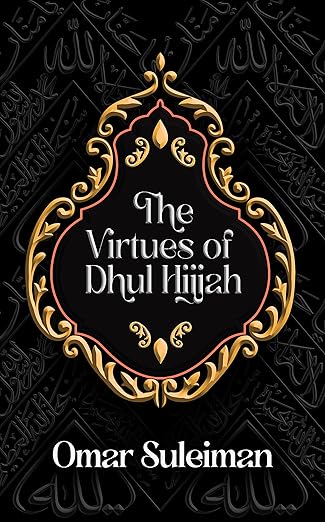
The Virtues of Dhul Hijjah – Best Days of Worship in Islam | Omar Suleiman
The Virtues of Dhul Hijjah – Best Days of Worship in Islam | Omar Suleiman
Publisher:
Tertib Publishing
Author:
Omar Suleiman
Language:
English
Pages: 80
Size: 10.67 x 0.25 x 17.53 cm
Couldn't load pickup availability
Collapsible content
Description of islamic Book
“The Virtues of Dhul Hijjah” by Omar Suleiman is an inspiring Islamic book that highlights the immense blessings and spiritual opportunities found in the first ten days of Dhul Hijjah. These sacred days are among the most beloved to Allah and hold great importance in Islam.
The book explores the significance of worship during Dhul Hijjah, including fasting, dhikr, charity, sacrifice, and sincere repentance. It provides meaningful reflections and practical guidance to help readers make the most of these blessed days and strengthen their connection with Allah
Why You Should Read This Book
This book helps you maximize the blessed days of Dhul Hijjah through worship, reflection, and a stronger connection with Allah.
Chapter 1: The Sacred Months
The Prophet ﷺ said: “The year is made up of twelve months, four of which are sacred: Dhu al-Qa‘dah, Dhu al-Hijjah, Muharram, and Rajab, which comes between Jumada al-Akhirah and Sha‘ban.” (Bukhari)
When thinking about sacred times in the Islamic calendar, most Muslims immediately think of Ramadan. Since it is the holiest and most blessed month of the year, this is natural. However, the four sacred months mentioned by the Prophet ﷺ also hold unique virtues, meanings and acts of worship that deserve our attention and understanding.
Many people know the names of these months but may not fully understand their importance or their place in the Islamic calendar. Because of this, their special virtues are often overlooked. For example, when discussing the best month for fasting after Ramadan, many people think of Sha‘ban or the six fasts of Shawwal. Yet the Prophet ﷺ described Muharram as “the month of Allah” and taught that fasting in it is the most rewarding after Ramadan. This shows the importance of learning about these sacred months and appreciating their value.
Historical Context
Even before Islam, the Arabs respected the sacred months and avoided warfare during them. Each month carried meanings connected to customs and historical practices. Dhu al-Qa‘dah refers to refraining from battle, Dhu al-Hijjah is the month of Hajj, Muharram means “forbidden,” marking a period when fighting was prohibited, and Rajab means to abstain or remove weapons from conflict.
Imam al-Shafi‘i compared the separate position of Rajab among the sacred months to Umar ibn Abdul Aziz among the righteous caliphs. Although separated in time, he is still included because of his status and virtue.
Before Islam, the Arabs would sometimes change the order of the sacred months whenever it suited their battles or interests. Allah fixed the calendar and assigned each month its proper place and significance.
There is great wisdom in the order Allah chose. Ramadan is followed by the six fasts of Shawwal, then Dhu al-Qa‘dah as preparation for Hajj in Dhu al-Hijjah. After the virtues of Dhu al-Hijjah comes Muharram, the best month for fasting after Ramadan. This sequence allows believers to continue increasing in worship and maintain spiritual strength throughout the year.
Multiplied Deeds
The sacred months are not only special because warfare was prohibited in them. Good deeds performed during these months are rewarded more greatly, while sins become more serious. Al-Hafiz Ibn Rajab said:
“Be careful of sins, for they prevent forgiveness during seasons of mercy.”
Just as sins committed during prayer are more serious, sins committed in the sacred months are worse than at other times. Allah grants His servants special seasons filled with mercy and forgiveness, so believers should strive to benefit from them and avoid actions that may deprive them of these blessings.
Among all the sacred months, Dhu al-Hijjah is considered the most sacred. The Prophet ﷺ said: “Your blood, wealth and honor are sacred, like the sanctity of this day, this month and this land.” In this hadith, he emphasized the holiness of the Day of ‘Arafah, Dhu al-Hijjah and the sacred land of Makkah.
To truly benefit from these sacred months, Muslims should become familiar with the Islamic calendar and its virtues. We ask Allah to allow us to benefit from the mercy, forgiveness and blessings found in these months and to protect us from sin throughout the year. Ameen.
Publisher
Tertib Publishing
Author
- Omar Suleiman
Shipping and Delivery
We dispatch orders directly from our UK and USA warehouses, offering multiple shipping options to suit your needs. We proudly ship worldwide.
UK Deliveries (from UK warehouse):
Standard shipping typically arrives within 3–4 working days. Expedited delivery takes 2–3 working days. We aim to dispatch orders the same day or next working day, with next-day delivery options available where applicable.
USA Deliveries (from USA warehouse):
Orders usually arrive within 4–7 working days.
Europe (shipped from UK):
Standard delivery takes approximately 6–10 working days, with expedited services available in 3–5 working days.
Canada:
Estimated delivery time is 5–10 working days.
Worldwide Shipping:
International orders generally arrive within 5–20 working days, depending on destination and shipping method selected.
For precise delivery timelines based on your location, please contact us by email and our team will provide detailed information tailored to your address.
Sample Pages - Content
Who is Omar Suleiman?
Omar Suleiman is a renowned Islamic scholar, speaker, and educator known for his deep knowledge of Qur’an, Sunnah, and contemporary Islamic thought. He is the founder and president of the Yaqeen Institute for Islamic Research, which focuses on producing authentic, research-based Islamic knowledge and resources for Muslims worldwide.