


The Spiritual Cure by Imam Ibn Qayyim al-Jawziyyah – Explanation of Surah Al-Fatihah, Healing of the Heart & Islamic Spiritual Guide
The Spiritual Cure by Imam Ibn Qayyim al-Jawziyyah – Explanation of Surah Al-Fatihah, Healing of the Heart & Islamic Spiritual Guide
Publisher:
Dar As Sunnah Publications
Author:
Imam Ibn Qayyim al-Jawziyyah
Language:
English
Binding:
Soft Cover
Pages: 208
Size: 16x22cm
Couldn't load pickup availability


Collapsible content
Description of islamic Book
The Spiritual Cure is a powerful explanation of Surah Al-Fatihah, the greatest chapter of the Qur’an, highlighting its role as a source of healing for the heart and soul. This book draws from classical Islamic scholarship to explain how this short yet profound Surah contains the essence of Tawheed, guidance, and spiritual transformation.
It teaches readers how to reflect on Allah’s Names and Attributes, develop sincerity in worship, and understand the deeper meanings behind daily recitation. Ideal for those seeking spiritual purification (Tazkiyah) and a stronger connection with the Qur’an.
From Author:
In this work, the author explains that Surah Al-Fatihah is not just a chapter of recitation, but a complete guide for spiritual healing and transformation. It contains the foundations of faith, the essence of Tawheed, and the الطريق to guidance and success.The author emphasizes reflection upon the meanings of the Surah—recognizing Allah as the only One worthy of worship, seeking His help alone, and understanding the reality of the Day of Judgment. Each verse serves as a reminder to purify the heart and align one’s life with divine guidance.
Page : 01
DAAR US-SUNNAH QUR'ANIC COLLECTION The Spiritual Cure An Explanation to Surah al-Fatihah. م الله الرحمن الرحيم الحمد للهِ رَبِّ الْعَالَمِينَ ) الرَّحْمَنِ الرحيم . مَلِكِ يَوْمِ الدِّينِ . إيَّاكَ نَعْبُدُ وَإِيَّاكَ سَمِينٌ . اهْدِنَا الصِّرَاطَ الْمُسْتَقِيمَ . صراط الذينَ أَنْعَمْتَ عَلَيْهِمْ غَيْرِ المغضُوبِ عَلَيْهِمْ وَلَا الضَّالِّينَ ) A summary of numerous classical commentaries of the Qur'an at-Tabari, al-Baghawi, az-Zamakhshari, ibn 'Atiyyah, ibn al-Jawzī, al-Qurtubi, ibn al-Qayyim, ibn Kathir, as-Suyati, al-Alasi, ash-Shawkani, as-Sa'di, ash-Shanqiti and many others 000
Page : 02
2.1 The Enmity of Shaytan 35 2.2 Isti'adhah for recitation 38 2.3 The meaning of Isti'adhah 42 2.4 Everyone is need of Isti'ädhah 46 2.5 The virtues of Isti'adhah 49 CHAPTER FIVE The All-Merciful (ar-Rahman), The Most Merciful (ar-Rahim) 86 2.6 The meaning of Shaytan 51 5.1 2.7 Summary 53 5.2 The meaning of ar-Rahman and ar-Rahim The placing of this verse in the Surah 5.3 The repitition of ar-Rahman and ar-Rahim 825 86 92 95 CHAPTER THREE With the Name of Allah, The All-Merciful, CHAPTER SIX The Most Merciful 56 3.1 The wisdom of the basmAllah Master of the Day of Judgement 97 56 3.2 Meaning of Allah 59 6.1 3.3 Legal Rulings to do with the Basm Allah The meaning of Malik 97 64 6.2 3.4 The virtues of the basmAllah Meaning of the word yawm 106 68 6.3 Meaning of the word Din 107 6.4 The place of this verse in the Surah 108 CHAPTER FOUR CHAPTER SEVEN All Praises and thanks are due to Allāh 71 4.1 The meaning of hamd 71 4.2 The import of hamd 74 You Alone do we worship and You Alone do we ask for help 111 4.3 The virtues of hamd 76 7.1 4.4 The meaning of Rabb 80 The verse exemplifies the meaning of Tawhid 111 4.5 4.6 The meaning of 'Alamin Summary 7.2 82 The meaning of ibadah 114 7.3 84 Worship is the desired goal 117 7.4 You Alone we ask for help 120 7.5 Asking of the creation 124 7.6 Change from the third person to the second person 127
Page : 03
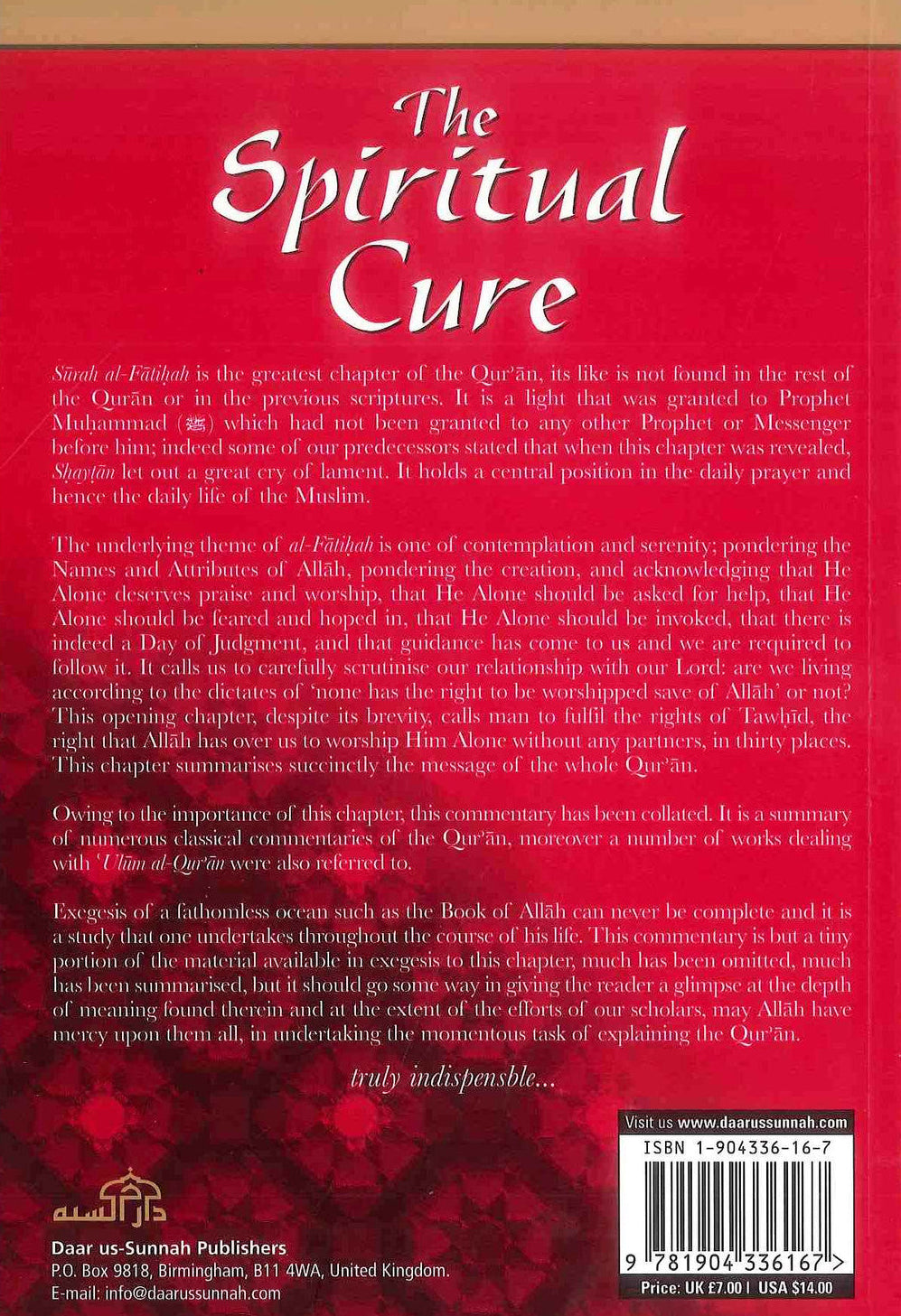
The Spiritual Cure Surah al-Fatihah is the greatest chapter of the Qur'an, its like is not found in the rest of the Quran or in the previous scriptures. It is a light that was granted to Prophet Muhammad() which had not been granted to any other Prophet or Messenger before him; indeed some of our predecessors stated that when this chapter was revealed, Shaytan let out a great cry of lament. It holds a central position in the daily prayer and hence the daily life of the Muslim. The underlying theme of al-Fatihah is one of contemplation and serenity; pondering the Names and Attributes of Allah, pondering the creation, and acknowledging that He Alone deserves praise and worship, that He Alone should be asked for help, that He Alone should be feared and hoped in, that He Alone should be invoked, that there is indeed a Day of Judgment, and that guidance has come to us and we are required to follow it. It calls us to carefully scrutinise our relationship with our Lord: are we living according to the dictates of 'none has the right to be worshipped save of Allah' or not? This opening chapter, despite its brevity, calls man to fulfil the rights of Tawhid, the right that Allah has over us to worship Him Alone without any partners, in thirty places. This chapter summarises succinctly the message of the whole Qur'an. Owing to the importance of this chapter, this commentary has been collated. It is a summary of numerous classical commentaries of the Qur'an, moreover a number of works dealing with 'Ulum al-Qur'an were also referred to. Exegesis of a fathomless ocean such as the Book of Allah can never be complete and it is a study that one undertakes throughout the course of his life. This commentary is but a tiny portion of the material available in exegesis to this chapter, much has been omitted, much has been summarised, but it should go some way in giving the reader a glimpse at the depth of meaning found therein and at the extent of the efforts of our scholars, may Allah have mercy upon them all, in undertaking the momentous task of explaining the Qur'an. truly indispensble... Visit us www.daarussunnah.com ISBN 1-904336-16-7 縮 Daar us-Sunnah Publishers P.O. Box 9818, Birmingham, B11 4WA, United Kingdom. E-mail: info@daarussunnah.com 9781904 336167"> Price: UK £7.00 | USA $14.00The Spiritual Cure Surah al-Fatihah is the greatest chapter of the Qur'an, its like is not found in the rest of the Quran or in the previous scriptures. It is a light that was granted to Prophet Muhammad() which had not been granted to any other Prophet or Messenger before him; indeed some of our predecessors stated that when this chapter was revealed, Shaytan let out a great cry of lament. It holds a central position in the daily prayer and hence the daily life of the Muslim. The underlying theme of al-Fatihah is one of contemplation and serenity; pondering the Names and Attributes of Allah, pondering the creation, and acknowledging that He Alone deserves praise and worship, that He Alone should be asked for help, that He Alone should be feared and hoped in, that He Alone should be invoked, that there is indeed a Day of Judgment, and that guidance has come to us and we are required to follow it. It calls us to carefully scrutinise our relationship with our Lord: are we living according to the dictates of 'none has the right to be worshipped save of Allah' or not? This opening chapter, despite its brevity, calls man to fulfil the rights of Tawhid, the right that Allah has over us to worship Him Alone without any partners, in thirty places. This chapter summarises succinctly the message of the whole Qur'an. Owing to the importance of this chapter, this commentary has been collated. It is a summary of numerous classical commentaries of the Qur'an, moreover a number of works dealing with 'Ulum al-Qur'an were also referred to. Exegesis of a fathomless ocean such as the Book of Allah can never be complete and it is a study that one undertakes throughout the course of his life. This commentary is but a tiny portion of the material available in exegesis to this chapter, much has been omitted, much has been summarised, but it should go some way in giving the reader a glimpse at the depth of meaning found therein and at the extent of the efforts of our scholars, may Allah have mercy upon them all, in undertaking the momentous task of explaining the Qur'an. truly indispensble... Visit us www.daarussunnah.com ISBN 1-904336-16-7 縮 Daar us-Sunnah Publishers P.O. Box 9818, Birmingham, B11 4WA, United Kingdom. E-mail: info@daarussunnah.com 9781904 336167"> Price: UK £7.00 | USA $14.00
Publisher
Dar As Sunnah Publications
Author
- Imam Ibn Qayyim al-Jawziyyah
Shipping and Delivery
We dispatch orders directly from our UK and USA warehouses, offering multiple shipping options to suit your needs. We proudly ship worldwide.
UK Deliveries (from UK warehouse):
Standard shipping typically arrives within 3–4 working days. Expedited delivery takes 2–3 working days. We aim to dispatch orders the same day or next working day, with next-day delivery options available where applicable.
USA Deliveries (from USA warehouse):
Orders usually arrive within 4–7 working days.
Europe (shipped from UK):
Standard delivery takes approximately 6–10 working days, with expedited services available in 3–5 working days.
Canada:
Estimated delivery time is 5–10 working days.
Worldwide Shipping:
International orders generally arrive within 5–20 working days, depending on destination and shipping method selected.
For precise delivery timelines based on your location, please contact us by email and our team will provide detailed information tailored to your address.
Sample Pages - Content
Page : 01
DAAR US-SUNNAH QUR'ANIC COLLECTION The Spiritual Cure An Explanation to Surah al-Fatihah. م الله الرحمن الرحيم الحمد للهِ رَبِّ الْعَالَمِينَ ) الرَّحْمَنِ الرحيم . مَلِكِ يَوْمِ الدِّينِ . إيَّاكَ نَعْبُدُ وَإِيَّاكَ سَمِينٌ . اهْدِنَا الصِّرَاطَ الْمُسْتَقِيمَ . صراط الذينَ أَنْعَمْتَ عَلَيْهِمْ غَيْرِ المغضُوبِ عَلَيْهِمْ وَلَا الضَّالِّينَ ) A summary of numerous classical commentaries of the Qur'an at-Tabari, al-Baghawi, az-Zamakhshari, ibn 'Atiyyah, ibn al-Jawzī, al-Qurtubi, ibn al-Qayyim, ibn Kathir, as-Suyati, al-Alasi, ash-Shawkani, as-Sa'di, ash-Shanqiti and many others 000
Page : 02
2.1 The Enmity of Shaytan 35 2.2 Isti'adhah for recitation 38 2.3 The meaning of Isti'adhah 42 2.4 Everyone is need of Isti'ädhah 46 2.5 The virtues of Isti'adhah 49 CHAPTER FIVE The All-Merciful (ar-Rahman), The Most Merciful (ar-Rahim) 86 2.6 The meaning of Shaytan 51 5.1 2.7 Summary 53 5.2 The meaning of ar-Rahman and ar-Rahim The placing of this verse in the Surah 5.3 The repitition of ar-Rahman and ar-Rahim 825 86 92 95 CHAPTER THREE With the Name of Allah, The All-Merciful, CHAPTER SIX The Most Merciful 56 3.1 The wisdom of the basmAllah Master of the Day of Judgement 97 56 3.2 Meaning of Allah 59 6.1 3.3 Legal Rulings to do with the Basm Allah The meaning of Malik 97 64 6.2 3.4 The virtues of the basmAllah Meaning of the word yawm 106 68 6.3 Meaning of the word Din 107 6.4 The place of this verse in the Surah 108 CHAPTER FOUR CHAPTER SEVEN All Praises and thanks are due to Allāh 71 4.1 The meaning of hamd 71 4.2 The import of hamd 74 You Alone do we worship and You Alone do we ask for help 111 4.3 The virtues of hamd 76 7.1 4.4 The meaning of Rabb 80 The verse exemplifies the meaning of Tawhid 111 4.5 4.6 The meaning of 'Alamin Summary 7.2 82 The meaning of ibadah 114 7.3 84 Worship is the desired goal 117 7.4 You Alone we ask for help 120 7.5 Asking of the creation 124 7.6 Change from the third person to the second person 127
Page : 03
The Spiritual Cure Surah al-Fatihah is the greatest chapter of the Qur'an, its like is not found in the rest of the Quran or in the previous scriptures. It is a light that was granted to Prophet Muhammad() which had not been granted to any other Prophet or Messenger before him; indeed some of our predecessors stated that when this chapter was revealed, Shaytan let out a great cry of lament. It holds a central position in the daily prayer and hence the daily life of the Muslim. The underlying theme of al-Fatihah is one of contemplation and serenity; pondering the Names and Attributes of Allah, pondering the creation, and acknowledging that He Alone deserves praise and worship, that He Alone should be asked for help, that He Alone should be feared and hoped in, that He Alone should be invoked, that there is indeed a Day of Judgment, and that guidance has come to us and we are required to follow it. It calls us to carefully scrutinise our relationship with our Lord: are we living according to the dictates of 'none has the right to be worshipped save of Allah' or not? This opening chapter, despite its brevity, calls man to fulfil the rights of Tawhid, the right that Allah has over us to worship Him Alone without any partners, in thirty places. This chapter summarises succinctly the message of the whole Qur'an. Owing to the importance of this chapter, this commentary has been collated. It is a summary of numerous classical commentaries of the Qur'an, moreover a number of works dealing with 'Ulum al-Qur'an were also referred to. Exegesis of a fathomless ocean such as the Book of Allah can never be complete and it is a study that one undertakes throughout the course of his life. This commentary is but a tiny portion of the material available in exegesis to this chapter, much has been omitted, much has been summarised, but it should go some way in giving the reader a glimpse at the depth of meaning found therein and at the extent of the efforts of our scholars, may Allah have mercy upon them all, in undertaking the momentous task of explaining the Qur'an. truly indispensble... Visit us www.daarussunnah.com ISBN 1-904336-16-7 縮 Daar us-Sunnah Publishers P.O. Box 9818, Birmingham, B11 4WA, United Kingdom. E-mail: info@daarussunnah.com 9781904 336167"> Price: UK £7.00 | USA $14.00The Spiritual Cure Surah al-Fatihah is the greatest chapter of the Qur'an, its like is not found in the rest of the Quran or in the previous scriptures. It is a light that was granted to Prophet Muhammad() which had not been granted to any other Prophet or Messenger before him; indeed some of our predecessors stated that when this chapter was revealed, Shaytan let out a great cry of lament. It holds a central position in the daily prayer and hence the daily life of the Muslim. The underlying theme of al-Fatihah is one of contemplation and serenity; pondering the Names and Attributes of Allah, pondering the creation, and acknowledging that He Alone deserves praise and worship, that He Alone should be asked for help, that He Alone should be feared and hoped in, that He Alone should be invoked, that there is indeed a Day of Judgment, and that guidance has come to us and we are required to follow it. It calls us to carefully scrutinise our relationship with our Lord: are we living according to the dictates of 'none has the right to be worshipped save of Allah' or not? This opening chapter, despite its brevity, calls man to fulfil the rights of Tawhid, the right that Allah has over us to worship Him Alone without any partners, in thirty places. This chapter summarises succinctly the message of the whole Qur'an. Owing to the importance of this chapter, this commentary has been collated. It is a summary of numerous classical commentaries of the Qur'an, moreover a number of works dealing with 'Ulum al-Qur'an were also referred to. Exegesis of a fathomless ocean such as the Book of Allah can never be complete and it is a study that one undertakes throughout the course of his life. This commentary is but a tiny portion of the material available in exegesis to this chapter, much has been omitted, much has been summarised, but it should go some way in giving the reader a glimpse at the depth of meaning found therein and at the extent of the efforts of our scholars, may Allah have mercy upon them all, in undertaking the momentous task of explaining the Qur'an. truly indispensble... Visit us www.daarussunnah.com ISBN 1-904336-16-7 縮 Daar us-Sunnah Publishers P.O. Box 9818, Birmingham, B11 4WA, United Kingdom. E-mail: info@daarussunnah.com 9781904 336167"> Price: UK £7.00 | USA $14.00
Who is Imam Ibn Qayyim Al-Jawziyyah?
Imam Ibn Qayyim al-Jawziyyah (691 – 751 AH) was a great classical Islamic scholar, jurist, and theologian from Damascus who studied under Ibn Taymiyyah and became one of the most influential figures in Islamic scholarship. His works span theology, spirituality, jurisprudence, and moral reform. Ibn Qayyim’s writings are known for blending deep knowledge with spiritual insight, aiming to awaken the believer’s heart toward Allah, His mercy, and His commands.