


The Effect of the Legislated Statements of Remembrance in Repelling Grief and Anxiety
The Effect of the Legislated Statements of Remembrance in Repelling Grief and Anxiety
Publisher:
Maktabatul-Irshad
Author:
Shaykh Abdur-Razzaaq ibn Abdul-Muhsin Al-Badr
Language:
English
Binding:
Soft Cover
Pages: 61
Size: 5.5 × 8.5 in16x21cm
Couldn't load pickup availability

Collapsible content
Description of islamic Book
The Effect of the Legislated Statements of Remembrance in Repelling Grief and Anxiety
The Effect of the Legislated Statements of Remembrance in Repelling Grief and Anxiety is a valuable Islamic work by Shaykh Abdur Razzaq ibn Abdul Muhsin al-Badr that highlights the healing effects of Dhikr upon the heart and soul. The author explains how authentic supplications and remembrances prescribed in the Qur’an and Sunnah help believers overcome sadness, grief, anxiety, and emotional distress. Through clear evidences and practical guidance, the book demonstrates how strengthening one's connection with Allah brings peace, comfort, and tranquility during times of hardship. It also discusses the different forms of emotional pain that affect people and presents prophetic remedies for achieving inner calm and spiritual well-being. This concise yet powerful treatise is an excellent resource for Muslims seeking comfort, resilience, and reliance upon Allah through authentic remembrance.
From Author:
The Effect of the Legislated Statements of Remembrance in Repelling Grief and Anxiety From that which is known is that between this life and the Hereafter the individual may experience some adversities and some afflictions may befall him. He may be tried with some painful things that will cause him distress and cause heartache and cause a tight feeling within his heart. Perhaps it will bring about for him a lot of sadness, grief, and anxiety. This sadness or pain, which afflicts the heart, is either connected to past affairs, or it is connected to future affairs, or it is connected to the current affair of the person. Perhaps the person reflects upon affairs which have passed and things which have missed him, so he feels pain and sadness due to that. Perhaps the pain, which afflicts his heart, is connected to future affairs, so that he fears things which are eminent that he expects to occur. Perhaps the pain is connected to the current state of the person; such as a calamity that has befallen him or descended upon him, so he is distressed due to it. Due to this the scholars say: “If the pain, which afflicts the heart, is connected with something from the past then it is sadness. If it is connected with something from the future, then it is anxiety. If it is connected to the current condition of the person, then it is grief.”
Content:
Understanding Sadness, Grief, and Anxiety
The author explains that every person faces trials and difficulties throughout life. The pain experienced by the heart generally falls into three categories:
- Sadness related to past events and missed opportunities
- Anxiety concerning future fears and uncertainties
- Grief resulting from present hardships and calamities
These emotional burdens can affect a person's peace of mind, sleep, well-being, and daily life, often becoming visible through their appearance and behavior.
The Healing Power of Legislated Remembrances
This beneficial treatise highlights how the prescribed supplications and remembrances taught in the Qur'an and Sunnah provide spiritual healing and inner tranquility. Through sincere remembrance of Allah, the believer strengthens reliance upon Him, gains patience during hardships, and finds relief from emotional distress.
Topics Covered in the Book
- The causes of grief, sadness, and anxiety
- The effects of emotional hardship on the heart
- The virtues of Dhikr and remembrance of Allah
- Authentic supplications for times of distress
- Strengthening trust and reliance upon Allah
- Finding peace through Qur'an and Sunnah
A Practical Guide for Everyday Life
The book serves as a practical reminder that the believer is never without a remedy. Through regular remembrance, supplication, and connection with Allah, the heart finds comfort, strength, and contentment regardless of life's challenges.
Page:01
أثر الأذكار الشرعية في طرد الهم والغم
The Effect of the Legislated Statements of
Remembrance in Repelling Grief and Anxiety
By: Shaykh 'Abdur-Razzaaq ibn 'Abdul-Muhsin Al-Badr
Page:02
أثر الأذكار الشرعية في طرد الهم و الغم
The Effect of the Legislated Statements of
Remembrance in Repelling Grief and Anxiety.
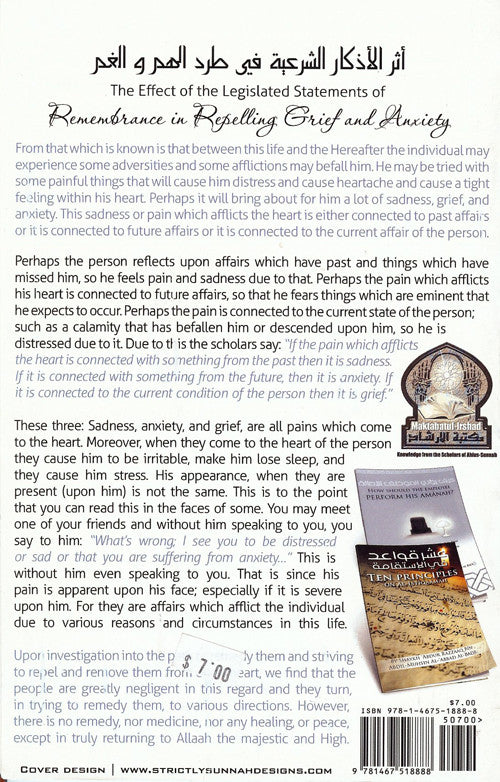
From that which is known is that between this life and the Hereafter the individual may experience some adversities and some afflictions may befall him. He may be tried with some painful things that will cause him distress and cause heartache and cause a tight feeling within his heart. Perhaps it will bring about for him a lot of sadness, grief, and anxiety. This sadness or pain which afflicts the heart is either connected to past affairs or it is connected to future affairs or it is connected to the current affair of the person. Perhaps the person reflects upon affairs which have past and things which have missed him, so he feels pain and sadness due to that. Perhaps the pain which afflicts his heart is connected to future affairs, so that he fears things which are eminent that he expects to occur. Perhaps the pain is connected to the current state of the person; such as a calamity that has befallen him or descended upon him, so he is distressed due to it. Due to th is the scholars say. "If the pain which afflicts the heart is connected with something from the past then it is sadness. If it is connected with something from the future, then it is anxiety. If it is connected to the current condition of the person then it is grief."
Maktabatul-Irshad
مكتبة الارشاد
HOW SHOULD THE EMPL PERFORM HIS AMANAH?
These three: Sadness, anxiety, and grief, are all pains which come to the heart. Moreover, when they come to the heart of the person they cause him to be irritable, make him lose sleep, and they cause him stress. His appearance, when they are present (upon him) is not the same. This is to the point that you can read this in the faces of some. You may meet one of your friends and without him speaking to you, you say to him: "What's wrong: I see you to be distressed or sad or that you are suffering from anxiety..." This is without him even speaking to you. That is since his pain is apparent upon his face; especially if it is severe upon him. For they are affairs which afflict the individual due to various reasons and circumstances in this life.
Publisher
Maktabatul-Irshad
Author
- Shaykh Abdur-Razzaaq ibn Abdul-Muhsin Al-Badr
Shipping and Delivery
We dispatch orders directly from our UK and USA warehouses, offering multiple shipping options to suit your needs. We proudly ship worldwide.
UK Deliveries (from UK warehouse):
Standard shipping typically arrives within 3–4 working days. Expedited delivery takes 2–3 working days. We aim to dispatch orders the same day or next working day, with next-day delivery options available where applicable.
USA Deliveries (from USA warehouse):
Orders usually arrive within 4–7 working days.
Europe (shipped from UK):
Standard delivery takes approximately 6–10 working days, with expedited services available in 3–5 working days.
Canada:
Estimated delivery time is 5–10 working days.
Worldwide Shipping:
International orders generally arrive within 5–20 working days, depending on destination and shipping method selected.
For precise delivery timelines based on your location, please contact us by email and our team will provide detailed information tailored to your address.
Sample Pages - Content
Page:01
أثر الأذكار الشرعية في طرد الهم والغم
The Effect of the Legislated Statements of
Remembrance in Repelling Grief and Anxiety
By: Shaykh 'Abdur-Razzaaq ibn 'Abdul-Muhsin Al-Badr
Page:02
أثر الأذكار الشرعية في طرد الهم و الغم
The Effect of the Legislated Statements of
Remembrance in Repelling Grief and Anxiety.
From that which is known is that between this life and the Hereafter the individual may experience some adversities and some afflictions may befall him. He may be tried with some painful things that will cause him distress and cause heartache and cause a tight feeling within his heart. Perhaps it will bring about for him a lot of sadness, grief, and anxiety. This sadness or pain which afflicts the heart is either connected to past affairs or it is connected to future affairs or it is connected to the current affair of the person. Perhaps the person reflects upon affairs which have past and things which have missed him, so he feels pain and sadness due to that. Perhaps the pain which afflicts his heart is connected to future affairs, so that he fears things which are eminent that he expects to occur. Perhaps the pain is connected to the current state of the person; such as a calamity that has befallen him or descended upon him, so he is distressed due to it. Due to th is the scholars say. "If the pain which afflicts the heart is connected with something from the past then it is sadness. If it is connected with something from the future, then it is anxiety. If it is connected to the current condition of the person then it is grief."
Maktabatul-Irshad
مكتبة الارشاد
HOW SHOULD THE EMPL PERFORM HIS AMANAH?
These three: Sadness, anxiety, and grief, are all pains which come to the heart. Moreover, when they come to the heart of the person they cause him to be irritable, make him lose sleep, and they cause him stress. His appearance, when they are present (upon him) is not the same. This is to the point that you can read this in the faces of some. You may meet one of your friends and without him speaking to you, you say to him: "What's wrong: I see you to be distressed or sad or that you are suffering from anxiety..." This is without him even speaking to you. That is since his pain is apparent upon his face; especially if it is severe upon him. For they are affairs which afflict the individual due to various reasons and circumstances in this life.
Who is Shaykh Abdur Razzaaq Bin Abdul Muhsin Al Badr?
The author’s intention is to make the profound meanings of the Al-Haa’iyah creed poem accessible and relevant. Through clear explanation, Shaykh Al-Badr guides readers into the poem’s theological insights, emphasizing reliance on the Qur’an and Sunnah and refuting deviant doctrinal positions — such as those who reject the Sunnah as a source of belief.