


The Creed of Al-Wasitiyyah by Shaykh al-Islam Ibn Taymiyyah – Authentic Aqeedah Book, Tawheed & Sunni Belief Guide
The Creed of Al-Wasitiyyah by Shaykh al-Islam Ibn Taymiyyah – Authentic Aqeedah Book, Tawheed & Sunni Belief Guide
Publisher:
Dar As Sunnah Publications
Author:
Ibn Taymiyyah
Language:
English
Binding:
Soft Cover
Pages: 176
Size: 16x22 Cm
Couldn't load pickup availability
Collapsible content
Description of islamic Book
The Creed of Al-Wasitiyyah is one of the most important and widely studied texts in Islamic Aqeedah. Written by Shaykh al-Islam Ibn Taymiyyah, the book presents a clear and authentic explanation of Sunni Islamic belief based on the Qur’an and Sunnah.
It was written in response to a request from a judge in Wasit (Iraq), summarizing the beliefs of the saved group (Ahlus-Sunnah wal-Jama’ah). The book is concise yet comprehensive, making it ideal for both beginners and students of knowledge.
From Author:
In this work, the author explains that the correct Islamic creed is based entirely on the Qur’an and the authentic Sunnah, as understood by the early generations of Muslims.
He emphasizes that belief in Allah must be established correctly, particularly regarding His Names and Attributes, without distortion, denial, or comparison. The author outlines the principles of faith that define the saved group (Ahlus-Sunnah wal-Jama’ah).
Page : 01
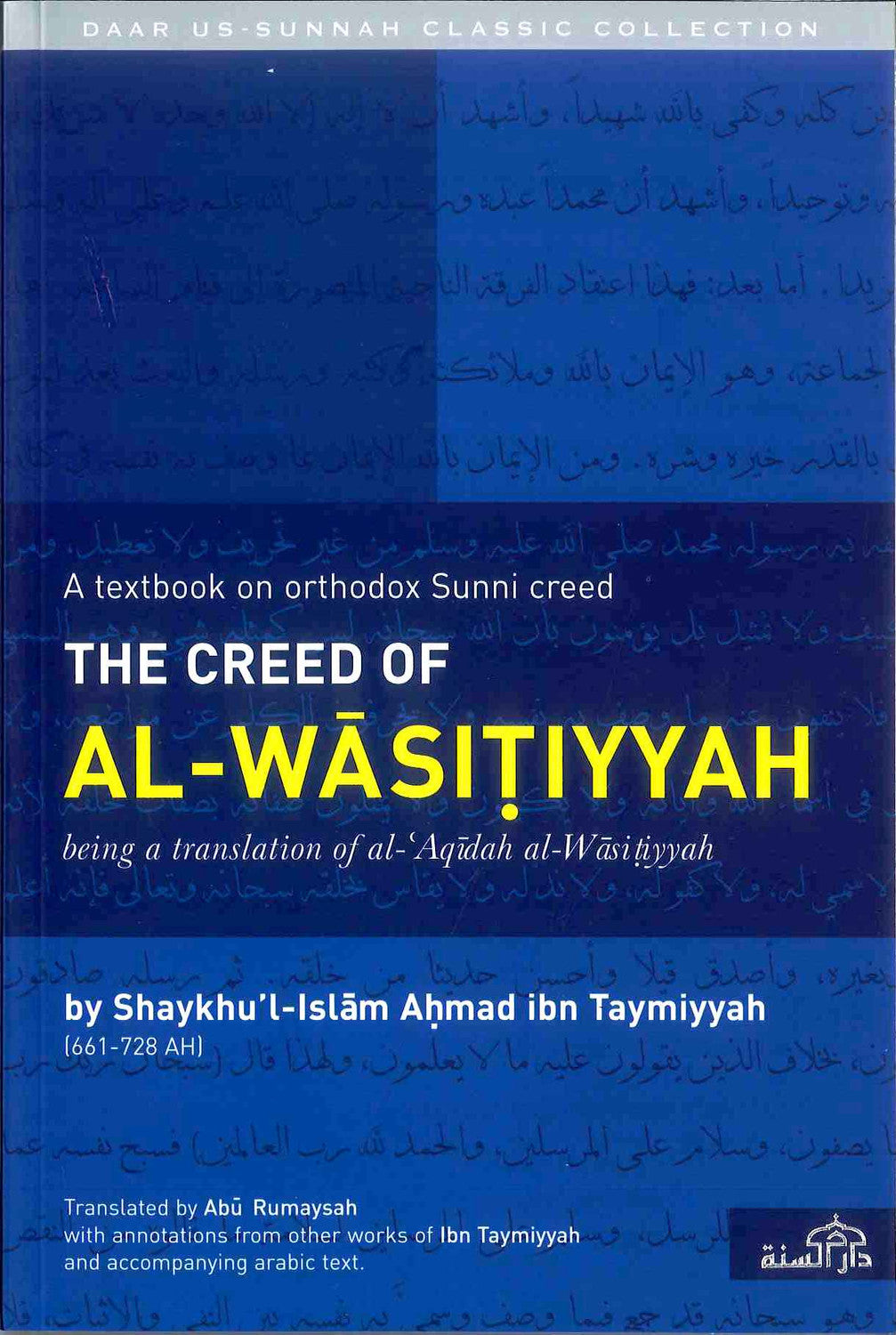
DAAR US-SUNNAH CLASSIC COLLECTION كله وكفى بالله شهيدا ، وأشهد أن لا إله إلا الله وحد ، وتوحيداً، وأشهد أن محمداً عبده ورسوله صلى الله عليه زيدا . أما بعد: فهذا اعتقاد الفرقة الناحية المنصورة إلى قيام النساء الجماعة، وهو الإيمان بالله وملائكن کی کثیر فرار والبعث بعد ال بالقدر خيره وشره . ومن الإيمان بالله الإيمان ما وصف به نفسه في كنا نه به رسوله محمد صلى الله عليه وسلم من غير تحريف و تحريف ولا تعطيل ولا قتيل بل يؤمنون بأن A textbook on orthodox Sunni creed THE CREED OF AL-WASITIYYAH being a translation of al-'Aqidah al-Wasitiyyah بغيره، وأصدق قبلا وأحسن حده مخلفي وتعالى فإنه أعلم by Shaykhu'l-Islām Aḥmad ibn Taymiyyah ن، لخلاف الذين يقولون عليه ما لا يعلمون، ولهذا قال (1) 728-1661) يصفون وسلام على المرسلين، والحمد لله رب العالمين) فسبح نفسه Translated by Abu Rumaysah with annotations from other works of Ibn Taymiyyah and accompanying arabic text. دار السنة للرسل، وهو سبحانه قد جع فيما وصف النفي والاثات
Page: 02
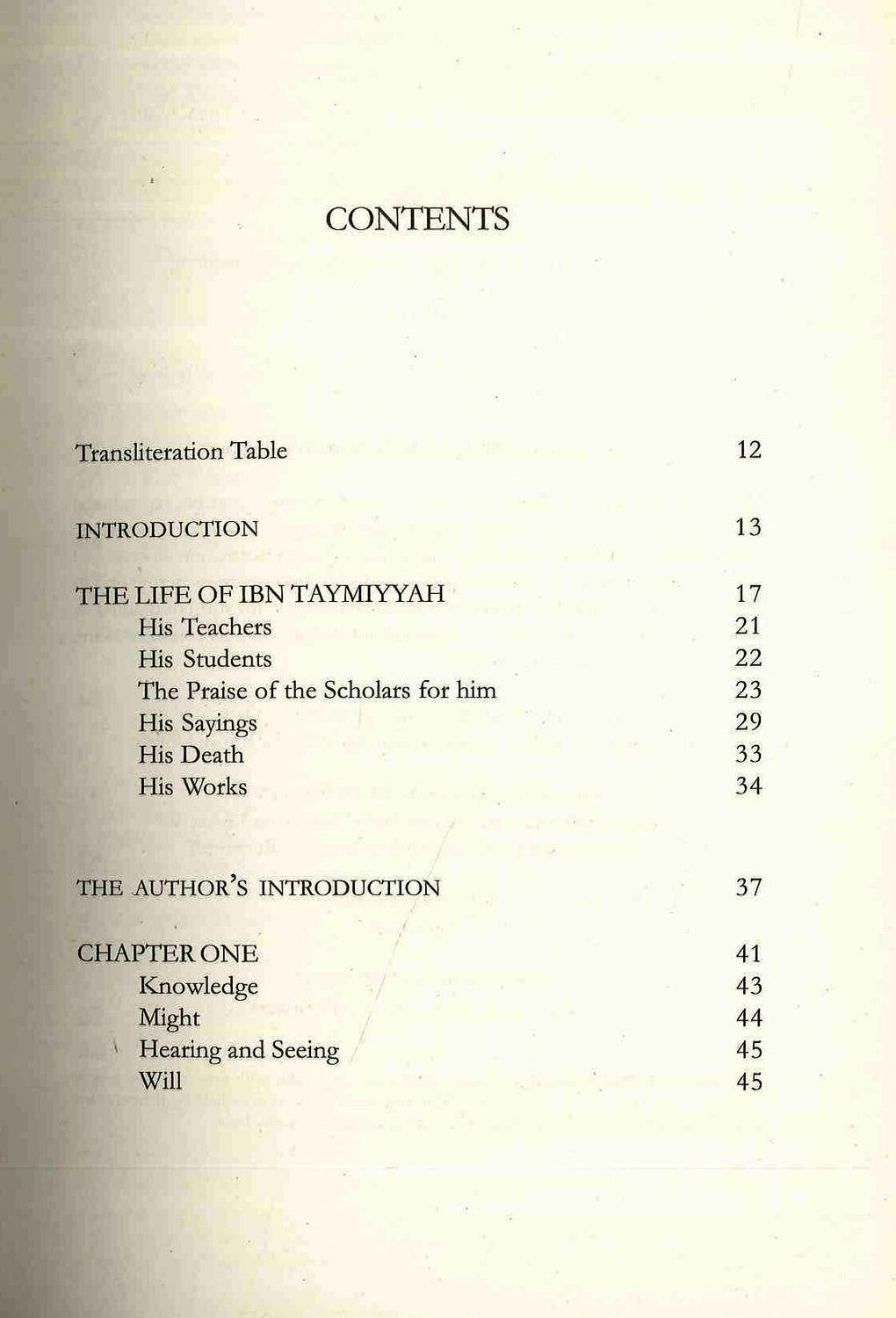
Transliteration Table CONTENTS INTRODUCTION THE LIFE OF IBN TAYMIYYAH His Teachers His Students The Praise of the Scholars for him His Sayings His Death His Works THE AUTHOR'S INTRODUCTION CHAPTER ONE 12 222 223 13 17 21 29 33 34 377 41 Knowledge Might 43 44 Hearing and Seeing Will 45 45
Page : 03
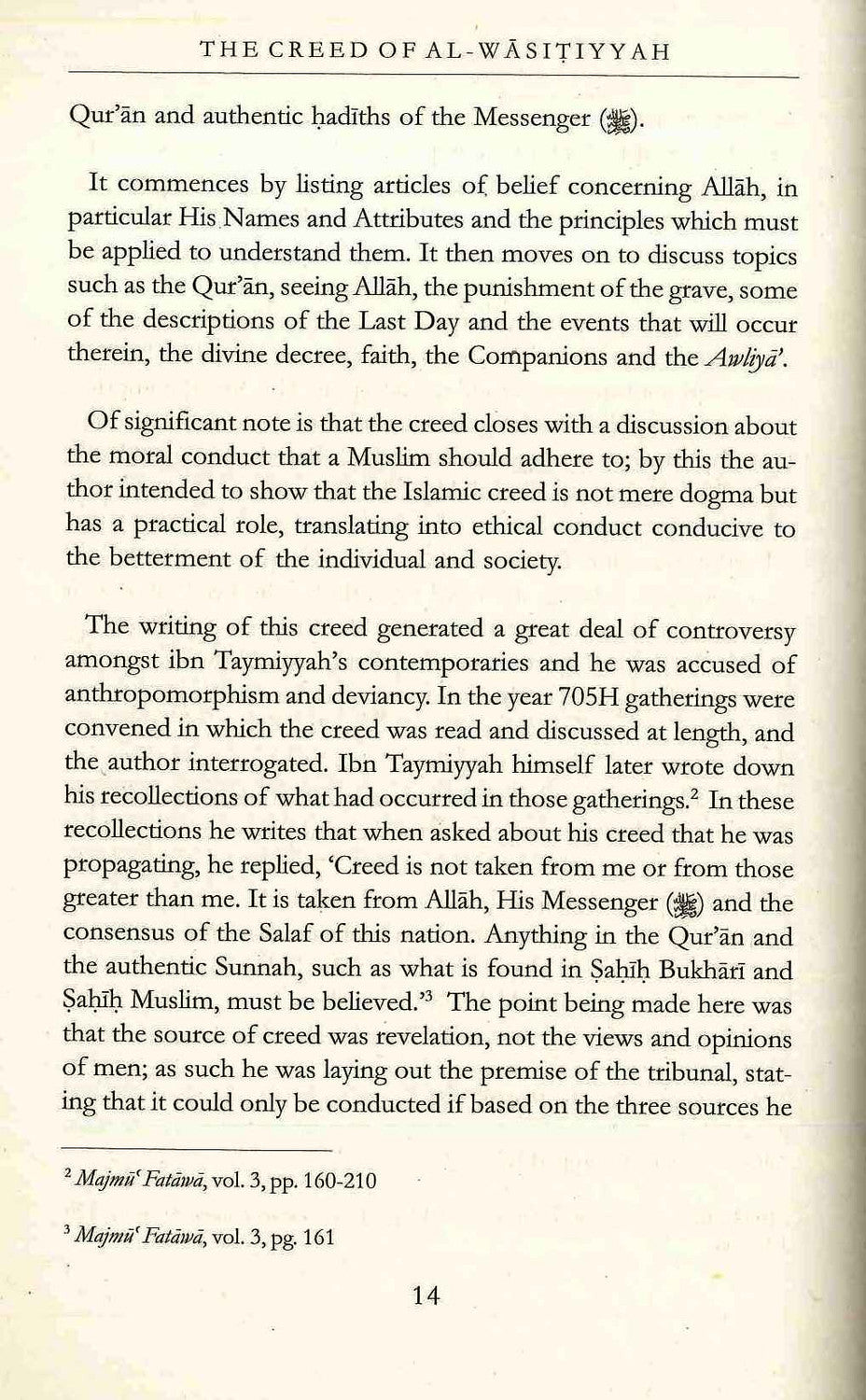
THE CREED OF AL-WASITIYYAH Qur'an and authentic hadiths of the Messenger (). It commences by listing articles of belief concerning Allah, in particular His Names and Attributes and the principles which must be applied to understand them. It then moves on to discuss topics such as the Qur'an, seeing Allah, the punishment of the grave, some of the descriptions of the Last Day and the events that will occur therein, the divine decree, faith, the Companions and the Awliya'. Of significant note is that the creed closes with a discussion about the moral conduct that a Muslim should adhere to; by this the au- thor intended to show that the Islamic creed is not mere dogma but has a practical role, translating into ethical conduct conducive to the betterment of the individual and society. The writing of this creed generated a great deal of controversy amongst ibn Taymiyyah's contemporaries and he was accused of anthropomorphism and deviancy. In the year 705H gatherings were convened in which the creed was read and discussed at length, and the author interrogated. Ibn Taymiyyah himself later wrote down his recollections of what had occurred in those gatherings.2 In these recollections he writes that when asked about his creed that he was propagating, he replied, 'Creed is not taken from me or from those greater than me. It is taken from Allah, His Messenger () and the consensus of the Salaf of this nation. Anything in the Qur'an and the authentic Sunnah, such as what is found in Sahih Bukhārī and Sahih Muslim, must be believed." The point being made here was that the source of creed was revelation, not the views and opinions of men; as such he was laying out the premise of the tribunal, stat- ing that it could only be conducted if based on the three sources he 2 Majmu' Fatāwā, vol. 3, pp. 3 160-210 Majmu' Fatawa, vol. 3, pg. 161 14
Page : 04
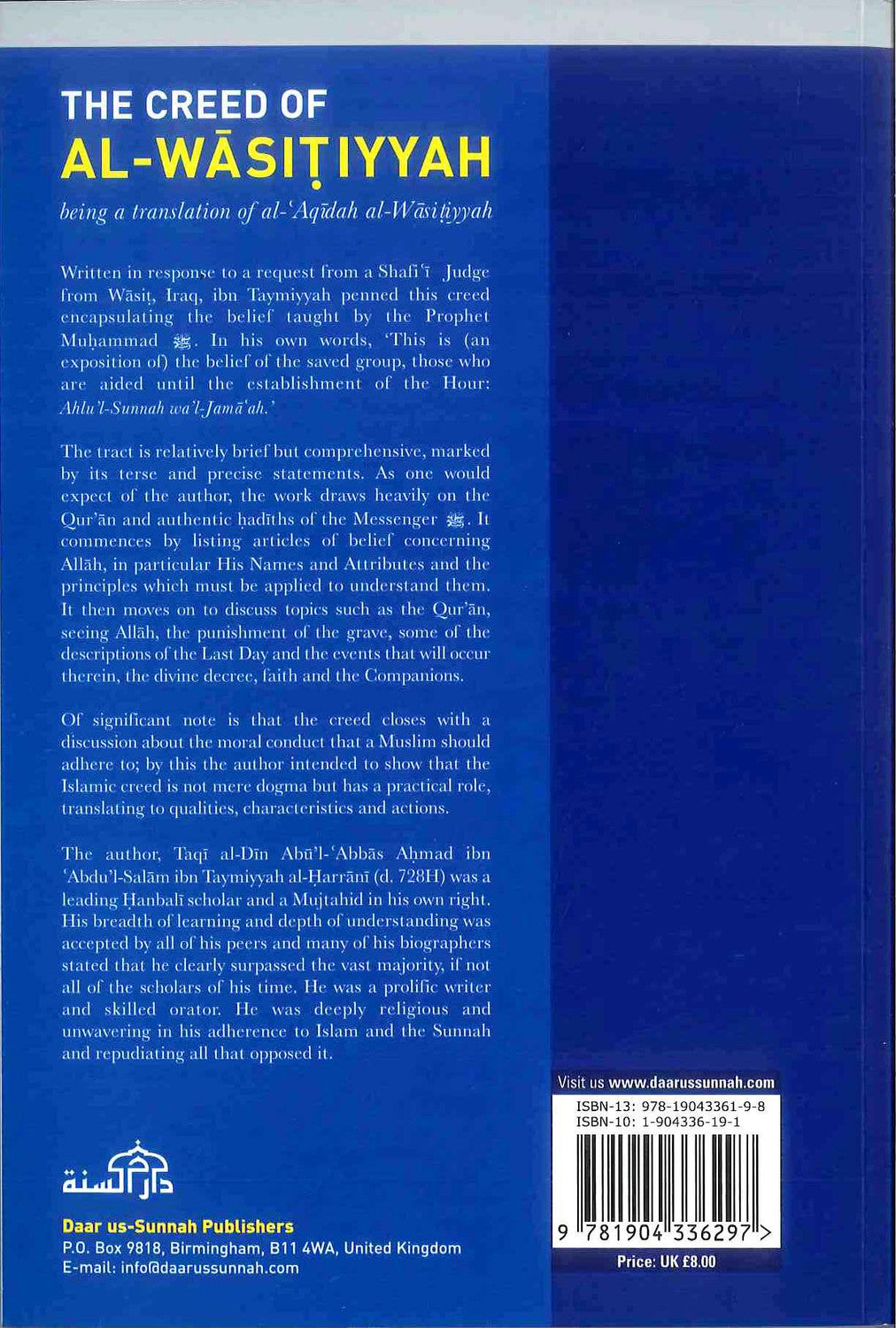
THE CREED OF AL-WASITIYYAH being a translation of al-'Aqidah al-Wasitiyyah Written in response to a request from a Shafi'i Judge from Wasit, Iraq, ibn Taymiyyah penned this creed encapsulating the belief taught by the Prophet Muhammad. In his own words, "This is (an exposition of) the belief of the saved group, those who are aided until the establishment of the Hour: Ahlul-Sunnah wal-Jama'ah.' The tract is relatively brief but comprehensive, marked by its terse and precise statements. As one would expect of the author, the work draws heavily on the Qur'an and authentic hadiths of the Messenger. It commences by listing articles of belief concerning Allah, in particular His Names and Attributes and the principles which must be applied to understand them. It then moves on to discuss topics such as the Qur'an, seeing Allah, the punishment of the grave, some of the descriptions of the Last Day and the events that will occur therein, the divine decree, faith and the Companions. Of significant note is that the creed closes with a discussion about the moral conduct that a Muslim should adhere to; by this the author intended to show that the Islamic creed is not mere dogma but has a practical role, translating to qualities, characteristics and actions. The author, Taqi al-Din Abu'l-'Abbas Ahmad ibn 'Abdu'l-Salam ibn Taymiyyah al-Harrānī (d. 728H) was a leading Hanbali scholar and a Mujtahid in his own right. His breadth of learning and depth of understanding was accepted by all of his peers and many of his biographers stated that he clearly surpassed the vast majority, if not all of the scholars of his time. He was a prolific writer and skilled orator. He was deeply religious and unwavering in his adherence to Islam and the Sunnah and repudiating all that opposed it. دار السنة Visit us www.daarussunnah.com ISBN-13: 978-19043361-9-8 ISBN-10: 1-904336-19-1 Daar us-Sunnah Publishers P.O. Box 9818, Birmingham, B11 4WA, United Kingdom E-mail: info@daarussunnah.com 9781904 336297"> Price: UK £8.00
Publisher
Dar As Sunnah Publications
Author
- Ibn Taymiyyah
Shipping and Delivery
We dispatch orders directly from our UK and USA warehouses, offering multiple shipping options to suit your needs. We proudly ship worldwide.
UK Deliveries (from UK warehouse):
Standard shipping typically arrives within 3–4 working days. Expedited delivery takes 2–3 working days. We aim to dispatch orders the same day or next working day, with next-day delivery options available where applicable.
USA Deliveries (from USA warehouse):
Orders usually arrive within 4–7 working days.
Europe (shipped from UK):
Standard delivery takes approximately 6–10 working days, with expedited services available in 3–5 working days.
Canada:
Estimated delivery time is 5–10 working days.
Worldwide Shipping:
International orders generally arrive within 5–20 working days, depending on destination and shipping method selected.
For precise delivery timelines based on your location, please contact us by email and our team will provide detailed information tailored to your address.
Sample Pages - Content
Page : 01
DAAR US-SUNNAH CLASSIC COLLECTION كله وكفى بالله شهيدا ، وأشهد أن لا إله إلا الله وحد ، وتوحيداً، وأشهد أن محمداً عبده ورسوله صلى الله عليه زيدا . أما بعد: فهذا اعتقاد الفرقة الناحية المنصورة إلى قيام النساء الجماعة، وهو الإيمان بالله وملائكن کی کثیر فرار والبعث بعد ال بالقدر خيره وشره . ومن الإيمان بالله الإيمان ما وصف به نفسه في كنا نه به رسوله محمد صلى الله عليه وسلم من غير تحريف و تحريف ولا تعطيل ولا قتيل بل يؤمنون بأن A textbook on orthodox Sunni creed THE CREED OF AL-WASITIYYAH being a translation of al-'Aqidah al-Wasitiyyah بغيره، وأصدق قبلا وأحسن حده مخلفي وتعالى فإنه أعلم by Shaykhu'l-Islām Aḥmad ibn Taymiyyah ن، لخلاف الذين يقولون عليه ما لا يعلمون، ولهذا قال (1) 728-1661) يصفون وسلام على المرسلين، والحمد لله رب العالمين) فسبح نفسه Translated by Abu Rumaysah with annotations from other works of Ibn Taymiyyah and accompanying arabic text. دار السنة للرسل، وهو سبحانه قد جع فيما وصف النفي والاثات
Page: 02
Transliteration Table CONTENTS INTRODUCTION THE LIFE OF IBN TAYMIYYAH His Teachers His Students The Praise of the Scholars for him His Sayings His Death His Works THE AUTHOR'S INTRODUCTION CHAPTER ONE 12 222 223 13 17 21 29 33 34 377 41 Knowledge Might 43 44 Hearing and Seeing Will 45 45
Page : 03
THE CREED OF AL-WASITIYYAH Qur'an and authentic hadiths of the Messenger (). It commences by listing articles of belief concerning Allah, in particular His Names and Attributes and the principles which must be applied to understand them. It then moves on to discuss topics such as the Qur'an, seeing Allah, the punishment of the grave, some of the descriptions of the Last Day and the events that will occur therein, the divine decree, faith, the Companions and the Awliya'. Of significant note is that the creed closes with a discussion about the moral conduct that a Muslim should adhere to; by this the au- thor intended to show that the Islamic creed is not mere dogma but has a practical role, translating into ethical conduct conducive to the betterment of the individual and society. The writing of this creed generated a great deal of controversy amongst ibn Taymiyyah's contemporaries and he was accused of anthropomorphism and deviancy. In the year 705H gatherings were convened in which the creed was read and discussed at length, and the author interrogated. Ibn Taymiyyah himself later wrote down his recollections of what had occurred in those gatherings.2 In these recollections he writes that when asked about his creed that he was propagating, he replied, 'Creed is not taken from me or from those greater than me. It is taken from Allah, His Messenger () and the consensus of the Salaf of this nation. Anything in the Qur'an and the authentic Sunnah, such as what is found in Sahih Bukhārī and Sahih Muslim, must be believed." The point being made here was that the source of creed was revelation, not the views and opinions of men; as such he was laying out the premise of the tribunal, stat- ing that it could only be conducted if based on the three sources he 2 Majmu' Fatāwā, vol. 3, pp. 3 160-210 Majmu' Fatawa, vol. 3, pg. 161 14
Page : 04
THE CREED OF AL-WASITIYYAH being a translation of al-'Aqidah al-Wasitiyyah Written in response to a request from a Shafi'i Judge from Wasit, Iraq, ibn Taymiyyah penned this creed encapsulating the belief taught by the Prophet Muhammad. In his own words, "This is (an exposition of) the belief of the saved group, those who are aided until the establishment of the Hour: Ahlul-Sunnah wal-Jama'ah.' The tract is relatively brief but comprehensive, marked by its terse and precise statements. As one would expect of the author, the work draws heavily on the Qur'an and authentic hadiths of the Messenger. It commences by listing articles of belief concerning Allah, in particular His Names and Attributes and the principles which must be applied to understand them. It then moves on to discuss topics such as the Qur'an, seeing Allah, the punishment of the grave, some of the descriptions of the Last Day and the events that will occur therein, the divine decree, faith and the Companions. Of significant note is that the creed closes with a discussion about the moral conduct that a Muslim should adhere to; by this the author intended to show that the Islamic creed is not mere dogma but has a practical role, translating to qualities, characteristics and actions. The author, Taqi al-Din Abu'l-'Abbas Ahmad ibn 'Abdu'l-Salam ibn Taymiyyah al-Harrānī (d. 728H) was a leading Hanbali scholar and a Mujtahid in his own right. His breadth of learning and depth of understanding was accepted by all of his peers and many of his biographers stated that he clearly surpassed the vast majority, if not all of the scholars of his time. He was a prolific writer and skilled orator. He was deeply religious and unwavering in his adherence to Islam and the Sunnah and repudiating all that opposed it. دار السنة Visit us www.daarussunnah.com ISBN-13: 978-19043361-9-8 ISBN-10: 1-904336-19-1 Daar us-Sunnah Publishers P.O. Box 9818, Birmingham, B11 4WA, United Kingdom E-mail: info@daarussunnah.com 9781904 336297"> Price: UK £8.00
Who is Ibn Taymiyyah?
Ibn Taymiyyah (1263–1328) was a highly influential Islamic scholar and theologian known for his dedication to the Quran and Sunnah. Originating from Harran, he became a leading figure in the Hanbali school of thought. Ibn Taymiyyah advocated for a pure and direct approach to Islamic teachings, urging Muslims to avoid practices he considered innovations, like saint worship and shrine reverence. His writings span theology, law, and philosophy, leaving a lasting impact on Islamic thought and inspiring later reformers. While his interpretations are sometimes debated, his scholarship remains deeply respected across the Muslim world.