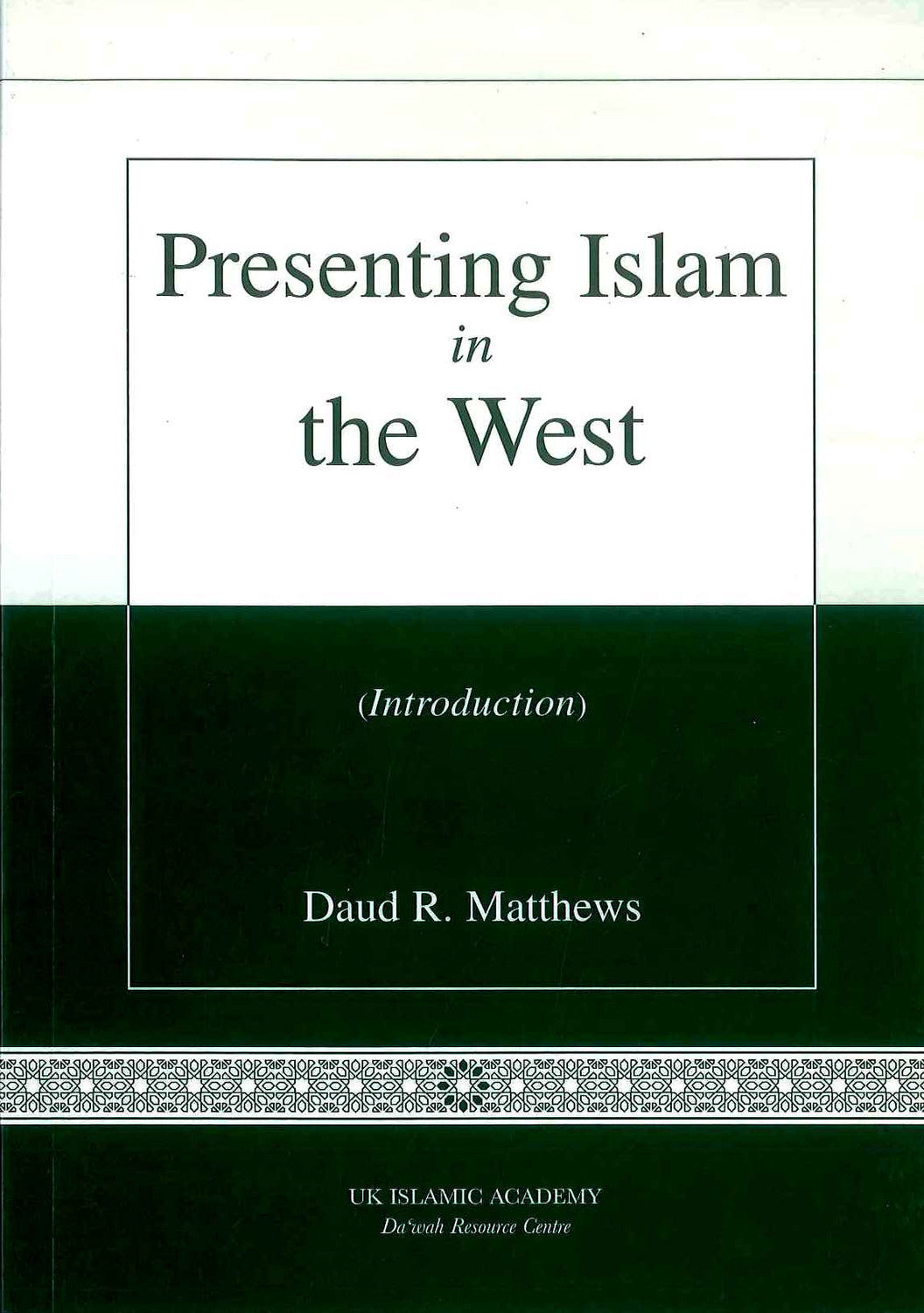
Presenting Islam in the West by Daud R. Matthews is a practical Islamic Da’wah methodology book that explains how to present Islam effectively to Western audiences. Based on the Qur’an and Sunnah, it highlights wisdom, communication skills, cultural understanding, and respectful dialogue in inviting people toward Islam.
From Author:
In Presenting Islam in the West, Daud R. Matthews explains that conveying the message of Islam requires wisdom, knowledge, patience, and cultural awareness. The author emphasizes that Da’wah is not meant to be confrontational but rather invitational, guiding people toward Islam through respectful dialogue and clear understanding. Drawing upon Qur’anic guidance such as inviting people with wisdom and good preaching, the book highlights that the role of a Muslim caller is to present the message clearly while Allah alone guides whom He wills. The author also stresses the importance of understanding Western culture, addressing misconceptions about Islam, and communicating in a way that connects with people’s intellectual and emotional perspectives. The book presents Da’wah as a gradual and nurturing process, similar to caring for a seed until it grows into strong faith.
Page:01
Presenting Islam
in
the West
(Introduction)
Daud R. Matthews
UK ISLAMIC ACADEMY
Da'wah Resource Centre
page:02
Presenting Islam in the West
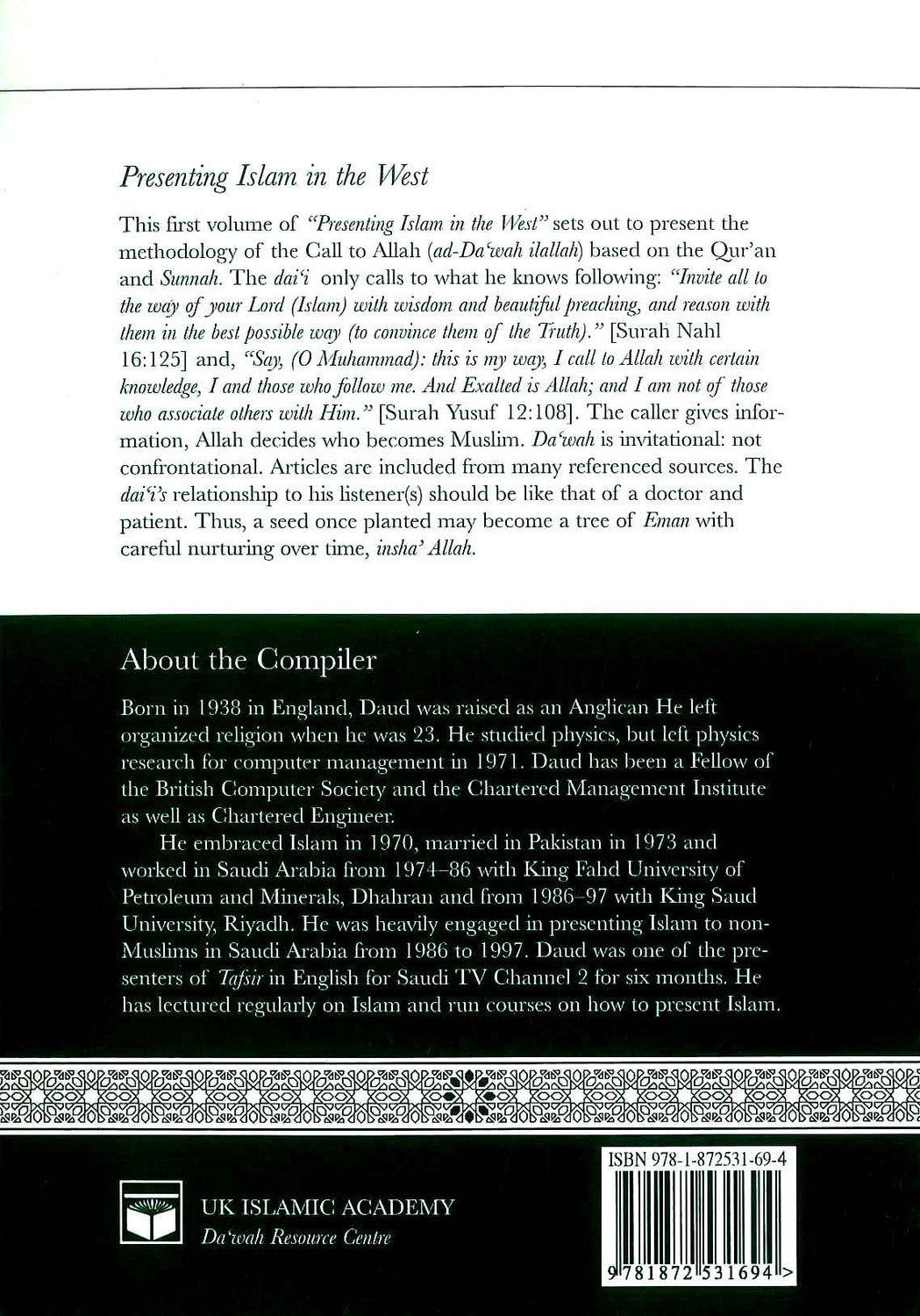
This first volume of "Presenting Islam in the West" sets out to present the methodology of the Call to Allah (ad-Da'wah ilallah) based on the Qur'an and Sunnah. The dai'i only calls to what he knows following: "Invite all to the way of your Lord (Islam) with wisdom and beautiful preaching, and reason with them in the best possible way (to convince them of the Truth)." [Surah Nahl 16:125] and, "Say, (O Muhammad): this is my way, I call to Allah with certain knowledge, I and those who follow me. And Exalted is Allah; and I am not of those who associate others with Him." [Surah Yusuf 12:108]. The caller gives infor- mation, Allah decides who becomes Muslim. Da'wah is invitational: not confrontational. Articles are included from many referenced sources. The dai'i's relationship to his listener(s) should be like that of a doctor and patient. Thus, a seed once planted may become a tree of Eman with careful nurturing over time, insha' Allah.
About the Compiler
Born in 1938 in England, Daud was raised as an Anglican He left organized religion when he was 23. He studied physics, but left physics research for computer management in 1971. Daud has been a Fellow of the British Computer Society and the Chartered Management Institute as well as Chartered Engineer.
He embraced Islam in 1970, married in Pakistan in 1973 and worked in Saudi Arabia from 1974-86 with King Fahd University of Petroleum and Minerals, Dhahran and from 1986-97 with King Saud University, Riyadh. He was heavily engaged in presenting Islam to non- Muslims in Saudi Arabia from 1986 to 1997. Daud was one of the pre- senters of Tafsir in English for Saudi TV Channel 2 for six months. He has lectured regularly on Islam and run courses on how to present Islam.
UK ISLAMIC ACADEMY
Da'wah Resource Centre
ISBN 978-1-872531-69-4
9781872 531694">
Page:03
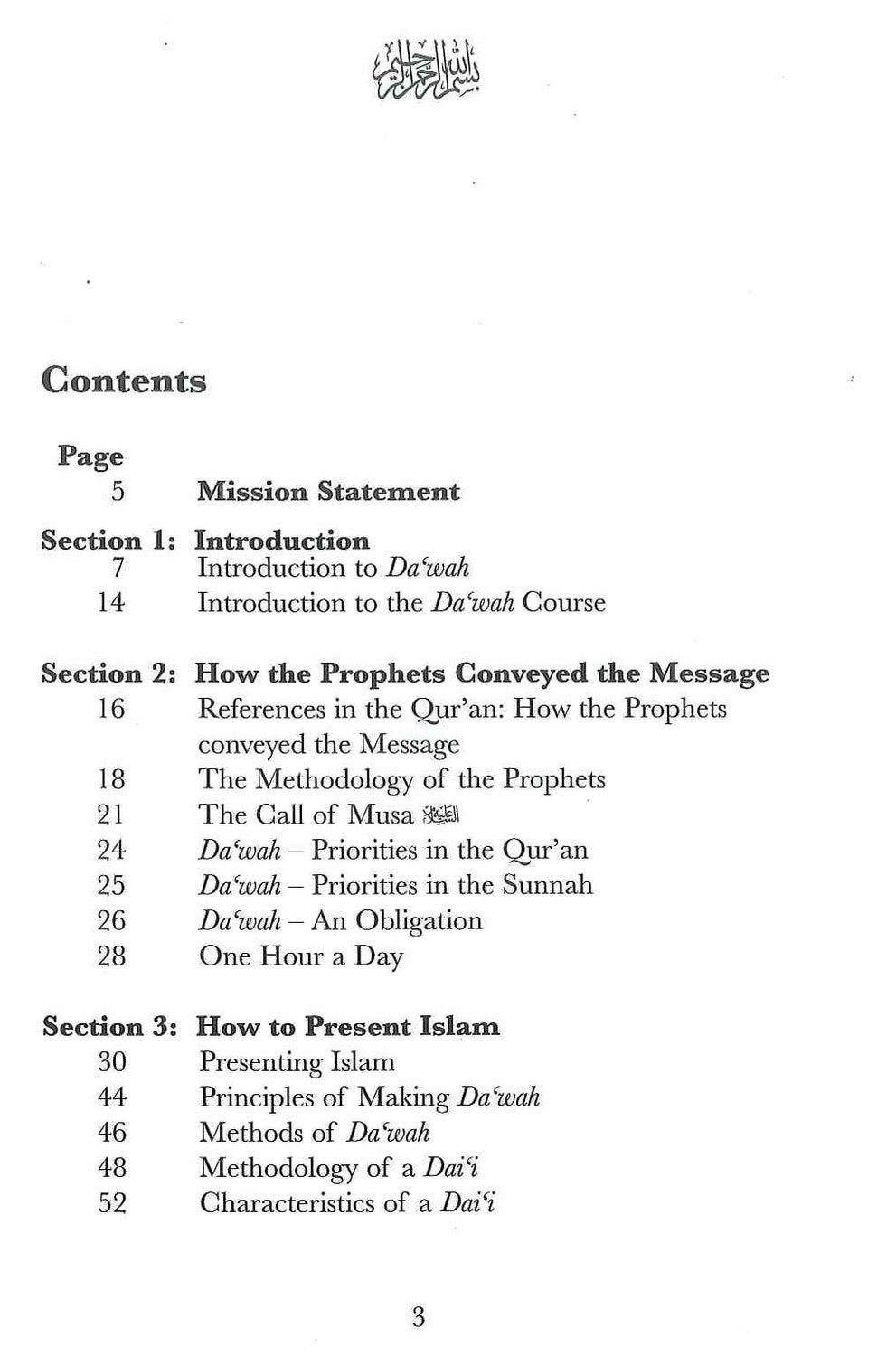
Contents
Page
Mission Statement
Section 1: Introduction
Introduction to Da'wah
Introduction to the Da'wah Course
Section 2: How the Prophets Conveyed the Message
References in the Qur'an: How the Prophets conveyed the Message
The Methodology of the Prophets
The Call of Musa
Da'wah- Priorities in the Qur'an
Da'wah- Priorities in the Sunnah Da'wah- An Obligation One Hour a Day
Section 3: How to Present Islam
Presenting Islam
Principles of Making Da'wah
Methods of Da'wah
Methodology of a Dai'i
Characteristics of a Dai'i
3page:04
SECTION 1
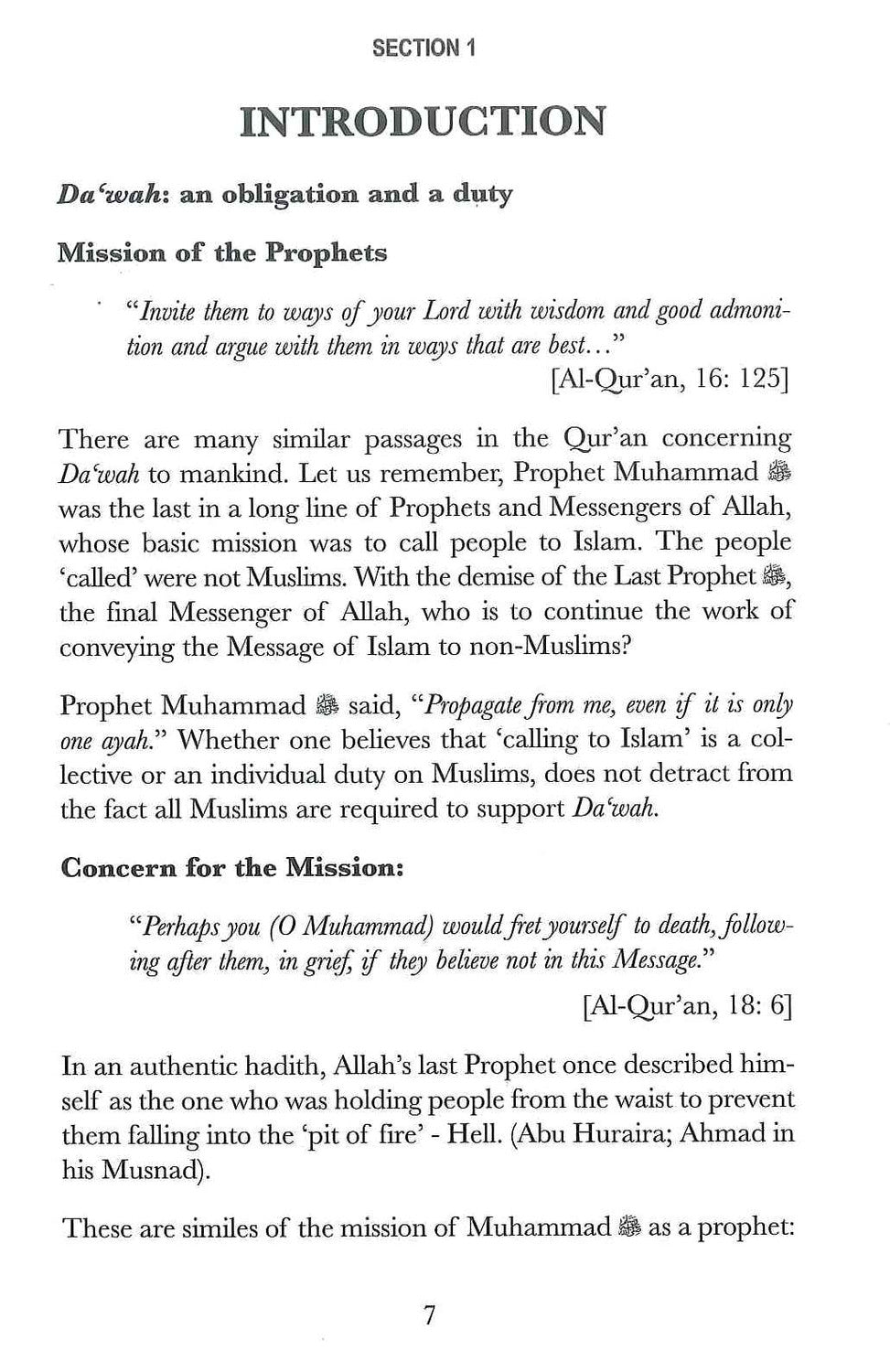
INTRODUCTION
Da'wah: an obligation and a duty
Mission of the Prophets
"Invite them to ways of your Lord with wisdom and good admoni- tion and argue with them in ways that are best..."
[Al-Qur'an, 16: 125]
There are many similar passages in the Qur'an concerning Da'wah to mankind. Let us remember, Prophet Muhammad was the last in a long line of Prophets and Messengers of Allah, whose basic mission was to call people to Islam. The people 'called' were not Muslims. With the demise of the Last Prophet, the final Messenger of Allah, who is to continue the work of conveying the Message of Islam to non-Muslims?
Prophet Muhammad said, "Propagate from me, even if it is only one ayah." Whether one believes that 'calling to Islam' is a col- lective or an individual duty on Muslims, does not detract from the fact all Muslims are required to support Da'wah.
Concern for the Mission:
"Perhaps you (O Muhammad) would fret yourself to death, follow- ing after them, in grief, if they believe not in this Message."
[Al-Qur'an, 18: 6]
In an authentic hadith, Allah's last Prophet once described him- self as the one who was holding people from the waist to prevent them falling into the 'pit of fire' - Hell. (Abu Huraira; Ahmad in his Musnad).
These are similes of the mission of Muhammad as a prophet: