


Enjoying Good Forbidding Evil by Sheikh Al Islam Ibn Taimiyyah
Enjoying Good Forbidding Evil by Sheikh Al Islam Ibn Taimiyyah
Publisher:
Darussalam
Author:
Ibn Taymiyyah
Language:
English
Binding:
Paper back
Pages: 124
Size: 16x21cm
Couldn't load pickup availability
Collapsible content
Description of islamic Book
Enjoying good and forbidding evil refers to the moral principle of promoting positive actions and discouraging harmful behaviors. It involves encouraging acts of kindness, justice, and virtue while standing against wrongdoing, injustice, and harmful practices. This concept plays a crucial role in fostering a society based on ethical values and mutual respect, where individuals work together to create a better, more compassionate world
Page:01
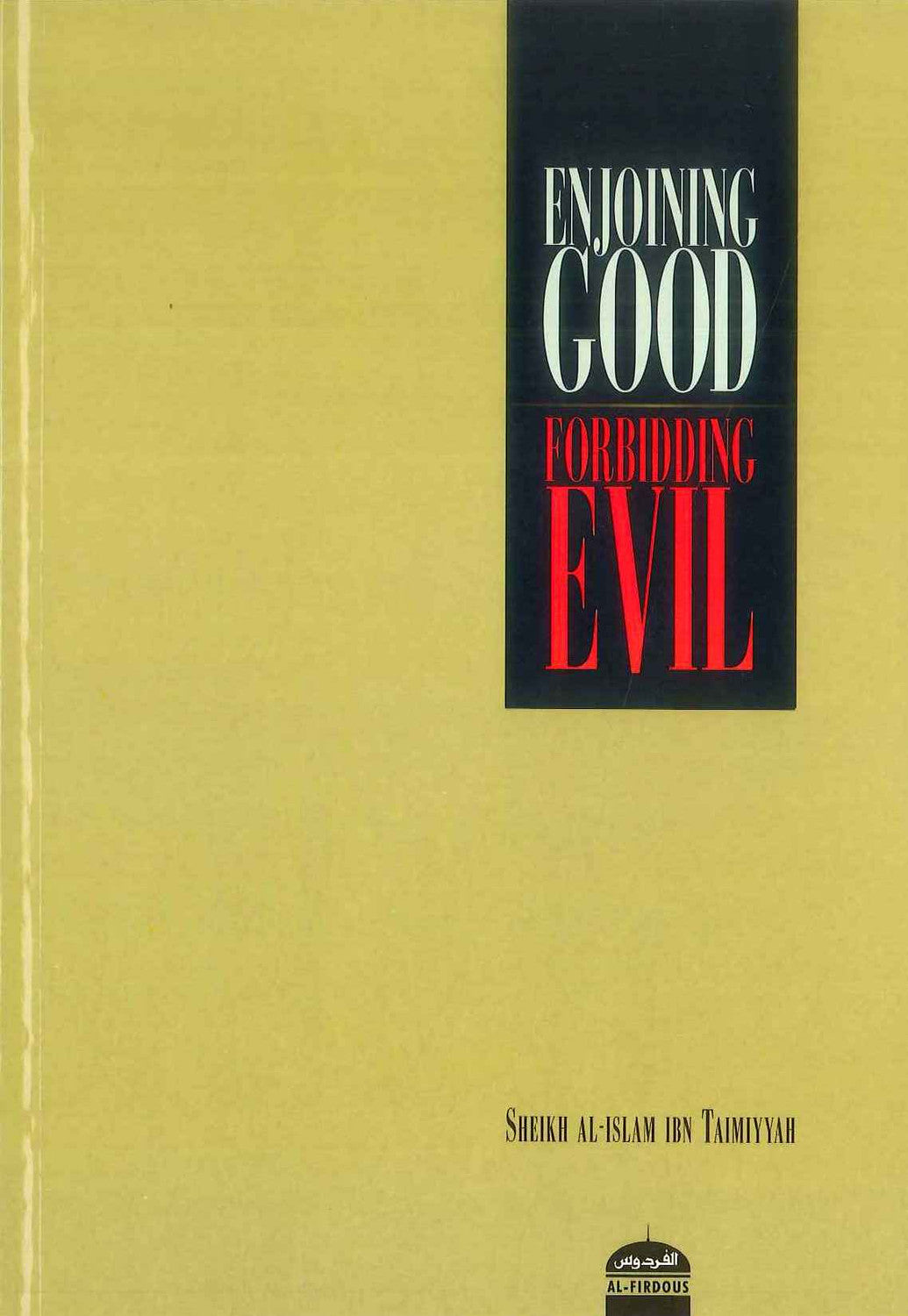
ENJOINING
GOOD
FORBIDDING
EVIL
SHEIKH AL-ISLAM IBN TAIMIYYAH
الفردوس
AL-FIRDOUS
Page:02
ISBN 1-874263-85-X
9781874" 263852′
AL-FIRDOUS LIMITED
•
LONDON
Page:03
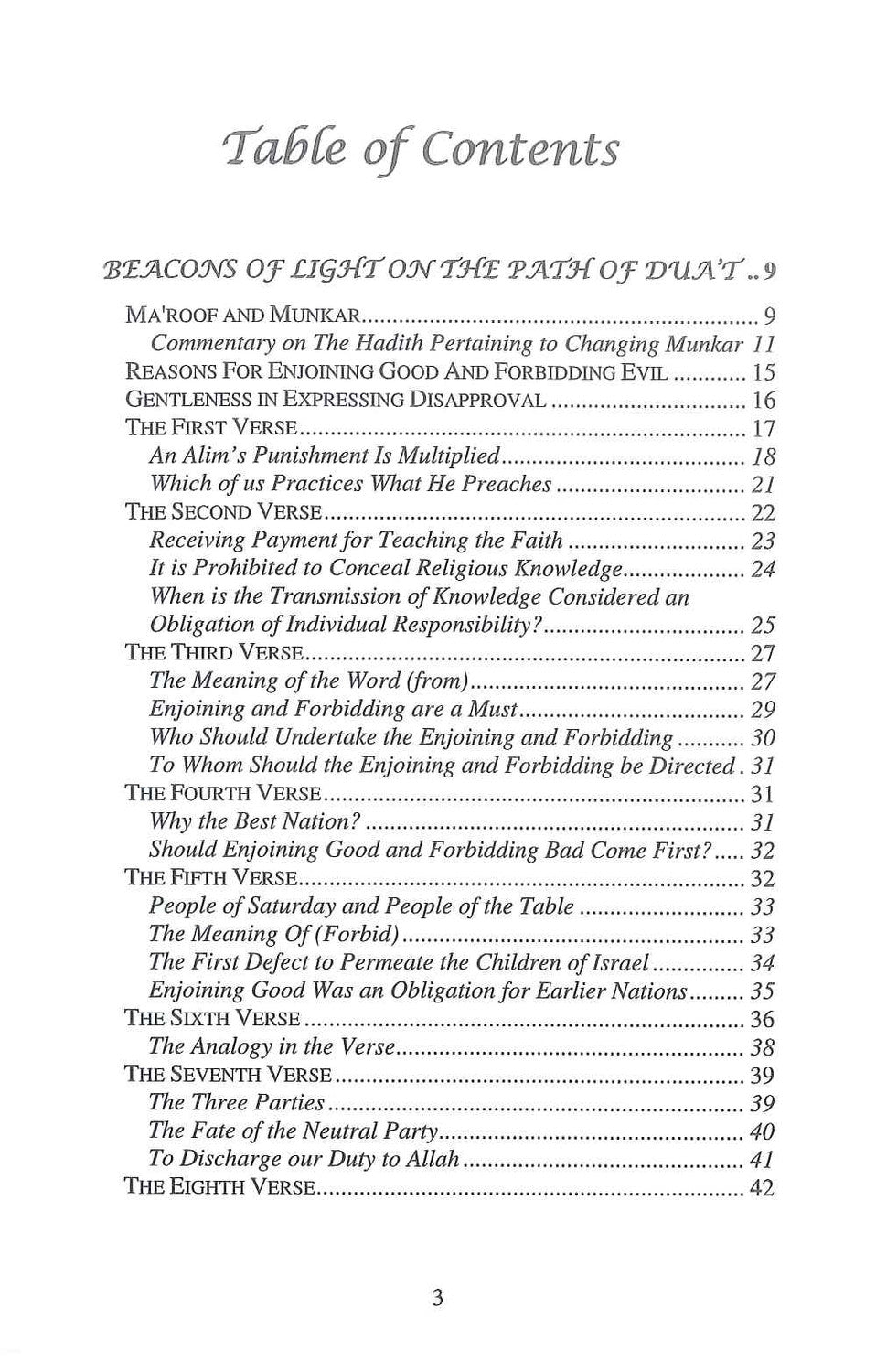
Table of Contents
BEACONS OF LIGHT ON THE PATH OF DUA'T ..9
MA'ROOF AND MUNKAR...
Commentary on The Hadith Pertaining to Changing Munkar 11 REASONS FOR ENJOINING GOOD AND FORBIDDING EVIL GENTLENESS IN EXPRESSING DISAPPROVAL
THE FIRST VERSE.....
An Alim's Punishment Is Multiplied...
Which of us Practices What He Preaches.
THE SECOND VERSE...
Receiving Payment for Teaching the Faith
It is Prohibited to Conceal Religious Knowledge..
When is the Transmission of Knowledge Considered an Obligation of Individual Responsibility?..
THE THIRD
The Meaning of the Word (from)..
Enjoining and Forbidding are a Must..
Who Should Undertake the Enjoining and Forbidding.
To Whom Should the Enjoining and Forbidding be Directed. 31
THE FOURTH VERSE...
Why the Best Nation?
Should Enjoining Good and Forbidding Bad Come First?.....
THE FIFTH VERSE..
People of Saturday and People of the Table
The Meaning Of (Forbid).
The First Defect to Permeate the Children of Israel. Enjoining Good Was an Obligation for Earlier Nations.
THE SIXTH
The Analogy in the Verse.....
THE SEVENTH VERSE..
The Three Parties.
The Fate of the Neutral Party.
To Discharge our Duty to Allah.
THE EIGHTH VERSE...
Page:04
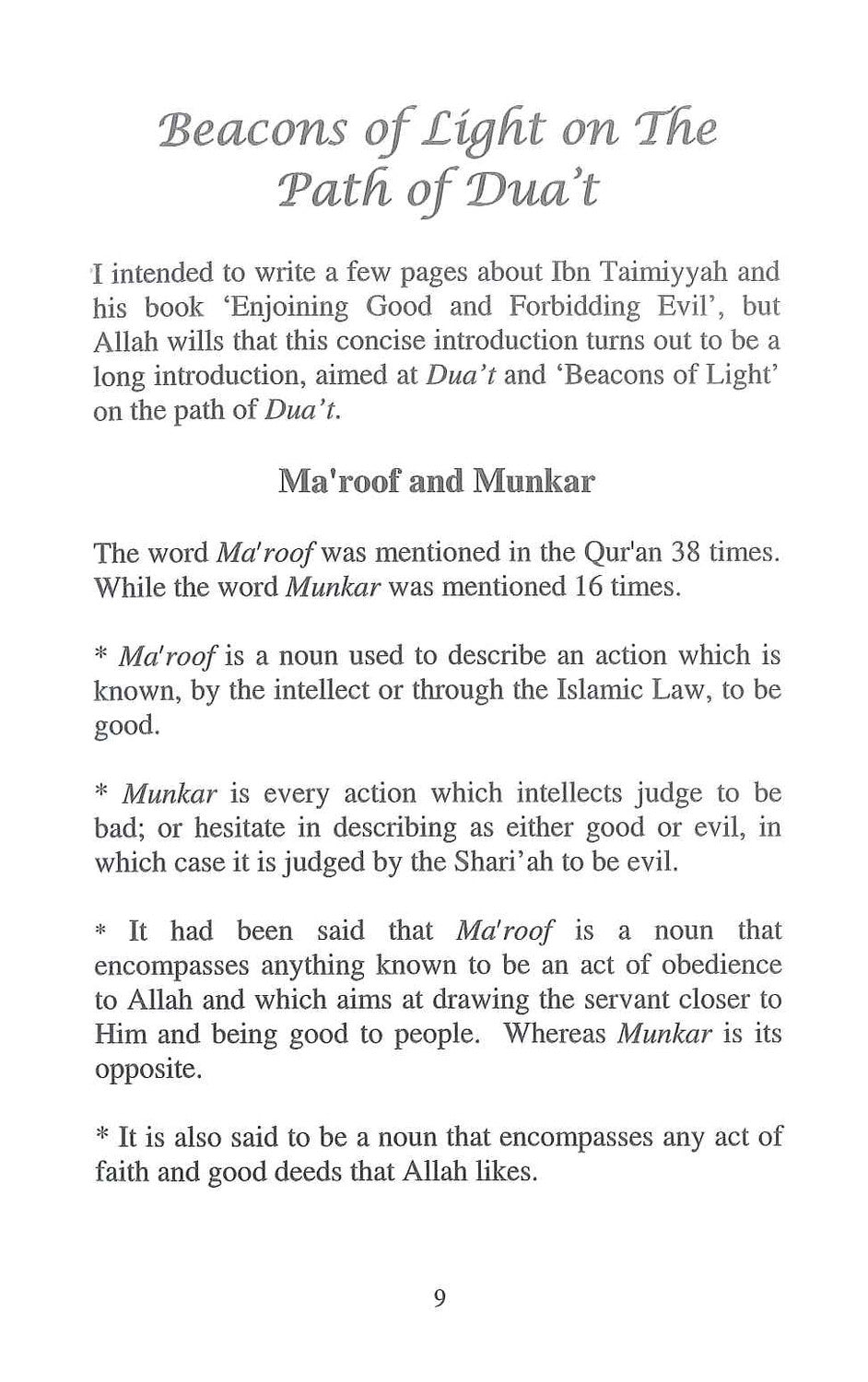
Beacons of Light on The Path of Dua't
I intended to write a few pages about Ibn Taimiyyah and his book 'Enjoining Good and Forbidding Evil', but Allah wills that this concise introduction turns out to be a long introduction, aimed at Dua't and 'Beacons of Light' on the path of Dua't.
Ma'roof and Munkar
The word Ma'roof was mentioned in the Qur'an 38 times. While the word Munkar was mentioned 16 times.
* Ma'roof is a noun used to describe an action which is known, by the intellect or through the Islamic Law, to be good.
* Munkar is every action which intellects judge to be bad; or hesitate in describing as either good or evil, in which case it is judged by the Shari'ah to be evi
Page:04
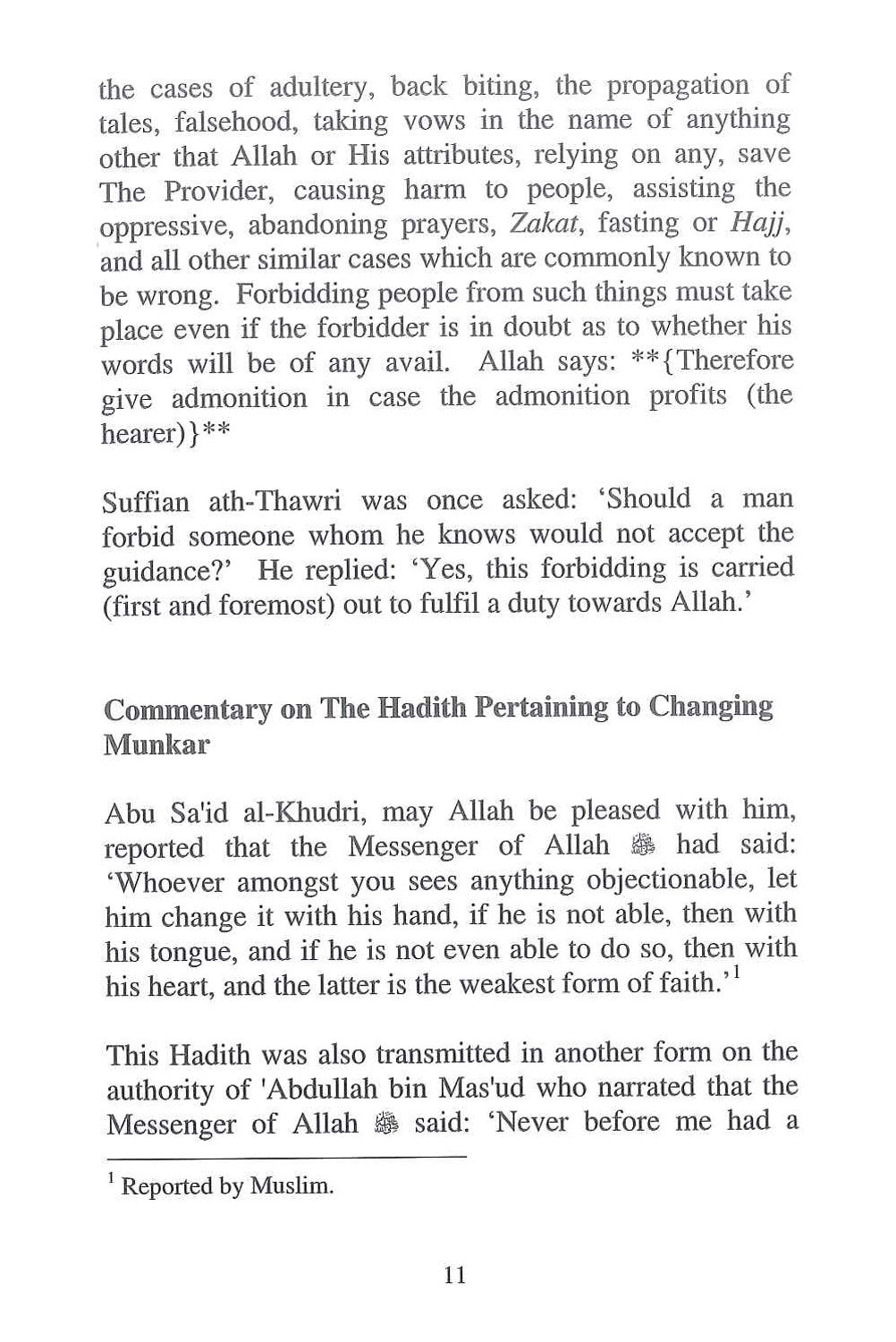
the cases of adultery, back biting, the propagation of tales, falsehood, taking vows in the name of anything other that Allah or His attributes, relying on any, save The Provider, causing harm to people, assisting the oppressive, abandoning prayers, Zakat, fasting or Hajj, and all other similar cases which are commonly known to be wrong. Forbidding people from such things must take place even if the forbidder is in doubt as to whether his words will be of any avail. Allah says: **{Therefore give admonition in case the admonition profits (the hearer)}**
Suffian ath-Thawri was once asked: 'Should a man forbid someone whom he knows would not accept the guidance?' He replied: 'Yes, this forbidding is carried (first and foremost) out to fulfil a duty towards Allah.'
Commentary on The Hadith Pertaining to Changing Munkar
Abu Sa'id al-Khudri, may Allah be pleased with him, reported that the Messenger of Allah had said: 'Whoever amongst you sees anything objectionable, let him change it with his hand, if he is not able, then with his tongue, and if he is not even able to do so, then with his heart, and the latter is the weakest form of faith."1
This Hadith was also transmitted in another form on the authority of 'Abdullah bin Mas'ud who narrated that the Messenger of Allah said: 'Never before me had a
Reported by Muslim.
Publisher
Darussalam
Author
- Ibn Taymiyyah
Shipping and Delivery
We dispatch orders directly from our UK and USA warehouses, offering multiple shipping options to suit your needs. We proudly ship worldwide.
UK Deliveries (from UK warehouse):
Standard shipping typically arrives within 3–4 working days. Expedited delivery takes 2–3 working days. We aim to dispatch orders the same day or next working day, with next-day delivery options available where applicable.
USA Deliveries (from USA warehouse):
Orders usually arrive within 4–7 working days.
Europe (shipped from UK):
Standard delivery takes approximately 6–10 working days, with expedited services available in 3–5 working days.
Canada:
Estimated delivery time is 5–10 working days.
Worldwide Shipping:
International orders generally arrive within 5–20 working days, depending on destination and shipping method selected.
For precise delivery timelines based on your location, please contact us by email and our team will provide detailed information tailored to your address.
Sample Pages - Content
Page:01
ENJOINING
GOOD
FORBIDDING
EVIL
SHEIKH AL-ISLAM IBN TAIMIYYAH
الفردوس
AL-FIRDOUS
Page:02
ISBN 1-874263-85-X
9781874" 263852′
AL-FIRDOUS LIMITED
•
LONDON
Page:03
Table of Contents
BEACONS OF LIGHT ON THE PATH OF DUA'T ..9
MA'ROOF AND MUNKAR...
Commentary on The Hadith Pertaining to Changing Munkar 11 REASONS FOR ENJOINING GOOD AND FORBIDDING EVIL GENTLENESS IN EXPRESSING DISAPPROVAL
THE FIRST VERSE.....
An Alim's Punishment Is Multiplied...
Which of us Practices What He Preaches.
THE SECOND VERSE...
Receiving Payment for Teaching the Faith
It is Prohibited to Conceal Religious Knowledge..
When is the Transmission of Knowledge Considered an Obligation of Individual Responsibility?..
THE THIRD
The Meaning of the Word (from)..
Enjoining and Forbidding are a Must..
Who Should Undertake the Enjoining and Forbidding.
To Whom Should the Enjoining and Forbidding be Directed. 31
THE FOURTH VERSE...
Why the Best Nation?
Should Enjoining Good and Forbidding Bad Come First?.....
THE FIFTH VERSE..
People of Saturday and People of the Table
The Meaning Of (Forbid).
The First Defect to Permeate the Children of Israel. Enjoining Good Was an Obligation for Earlier Nations.
THE SIXTH
The Analogy in the Verse.....
THE SEVENTH VERSE..
The Three Parties.
The Fate of the Neutral Party.
To Discharge our Duty to Allah.
THE EIGHTH VERSE...
Page:04
Beacons of Light on The Path of Dua't
I intended to write a few pages about Ibn Taimiyyah and his book 'Enjoining Good and Forbidding Evil', but Allah wills that this concise introduction turns out to be a long introduction, aimed at Dua't and 'Beacons of Light' on the path of Dua't.
Ma'roof and Munkar
The word Ma'roof was mentioned in the Qur'an 38 times. While the word Munkar was mentioned 16 times.
* Ma'roof is a noun used to describe an action which is known, by the intellect or through the Islamic Law, to be good.
* Munkar is every action which intellects judge to be bad; or hesitate in describing as either good or evil, in which case it is judged by the Shari'ah to be evi
Page:04
the cases of adultery, back biting, the propagation of tales, falsehood, taking vows in the name of anything other that Allah or His attributes, relying on any, save The Provider, causing harm to people, assisting the oppressive, abandoning prayers, Zakat, fasting or Hajj, and all other similar cases which are commonly known to be wrong. Forbidding people from such things must take place even if the forbidder is in doubt as to whether his words will be of any avail. Allah says: **{Therefore give admonition in case the admonition profits (the hearer)}**
Suffian ath-Thawri was once asked: 'Should a man forbid someone whom he knows would not accept the guidance?' He replied: 'Yes, this forbidding is carried (first and foremost) out to fulfil a duty towards Allah.'
Commentary on The Hadith Pertaining to Changing Munkar
Abu Sa'id al-Khudri, may Allah be pleased with him, reported that the Messenger of Allah had said: 'Whoever amongst you sees anything objectionable, let him change it with his hand, if he is not able, then with his tongue, and if he is not even able to do so, then with his heart, and the latter is the weakest form of faith."1
This Hadith was also transmitted in another form on the authority of 'Abdullah bin Mas'ud who narrated that the Messenger of Allah said: 'Never before me had a
Reported by Muslim.
Who is Ibn Taymiyyah?
Ibn Taymiyyah (1263–1328) was a highly influential Islamic scholar and theologian known for his dedication to the Quran and Sunnah. Originating from Harran, he became a leading figure in the Hanbali school of thought. Ibn Taymiyyah advocated for a pure and direct approach to Islamic teachings, urging Muslims to avoid practices he considered innovations, like saint worship and shrine reverence. His writings span theology, law, and philosophy, leaving a lasting impact on Islamic thought and inspiring later reformers. While his interpretations are sometimes debated, his scholarship remains deeply respected across the Muslim world.