


The Explanation of the Four Principles of Shirk by Shaykh Ibn Baaz | Islamic Aqeedah
The Explanation of the Four Principles of Shirk by Shaykh Ibn Baaz | Islamic Aqeedah
Publisher:
Maktabatul-Irshad
Author:
Shaykh Ibn Baaz
Language:
English
Binding:
Paper back
Pages: 54
Size: 5.8 x 8.3 in
Impossible de charger la disponibilité du service de retrait


Contenu réductible
Description du livre
The Explanation of the Four Principles of Shirk by Shaykh Ibn Baaz | Islamic Aqeedah
The Explanation of the Treatise The Four Principles of Shirk by Shaykh Ibn Baaz is an Islamic study book addressing the fundamental concepts of Tawheed (the oneness of Allah) and Shirk (associating partners with Allah). It explains four important principles that help readers understand the distinction between correct worship and practices that contradict Islamic monotheism.
Understand Tawheed & Avoid Shirk
This book highlights the importance of directing worship sincerely to Allah alone and developing a sound understanding of Islamic belief. Through scholarly explanation, it helps readers study the meaning of Shirk, recognise its significance in Islamic theology, and appreciate why preserving Tawheed is central to a Muslim’s faith.
A Valuable Resource for Islamic Studies
Suitable for students of knowledge, Islamic study circles, and readers seeking to strengthen their understanding of Aqeedah. This 54-page English paperback is a useful addition to an Islamic library for learning about Tawheed, worship, and foundational Islamic beliefs.
From Author:
Shaykh Ibn Baaz's "The Explanation of the Treatise The Four Principles of Shirk" is an incisive and academic work that digs into the core Islamic idea of shirk (associating partners with Allah) and the significance of knowing its different manifestations. This dissertation explains the four principles of shirk in detail, giving readers a thorough understanding of this key topic in Islamic theology.
Scholarly Exegesis:
A highly regarded Islamic scholar, Shaykh Ibn Baaz, presents a scholarly and in-depth explanation of the treatise, based on Islamic jurisprudence and classical Islamic writings.
Shirk Clarification:
The book clarifies the notion of shirk and its numerous forms, assisting readers in understanding the gravity of associating others with Allah.
Monotheism in Islam:
It underlines the essential premise of Islamic monotheism and its central importance in a Muslim's faith.
Worship and Correct Belief:
The treatise instructs readers on how to retain accurate ideas and worship while avoiding the temptations of shirk.
Examples in Practice:
It presents concrete examples and scenarios to demonstrate the many types of shirk and how they develop in everyday life.
Spiritual Intelligence:
The book urges readers to cultivate spiritual awareness and a deeper understanding of Tawhid (Allah's oneness) and the importance of upholding it.
Interfaith Cooperation:
The work, while founded in Islamic theology, promotes interfaith understanding by articulating Islam's basic notion of monotheism.
Éditeur
Maktabatul-Irshad
Auteur
- Shaykh Ibn Baaz
Shipping and Delivery
We dispatch orders directly from our UK and USA warehouses, offering multiple shipping options to suit your needs. We proudly ship worldwide.
UK Deliveries (from UK warehouse):
Standard shipping typically arrives within 3–4 working days. Expedited delivery takes 2–3 working days. We aim to dispatch orders the same day or next working day, with next-day delivery options available where applicable.
USA Deliveries (from USA warehouse):
Orders usually arrive within 4–7 working days.
Europe (shipped from UK):
Standard delivery takes approximately 6–10 working days, with expedited services available in 3–5 working days.
Canada:
Estimated delivery time is 5–10 working days.
Worldwide Shipping:
International orders generally arrive within 5–20 working days, depending on destination and shipping method selected.
For precise delivery timelines based on your location, please contact us by email and our team will provide detailed information tailored to your address.
Exemples de pages - Contenu
Page:01
القواعد الأربع
Explanation of the treatise: The Four Principles of Shirk
Explained By:
رحمنامه Shaykh Abdul-Azeez Bin Abdillah Bin Baaz
Page:02
شرح القواعد الأربع
Explanation of the treatise:
The Four Principles of Shirk
Online Islamic Book
So when the believer becomes aware that when Shirk is mixed with Tawheed, it becomes corrupted just like when al-hadath corrupts purification: then he should become aware that it is necessary to learn Tawheed and Shirk as it really is so he would not fall into Shirk.
Because Tawheed by definition is the religion of Allah, it is Islam, it is the guidance. So when the person does any type of Shirk this nullifies his Islam, this nullifies His religion.
For example, he supplicates to the deceased seeking the aid of them. He curses/insults the religion or Allah or His messenger, making mockery of Allah or His messenger or the religion believing making permissible what Allah had made impermissible from what is known from the religion: out of necessity, like committing fornication and the likes. Thus when he carries out any one of the nullifiers of Islam then he has nullified his religion.
Page:03
Explanation of the Trestise: The Feur Principles of Shirk
INTRODUCTION
Por indeed these four principles that the author, Shaykh Muhammad bin 'Abdul-Wahhab may Allah have mercy upon him, in it had cautioned about are extremely important principles. So whoever understands and comprehends them well; then he has understood the religion of the Mushrüreen (Polytheists) and has understood the religion of the Muslims.
Majority of the creation do not understand these principles [of shirk]; hecause of that these princiales obscure are for them. Consequently they erialas worshipping graves, those whom inhabit these graves, the 'Awifyaah of Allah, worshipping trees and stones beside Allah, while they think that they are upon something due on their level of ignorance of the true meaning of Tawheed and the reality of Shirk (Polytheism).
The author of these principles is Shaykh-ul-Intam Muhammad bin Abdil-Wahhab, may Allah have mercy upon him; He was the reviver of what was obliterated and wiped out from the Muslim world in this Arabian Peninsula in the second half of the twelve century. He
passed away in the year 1206 after bijrah.
Explanation of the Treatise: The Four Principles of Shirk 5
ARABIC TEXT OF THE FOUR PRINCIPLES OF SHIRK
أسْأَلُ اللهَ الْكَرِيمَ رَبَّ الْعَرْشِ الْعَظِيمِ أَنْ يَتَوَلاكَ فِي الدُّنْيَا وَالآخِرَةِ وَأَنْ يَجْعَلَكَ مُبَارَكًا أَيْنَمَا كُنتَ، وَأَنْ يَجْعَلَكَ مِمَّنْ إِذَا أُعْطِيَ شَكَرَ، وَإِذَا
ابْتُلِ صَبَرَ، وَإِذَا أَذَنبُ اسْتَغْفَرَ فَإِنَّ هَؤُلَاءِ الثَّلَاثُ عُنُوَانُ السَّعَادَةِ
اعْلَمْ أَرْشَدَكَ اللَّهُ لِطَاعَيْهِ: أَنَّ الْخَيفِيَّة مِلَّةَ إِبْرَاهِيمَ: أَنْ تَعْبُدَ اللَّهَ وَحدَهُ مُخْلِصًا لَهُ الذِينَ، كَمَا قَالَ تَعَالَى: ﴿وَمَا خَلَقْتُ الْجِنَّ وَالإِنه وَالا ليَعْبُدُونِ) [الناريات: 56]، فَإِذَا عَرَفْتَ أَنَّ اللَّهَ خَلَقَكَ لِعِبَادَتِهِ؛ فَاعْلَمْ أَى الْعِبَادَةَ لَا تُسَمَّى عِبَادَةَ إِلَّا مَعَ التَّوْحِيدِ، كَمَا أَنَّ الصَّلَاةَ لَا تُسَمَّى صَلَاةٌ إلا مع الطَّهَارَةِ فَإِذَا دَخَلَ اليَرُكَ فِي الْعِبَادَةِ فَسَدَتْ، كَالْحَدَثِ إِذَا دَخَلَ في الظَّهَارِ، فَإِذَا عَرَفْتَ أَنَّ القِرْك إذا خَالَطَ الْعِبَادَةِ أَفْسَدَهَا، وَأَحْبَط العَمَلَ، وَصَارَ صَاحِبُهُ مِنَ الخَالِدِينَ فِي النَّارِ. عَرَفْتَ أَنَّ أَهَمِّ مَا عَلَيْكَ مَعْرِفَةٌ ذَلِكَ لَعَلَّ الله أن يُخَلِصَكَ مِنْ هَذِهِ الشَّبَكَ، وَهِيَ الشرْكُ بِاللَّهِ
الَّذِي قَالَ الله تَعَالَى فِيهِ: إِنّ الله لا يَغْفِرُ أَن يُشْرَكَ بِهِ وَيَغْفِرُ مَا دُونَ
Page:04
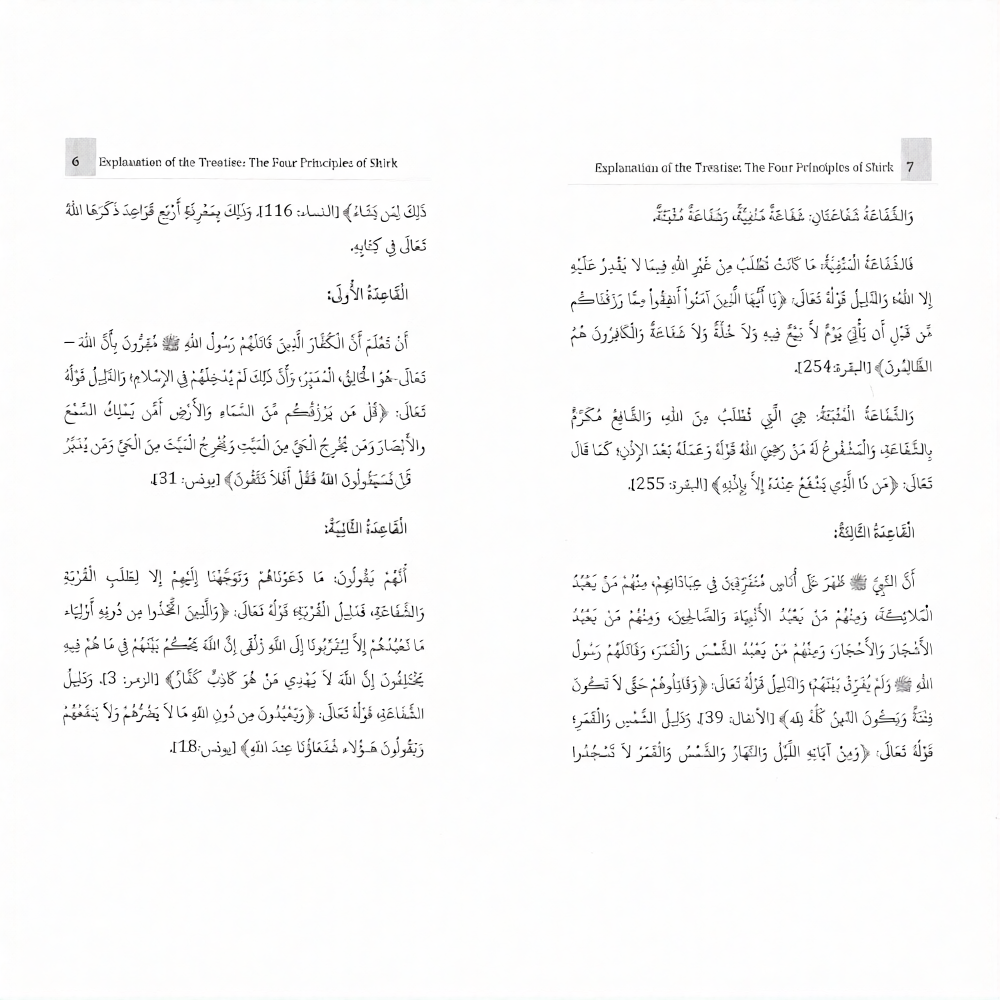
Explanation of the Treatise: The Four Principles of Shirk 7
وَالشَّفَاعَةُ شَفَاعَتَانِ: شَفَاعَةٌ مُلْفِيَّةٌ وَشَنَاعَةٌ مُثْبَتَةٌ.
فالفقاعة المَنْفِيَّةُ: مَا كَانَتْ تُطْلَبُ مِن غَيْرِ اللهِ فِيمَا لا يَقْدِرُ عَلَيْهِ إلا الله وَالسّليل قَوْلُهُ تَعَالَى: يَا أَيُّهَا الَّذِينَ آمَنُوا أَنفِقُوا مِمَّا رَزَقْنَاكُم مِّن قَبْلِ أَن يَأْتِي يَوْمٌ لا بَيْعٌ فِيهِ وَلَا خُلْةٌ وَلَا شَفَاعَةُ وَالْكَافِرُونَ هُمُ الظَّالِمُونَ) [البقرة: 254].
وَالشَّفَاعَةُ الْمُثْبَتَةُ فِي الَّتِي تَطْلَبُ مِنَ اللَّهِ وَالنَّافِعُ مُكَرَّم بِالشَّفَاعَةِ وَالْمَشْفُوعُ لَهُ مَنْ رَضِيَ اللهُ قَوْلَهُ وَعَمَلَهُ بَعْدَ الإِذْنِ؛ كَمَا قَالَ تَعَالَى: (مَن ذَا الَّذِي يَشْفَعُ عِنْدَهُ إِلا بِإِذْبو) (البقرة: 1255
الْقَاعِدَةُ الصَّالِئَةُ:
أن الذي ظهر على أناس مُتَفَرِّقِينَ فِي عِبَادَانِهِمْ، مِنْهُمْ مَنْ يَعْبُدُ الْمَلائِكَةَ، وَمِنْهُمْ مَنْ يَعْبُدُ الأَنْبِيَاءَ وَالصَّالِحِينَ، وَمِنْهُمْ مَنْ يَعْبُدُ الأَشْجَارَ وَالأحْجَارَ، وَمِنْهُمْ مَنْ يَعْبُدُ الشَّمْسَ وَالْقَمَرَ، وَقَاتَلَهُمْ رَسُولُ اللَّهِ وَلَمْ يُفَرِّقُ بَيْنَهُمْ، وَالتَليلُ قَوْلُهُ تَعَالَى: ﴿ وَقَاتِلُوهُمْ حَتَّى لَا تَكُونَ فِتْنَةٌ وَيَكُونَ اللينُ كُله لله) [الأنفال: 139 وَدَليلُ الشَّمْسِ وَالْقَمَرِ؛ قَوْلُهُ تَعَالَى: وَمِنْ آيَاتِهِ اللَّيْلُ وَالنَّهَارُ وَالشَّمْسُ وَالْقَمَرُ لاَ تَسْجُدُوا
ذَلِكَ لِمَن يَشَاءُ) [النساء: 116) وَذَلِكَ بِمَعْرِنَةٍ أَرْبَعِ قَرَاعِدَ ذَكَرَهَا اللَّهُ
تَعَالَى في كتابه. الْقَاعِدَةُ الأُولى:
أَنْ تَعْلَمَ أَنَّ الْكُفَّارَ الَّذِينَ قَاتَلَهُمْ رَسُولُ اللهِ صلى الله عليه وسلم مُبْرُونَ بِأَنَّ الله - تَعَالَى هُوَ الخَالِقُ الْمُعَبَرُ، وَأَنَّ ذَلِكَ لَمْ يُدْخِلْهُمْ فِي الإِسْلامِ وَالدَليلُ قَوْلُهُ تَعَالَى: (قُلْ مَن يَرْزُقُكُم مِّنَ السَّمَاءِ وَالْأَرْضِ أَمَّن يَمْلِكُ السَّمْعَ والْأَبْصَارَ وَمَن يُخْرِجُ الْحَيَّ مِنَ الْمَيِّتِ وَيُخْرِجُ الْمَيِّتَ مِنَ الْحَيِّ وَمَن يُنَبِّرُ قل نَسَيَقُولُونَ اللهُ فَقُلْ أَفَلا تَتَّقُونَ) [يونس: 131 الْقَاعِدَةُ الثَّانِيَةُ:
أَنَّهُمْ يَقُولُونَ: مَا دَعَوْنَاهُمْ وَتَوَجَّهْنَا إِلَيْهِمْ إِلَّا لِطَلَبِ الْقُرْبَةِ وَالشَّفَاعَةِ، فَنادِلُ الْقَرْيَةِ قَوْلُهُ تَعَالَى: وَالَّذِينَ اتَّخَذُوا مِن دُونِهِ أَوْلِيَاء مَا نَعْبُدُهُمْ إِلَّا لِيُقَرِّبُونَا إِلَى اللَّهِ زُلْقَى إِنَّ اللَّهَ يَحْكُمُ بَيْنَهُمْ فِي مَا هُمْ فِيهِ يَخْتَلِفُونَ إِنَّ اللهَ لا يَهْدِي مَنْ هُوَ كَاذِبٌ كَفَّارُ)) [الزمر: 3]، وَدَليل الشَّفَاعَةِ قَوْلُهُ تَعَالَى: ﴿وَيَعْبُدُونَ مِن دُونِ اللَّهِ مَا لَا يَضُرُّهُمْ وَلَا يَنفَعُهُمْ وَيَقُولُونَ هَؤُلاء فَفَعَاؤُنَا عِندَ اللهِ) [يونس: 118.
Who is Shaykh Abdul Aziz Ibn Baz?
Shaykh Abdul Aziz Ibn Baz (1912–1999) was a renowned Islamic scholar, jurist, and former Grand Mufti of Saudi Arabia. He was one of the most influential scholars of the 20th century, known for his extensive knowledge of Islamic law, his commitment to upholding the teachings of the Quran and Sunnah, and his strong advocacy for monotheism (Tawhid). Shaykh Ibn Baz played a key role in the modern revival of Islamic thought, emphasizing the importance of following the traditional teachings of Islam and the need for unity among Muslims. He was a prolific author, issuing many fatwas (religious rulings) on various matters, and contributed greatly to the spread of Islamic knowledge globally. His legacy continues to impact the Islamic world, particularly in the areas of education, jurisprudence, and the preservation of authentic Islamic teachings.