


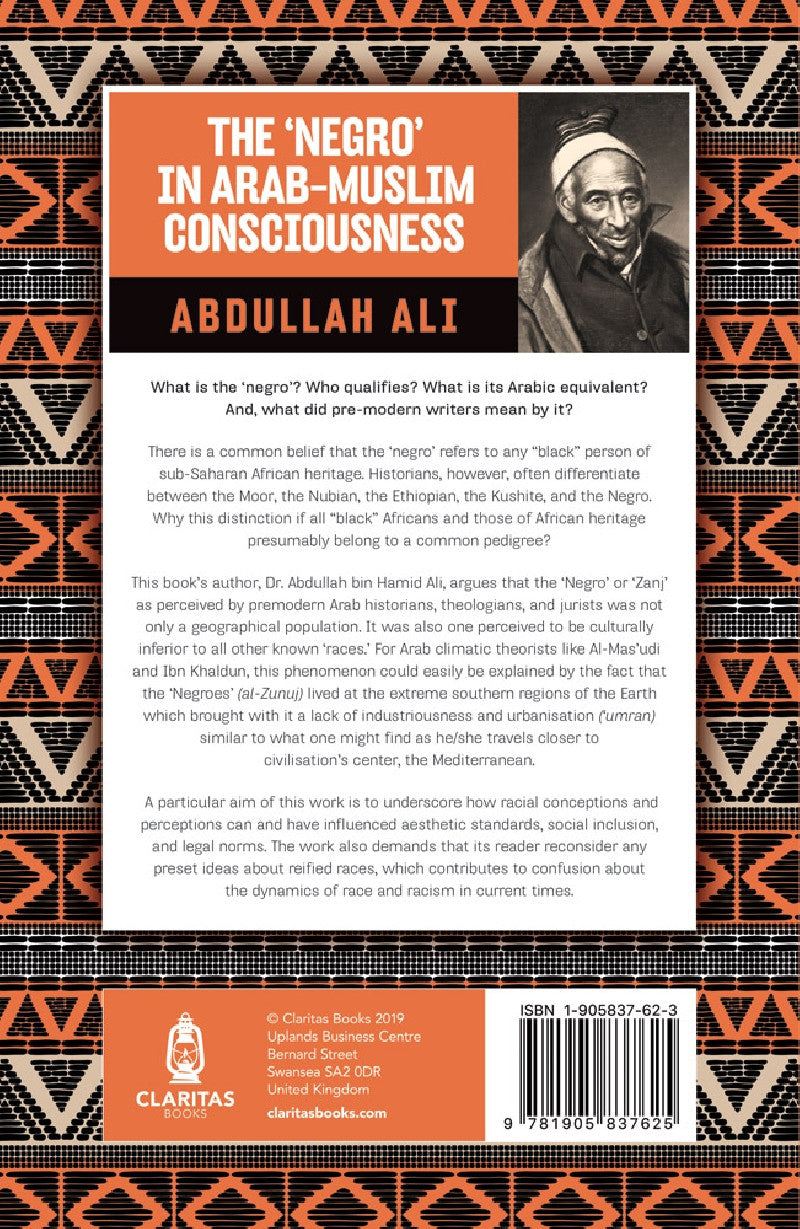
ما هو "الزنجي"؟ من ينطبق عليه هذا الوصف؟ ما هو مكافئه العربي؟ وماذا كان يقصد به الكُتّاب في العصور ما قبل الحديثة؟ هناك اعتقاد شائع بأن "الزنجي" يشير إلى أي شخص "أسود" من أصل أفريقي جنوب الصحراء الكبرى. ومع ذلك، غالبًا ما يُميّز المؤرخون بين الموري والنوبي والإثيوبي والكوشي والزنجي. لماذا هذا التمييز إذا كان جميع الأفارقة "السود" ومن هم من أصل أفريقي ينتمون على الأرجح إلى سلالة مشتركة؟ يرى مؤلف هذا الكتاب، الدكتور عبد الله بن حامد علي، أن "الزنجي" أو "الزنج" كما فهمه المؤرخون واللاهوتيون والفقهاء العرب في العصور ما قبل الحديثة لم يكن مجرد مجموعة سكانية جغرافية. بل كان يُنظر إليه أيضًا على أنه أدنى ثقافيًا من جميع "الأجناس" الأخرى المعروفة. وبالنسبة للمنظّرين العرب للمناخ مثل المسعودي وابن خلدون، يمكن تفسير هذه الظاهرة بسهولة من خلال حقيقة أن "الزنوج" (الزنج) عاشوا في المناطق الجنوبية القصوى من الأرض مما جلب معه نقصًا في النشاط الصناعي والعمران، على غرار ما قد يجده المرء كلما اقترب من مركز الحضارة، أي البحر الأبيض المتوسط. يهدف هذا العمل بشكل خاص إلى التأكيد على كيف يمكن للتصورات والتصوّرات العرقية أن تؤثر، وقد أثرت بالفعل، على المعايير الجمالية والاندماج الاجتماعي والأعراف القانونية. كما يطلب العمل من قارئه إعادة النظر في أي أفكار مسبقة حول الأجناس المجسدة، مما يساهم في الارتباك حول ديناميكيات العرق والعنصرية في العصر الحالي.
1
/
ل
4
الزنجي في الوعي العربي الإسلامي - منظورات تاريخية إسلامية بقلم عبد الله علي
الزنجي في الوعي العربي الإسلامي - منظورات تاريخية إسلامية بقلم عبد الله علي
No reviews
Publisher:
Claritas Books
Author:
عبد الله علي
Language:
إنجليزي
Binding:
غلاف ناعم
Pages: 294
Size: 15 × 22 سم
السعر العادي
$30.99 USD
السعر العادي
سعر البيع
$30.99 USD
سعر الوحدة
/
لكل
يتم احتساب الشحن عند الخروج.
لم نتمكن من تحميل توفر الاستلام


محتوى قابل للطي
وصف كتاب إسلامي
الزنجي في الوعي العربي الإسلامي - منظورات تاريخية إسلامية بقلم عبد الله علي
كتاب "الزنجي في الوعي العربي الإسلامي" للمؤلف عبد الله بن حامد علي هو دراسة علمية تستكشف كيف فهم المؤرخون والعلماء المسلمون العرب الأوائل مفهوم "الزنجي". يبحث الكتاب في الأفكار التاريخية حول العرق والهوية والثقافة في الحضارة الإسلامية.
من المؤلف:
الصفحة 01
AVAVA
AVAVA
W
W
AAA
الزنج في الوعي العربي الإسلامي
AVAVA
عبد الله علي
AAA
AAA
VANAN SOOOOOO?
الصفحة 02
المحتويات
المقدمة
أسئلة توجيهية: ما المميز؟
الفصل الأول
"سود" العرب أم عرب "بيض"؟
من هو العربي؟
من كان يعتبرهم العرب "بيضاً"؟
كيف أصبح العرب بيضاً
لون بشرة النبي
الخاتمة
الفصل الثاني
إدراك "السواد" من خلال العيون العربية
هل كان للنبي محمد أي قول عن السود؟
هل كان صحابة النبي عنصريين؟
هل العنصرية جزء من التراث الإسلامي؟
الخاتمة
الفصل الثالث
العلاقة بين السواد والعبودية
الفصل الرابع
العبودية: من أفريقيا إلى الجزيرة العربية
91
لماذا لم يكن هناك إعلان تحرير إسلامي؟
الصفحة 03
الفصل الأول
"سود" العرب أم عرب "بيض"؟
إن السكان الأصليين للجزيرة العربية... لم يكونوا عرب زماننا المألوفين، بل كانوا شعوباً أكثر سمرة بكثير. امتد حزام من البشر ذوي الأصول الزنجية البدائية عبر العالم القديم من أفريقيا إلى ملايو. هذا الحزام، وبفعل العوامل البيئية وعمليات تطورية أخرى، تحول في بعض أجزائه، مما أدى إلى ظهور الشعوب الحامية في أفريقيا، والشعوب الدرافيدية في الهند، وشعب متوسط السمرة يسكن شبه الجزيرة العربية. ومع مرور الوقت، جاءت هجرتان كبيرتان لشعوب فاتحة البشرة من الشمال، إحداهما الشعوب المغولية، لتخترق وتغير حزام البشر الداكنين إلى ما وراء الهند، والأخرى الشعوب القوقازية، لتغرس إسفيناً بين الهند وأفريقيا.
د. برترام توماس
رئيس وزراء سلطان مسقط وعُمان سابقاً
الصفحة 04
AVA
الزنج في الوعي العربي الإسلامي
عبد الله علي
ما هو "الزنج"؟ ومن المؤهل لهذا الوصف؟ وما هو مرادفه في العربية؟ وما الذي قصده الكتاب القدامى بهذا المصطلح؟
هناك اعتقاد شائع بأن "الزنج" يشير إلى أي شخص "أسود" من أصول أفريقية جنوب الصحراء. ومع ذلك، غالباً ما يميز المؤرخون بين الموري والنوبي والإثيوبي والكوشي والزنجي. لماذا هذا التمييز إذا كان جميع الأفارقة "السود" وأولئك من أصول أفريقية ينتمون -كما يفترض- إلى سلالة واحدة؟
يجادل مؤلف هذا الكتاب، د. عبد الله بن حميد علي، بأن "الزنج" كما كان ينظر إليه المؤرخون واللاهوتيون والفقهاء العرب قبل الحداثة، لم يكن مجرد فئة سكانية جغرافية فحسب، بل كان يُنظر إليه أيضاً على أنه أدنى ثقافياً من جميع "الأعراق" الأخرى المعروفة. وبالنسبة للمنظّرين المناخيين العرب مثل المسعودي وابن خلدون، يمكن تفسير هذه الظاهرة بسهولة من خلال حقيقة أن "الزنج" عاشوا في أقصى المناطق الجنوبية من الأرض، مما أدى إلى نقص في النشاط والتعمير (العمران) مقارنة بما قد يجده المرء كلما اقترب من مركز الحضارة، أي البحر الأبيض المتوسط.
يهدف هذا العمل بشكل خاص إلى التأكيد على كيف يمكن للمفاهيم والتصورات العنصرية أن تؤثر، وقد أثرت بالفعل، على المعايير الجمالية، والاندماج الاجتماعي، والأعراف القانونية. كما يطالب العمل قارئه بإعادة النظر في أي أفكار مسبقة حول الأعراق الجامدة، مما يساهم في الارتباك المحيط بديناميكيات العرق والعنصرية في العصر الحالي.
VA
VA
CLARITAS
Claritas Books 2019 Uplands Business Centre Bernard Street Swansea SA2 ODR
الناشر
Claritas Books
مؤلف
- عبد الله علي
الشحن والتوصيل
نقوم بشحن الطلبات مباشرة من مستودعاتنا في المملكة المتحدة والولايات المتحدة الأمريكية، ونقدم خيارات شحن متعددة لتناسب احتياجاتك. نحن نشحن بفخر إلى جميع أنحاء العالم.
عمليات التسليم في المملكة المتحدة (من مستودع المملكة المتحدة):
يصل الشحن القياسي عادةً في غضون 3-4 أيام عمل. يستغرق التسليم السريع 2-3 أيام عمل. نهدف إلى شحن الطلبات في نفس اليوم أو يوم العمل التالي، مع توفر خيارات التوصيل في اليوم التالي حيثما ينطبق ذلك.
عمليات التسليم في الولايات المتحدة الأمريكية (من مستودع الولايات المتحدة الأمريكية):
تصل الطلبات عادةً في غضون 4-7 أيام عمل.
أوروبا (يتم الشحن من المملكة المتحدة):
يستغرق التسليم القياسي حوالي 6-10 أيام عمل، مع توفر خدمات الشحن السريع في غضون 3-5 أيام عمل.
كندا:
الوقت المقدر للتسليم هو 5-10 أيام عمل.
الشحن في جميع أنحاء العالم:
تصل الطلبات الدولية بشكل عام في غضون 5-20 يوم عمل، اعتمادًا على الوجهة وطريقة الشحن المختارة.
للحصول على جداول زمنية دقيقة للتسليم بناءً على موقعك، يرجى الاتصال بنا عبر البريد الإلكتروني وسيقدم فريقنا معلومات مفصلة ومخصصة لعنوانك.
صفحات العينة - المحتوى
الصفحة 01
AVAVA
AVAVA
W
W
AAA
الزنج في الوعي العربي الإسلامي
AVAVA
عبد الله علي
AAA
AAA
VANAN SOOOOOO?
الصفحة 02
المحتويات
المقدمة
أسئلة توجيهية: ما المميز؟
الفصل الأول
"سود" العرب أم عرب "بيض"؟
من هو العربي؟
من كان يعتبرهم العرب "بيضاً"؟
كيف أصبح العرب بيضاً
لون بشرة النبي
الخاتمة
الفصل الثاني
إدراك "السواد" من خلال العيون العربية
هل كان للنبي محمد أي قول عن السود؟
هل كان صحابة النبي عنصريين؟
هل العنصرية جزء من التراث الإسلامي؟
الخاتمة
الفصل الثالث
العلاقة بين السواد والعبودية
الفصل الرابع
العبودية: من أفريقيا إلى الجزيرة العربية
91
لماذا لم يكن هناك إعلان تحرير إسلامي؟
الصفحة 03
الفصل الأول
"سود" العرب أم عرب "بيض"؟
إن السكان الأصليين للجزيرة العربية... لم يكونوا عرب زماننا المألوفين، بل كانوا شعوباً أكثر سمرة بكثير. امتد حزام من البشر ذوي الأصول الزنجية البدائية عبر العالم القديم من أفريقيا إلى ملايو. هذا الحزام، وبفعل العوامل البيئية وعمليات تطورية أخرى، تحول في بعض أجزائه، مما أدى إلى ظهور الشعوب الحامية في أفريقيا، والشعوب الدرافيدية في الهند، وشعب متوسط السمرة يسكن شبه الجزيرة العربية. ومع مرور الوقت، جاءت هجرتان كبيرتان لشعوب فاتحة البشرة من الشمال، إحداهما الشعوب المغولية، لتخترق وتغير حزام البشر الداكنين إلى ما وراء الهند، والأخرى الشعوب القوقازية، لتغرس إسفيناً بين الهند وأفريقيا.
د. برترام توماس
رئيس وزراء سلطان مسقط وعُمان سابقاً
الصفحة 04
AVA
الزنج في الوعي العربي الإسلامي
عبد الله علي
ما هو "الزنج"؟ ومن المؤهل لهذا الوصف؟ وما هو مرادفه في العربية؟ وما الذي قصده الكتاب القدامى بهذا المصطلح؟
هناك اعتقاد شائع بأن "الزنج" يشير إلى أي شخص "أسود" من أصول أفريقية جنوب الصحراء. ومع ذلك، غالباً ما يميز المؤرخون بين الموري والنوبي والإثيوبي والكوشي والزنجي. لماذا هذا التمييز إذا كان جميع الأفارقة "السود" وأولئك من أصول أفريقية ينتمون -كما يفترض- إلى سلالة واحدة؟
يجادل مؤلف هذا الكتاب، د. عبد الله بن حميد علي، بأن "الزنج" كما كان ينظر إليه المؤرخون واللاهوتيون والفقهاء العرب قبل الحداثة، لم يكن مجرد فئة سكانية جغرافية فحسب، بل كان يُنظر إليه أيضاً على أنه أدنى ثقافياً من جميع "الأعراق" الأخرى المعروفة. وبالنسبة للمنظّرين المناخيين العرب مثل المسعودي وابن خلدون، يمكن تفسير هذه الظاهرة بسهولة من خلال حقيقة أن "الزنج" عاشوا في أقصى المناطق الجنوبية من الأرض، مما أدى إلى نقص في النشاط والتعمير (العمران) مقارنة بما قد يجده المرء كلما اقترب من مركز الحضارة، أي البحر الأبيض المتوسط.
يهدف هذا العمل بشكل خاص إلى التأكيد على كيف يمكن للمفاهيم والتصورات العنصرية أن تؤثر، وقد أثرت بالفعل، على المعايير الجمالية، والاندماج الاجتماعي، والأعراف القانونية. كما يطالب العمل قارئه بإعادة النظر في أي أفكار مسبقة حول الأعراق الجامدة، مما يساهم في الارتباك المحيط بديناميكيات العرق والعنصرية في العصر الحالي.
VA
VA
CLARITAS
Claritas Books 2019 Uplands Business Centre Bernard Street Swansea SA2 ODR
من هو Abdullah Ali؟
Abdullah Yusuf Ali (1872–1953) was an Indian-born British Islamic scholar, writer, and translator. He is best known for his widely used English translation and commentary of the Holy Quran, The Holy Qur’an: Text, Translation and Commentary. His work helped English-speaking readers understand the meanings and teachings of the Quran. He was also an author and public speaker who contributed extensively to Islamic literature in English
العملاء يساعدون الآخرين من خلال التقييمات - جزاك اللهُ خيراً
4.94 ★ (49)
Verified