


The Islamic Ruling Concerning Tasweer – Islamic Guidelines on Photography & Images
The Islamic Ruling Concerning Tasweer – Islamic Guidelines on Photography & Images
Publisher:
American Publishers
Author:
أبو محمد عبد الرؤوف شاكر
Language:
الإنجليزية
Binding:
غلاف ورقي
Pages: 259
Size: ١٥×٢٣ سم
لم نتمكن من تحميل توفر الاستلام


محتوى قابل للطي
وصف كتاب إسلامي
“The Islamic Ruling Concerning Tasweer” is a concise yet important Islamic work that discusses the topic of image-making (tasweer) in light of the Quran, Sunnah, and classical scholarly opinions. The book explains the different types of images and photography, including traditional drawings, sculptures, and modern digital photography.
It presents evidences from authentic Hadiths and scholarly interpretations to clarify what is considered permissible and impermissible in Islam regarding images. The discussion also highlights the wisdom behind these rulings and their relevance in contemporary life, especially with modern technology and media.
From Author:
Two and Three dimensional
Images , Drawings , Paintings,
Photography and Sculptures
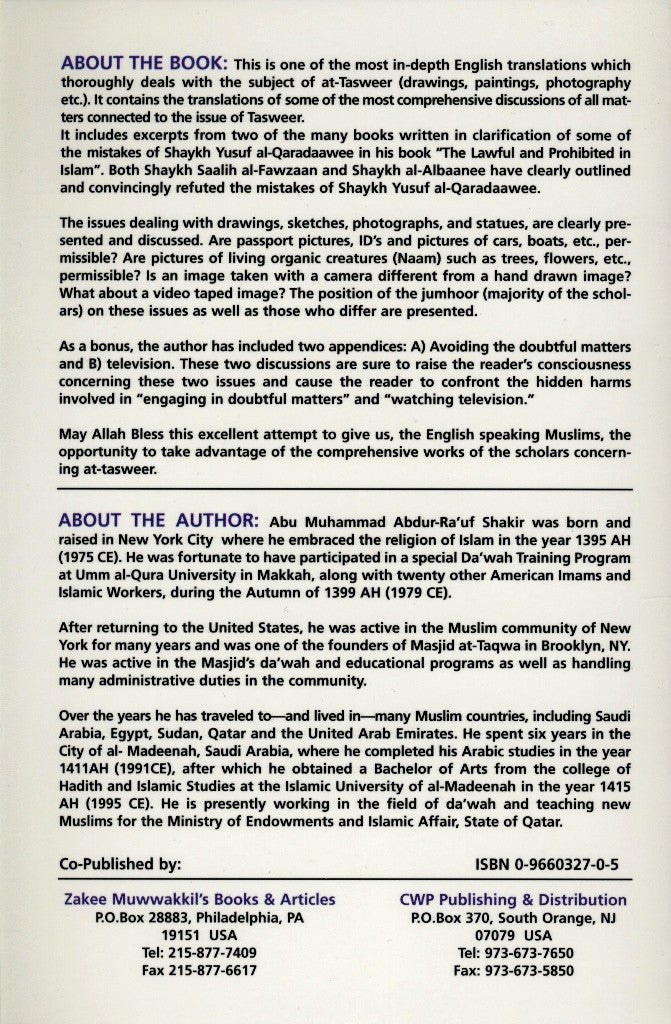
About book: This is one of the most in-depth English translations which thoroughly deals with the subject of At-Tasweer (drawings, paintings, photography and etc.) it contains the translation of some of the most comprehensive discussions of all matters connected to the issue of Tasweer.
الصفحة 01
الحكم الإسلامي المتعلق بالتصوير
الصور ثنائية وثلاثية الأبعاد، والرسومات، واللوحات، والتصوير الفوتوغرافي، والتماثيل
جمع وترتيب وترجمة: أبو محمد عبد الرؤوف شاكر
الصفحة 02
القسم الأول
الأحاديث المتعلقة بالتصوير [الصور، والرسومات، واللوحات، والصور الفوتوغرافية، والتماثيل]
الحديث رقم 1: المصورون سيعذبون يوم القيامة
عن ابن عمر رضي الله عنهما أن رسول الله صلى الله عليه وسلم قال: "إن الذين يصنعون هذه الصور يعذبون يوم القيامة، يقال لهم: أحيوا ما خلقتم". (متفق عليه)
قال رسول الله صلى الله عليه وسلم: "إن الذين يصنعون هذه الصور يعذبون يوم القيامة، ويقال لهم: أحيوا ما خلقتم". [البخاري ومسلم]
الدرس الذي نتعلمه من هذا الحديث هو التحريم الشديد والقاطع لتصوير ذوات الأرواح. فقد أُخبرنا أن مَن يصنع هذه الصور سيعذب يوم القيامة، وسيُطلب منه أن ينفخ الروح في (يحيي) ما صوّره، وهذا أمر لن يستطيع فعله أبداً.
وفي هذه النقطة، يقول الحافظ ابن حجر: هو تكليف بما لا يُطاق، ومنه نأخذ وصفاً لكيفية عذاب المصور؛ إذ يُؤمر بأن ينفخ...
الصفحة 03
القسم الأول
الأحاديث المتعلقة بالتصوير [الصور، والرسومات، واللوحات، والصور الفوتوغرافية، والتماثيل]
الحديث رقم 1: المصورون سيعذبون يوم القيامة
عن ابن عمر رضي الله عنهما أن رسول الله صلى الله عليه وسلم قال: "إن الذين يصنعون هذه الصور يعذبون يوم القيامة، يقال لهم: أحيوا ما خلقتم". (متفق عليه)
قال رسول الله صلى الله عليه وسلم: "إن الذين يصنعون هذه الصور يعذبون يوم القيامة، ويقال لهم: أحيوا ما خلقتم". [البخاري ومسلم]
الدرس الذي نتعلمه من هذا الحديث هو التحريم الشديد والقاطع لتصوير ذوات الأرواح. فقد أُخبرنا أن مَن يصنع هذه الصور سيعذب يوم القيامة، وسيُطلب منه أن ينفخ الروح في (يحيي) ما صوّره، وهذا أمر لن يستطيع فعله أبداً.
وفي هذه النقطة، يقول الحافظ ابن حجر: هو تكليف بما لا يُطاق، ومنه نأخذ وصفاً لكيفية عذاب المصور؛ إذ يُؤمر بأن ينفخ...
الصفحة 04
عن الكتاب: يُعد هذا الكتاب من أعمق الترجمات الإنجليزية التي تتناول موضوع التصوير (الرسومات، اللوحات، التصوير الفوتوغرافي، إلخ) بشيء من التفصيل. وهو يحتوي على ترجمات لبعض أكثر النقاشات شمولية حول جميع المسائل المتعلقة بقضية التصوير.
يتضمن الكتاب مقتطفات من كتابين من بين العديد من الكتب التي أُلفت لتوضيح بعض أخطاء الشيخ يوسف القرضاوي في كتابه "الحلال والحرام في الإسلام". فقد أوضح كل من الشيخ صالح الفوزان والشيخ الألباني أخطاء الشيخ يوسف القرضاوي وفنّداها بشكل مقنع.
يتم عرض ومناقشة القضايا المتعلقة بالرسومات، والاسكتشات، والصور الفوتوغرافية، والتماثيل بوضوح. هل صور جوازات السفر، وبطاقات الهوية، وصور السيارات، والقوارب، إلخ، مباحة؟ هل صور المخلوقات العضوية الحية (النماء) مثل الأشجار والزهور، إلخ، مباحة؟ هل الصورة الملتقطة بالكاميرا تختلف عن الصورة المرسومة باليد؟ ماذا عن الصورة المسجلة بالفيديو؟ تم عرض موقف الجمهور من هذه القضايا، بالإضافة إلى آراء المخالفين.
وكإضافة، أدرج المؤلف ملحقين: أ) تجنب الشبهات، ب) التلفاز. ومن المؤكد أن هذين النقاشين سيرفعان وعي القارئ بهاتين القضيتين، ويدفعانه لمواجهة الأضرار الخفية المتضمنة في "الخوض في الشبهات" و"مشاهدة التلفاز".
بارك الله في هذه المحاولة الممتازة لمنحنا، نحن المسلمين الناطقين بالإنجليزية، الفرصة للاستفادة من الأعمال الشاملة للعلماء فيما يتعلق بالتصوير.
عن المؤلف: وُلد ونشأ أبو محمد عبد الرؤوف شاكر في مدينة نيويورك، حيث اعتنق الإسلام في عام 1395 هـ (1975 م). وكان محظوظاً بمشاركته في برنامج تدريب دعوي خاص في جامعة أم القرى بمكة المكرمة، مع عشرين من الأئمة والعاملين الإسلاميين الأمريكيين الآخرين، خلال خريف عام 1399 هـ (1979 م).
بعد عودته إلى الولايات المتحدة، نشط في المجتمع المسلم في نيويورك لسنوات عديدة، وكان أحد مؤسسي مسجد التقوى في بروكلين، نيويورك. وكان نشطاً في البرامج الدعوية والتعليمية بالمسجد، بالإضافة إلى توليه العديد من المهام الإدارية في المجتمع.
على مر السنين، سافر إلى العديد من الدول الإسلامية وعاش فيها، بما في ذلك المملكة العربية السعودية، ومصر، والسودان، وقطر، والإمارات العربية المتحدة. أمضى ست سنوات في المدينة المنورة بالمملكة العربية السعودية، حيث أكمل دراساته العربية في عام 1411 هـ (1991 م)، وحصل بعدها على درجة البكالوريوس من كلية الحديث والدراسات الإسلامية بالجامعة الإسلامية بالمدينة المنورة في عام 1415 هـ (1995 م). ويعمل حالياً في مجال الدعوة وتعليم المسلمين الجدد لصالح وزارة الأوقاف والشؤون الإسلامية بدولة قطر.
شارك في النشر: زكي موكل للكتب والمقالات، ص.ب 28883، فيلادلفيا، بنسلفانيا.
الناشر
American Publishers
مؤلف
- أبو محمد عبد الرؤوف شاكر
الشحن والتوصيل
نقوم بشحن الطلبات مباشرة من مستودعاتنا في المملكة المتحدة والولايات المتحدة الأمريكية، ونقدم خيارات شحن متعددة لتناسب احتياجاتك. نحن نشحن بفخر إلى جميع أنحاء العالم.
عمليات التسليم في المملكة المتحدة (من مستودع المملكة المتحدة):
يصل الشحن القياسي عادةً في غضون 3-4 أيام عمل. يستغرق التسليم السريع 2-3 أيام عمل. نهدف إلى شحن الطلبات في نفس اليوم أو يوم العمل التالي، مع توفر خيارات التوصيل في اليوم التالي حيثما ينطبق ذلك.
عمليات التسليم في الولايات المتحدة الأمريكية (من مستودع الولايات المتحدة الأمريكية):
تصل الطلبات عادةً في غضون 4-7 أيام عمل.
أوروبا (يتم الشحن من المملكة المتحدة):
يستغرق التسليم القياسي حوالي 6-10 أيام عمل، مع توفر خدمات الشحن السريع في غضون 3-5 أيام عمل.
كندا:
الوقت المقدر للتسليم هو 5-10 أيام عمل.
الشحن في جميع أنحاء العالم:
تصل الطلبات الدولية بشكل عام في غضون 5-20 يوم عمل، اعتمادًا على الوجهة وطريقة الشحن المختارة.
للحصول على جداول زمنية دقيقة للتسليم بناءً على موقعك، يرجى الاتصال بنا عبر البريد الإلكتروني وسيقدم فريقنا معلومات مفصلة ومخصصة لعنوانك.
صفحات العينة - المحتوى
الصفحة 01
الحكم الإسلامي المتعلق بالتصوير
الصور ثنائية وثلاثية الأبعاد، والرسومات، واللوحات، والتصوير الفوتوغرافي، والتماثيل
جمع وترتيب وترجمة: أبو محمد عبد الرؤوف شاكر
الصفحة 02
القسم الأول
الأحاديث المتعلقة بالتصوير [الصور، والرسومات، واللوحات، والصور الفوتوغرافية، والتماثيل]
الحديث رقم 1: المصورون سيعذبون يوم القيامة
عن ابن عمر رضي الله عنهما أن رسول الله صلى الله عليه وسلم قال: "إن الذين يصنعون هذه الصور يعذبون يوم القيامة، يقال لهم: أحيوا ما خلقتم". (متفق عليه)
قال رسول الله صلى الله عليه وسلم: "إن الذين يصنعون هذه الصور يعذبون يوم القيامة، ويقال لهم: أحيوا ما خلقتم". [البخاري ومسلم]
الدرس الذي نتعلمه من هذا الحديث هو التحريم الشديد والقاطع لتصوير ذوات الأرواح. فقد أُخبرنا أن مَن يصنع هذه الصور سيعذب يوم القيامة، وسيُطلب منه أن ينفخ الروح في (يحيي) ما صوّره، وهذا أمر لن يستطيع فعله أبداً.
وفي هذه النقطة، يقول الحافظ ابن حجر: هو تكليف بما لا يُطاق، ومنه نأخذ وصفاً لكيفية عذاب المصور؛ إذ يُؤمر بأن ينفخ...
الصفحة 03
القسم الأول
الأحاديث المتعلقة بالتصوير [الصور، والرسومات، واللوحات، والصور الفوتوغرافية، والتماثيل]
الحديث رقم 1: المصورون سيعذبون يوم القيامة
عن ابن عمر رضي الله عنهما أن رسول الله صلى الله عليه وسلم قال: "إن الذين يصنعون هذه الصور يعذبون يوم القيامة، يقال لهم: أحيوا ما خلقتم". (متفق عليه)
قال رسول الله صلى الله عليه وسلم: "إن الذين يصنعون هذه الصور يعذبون يوم القيامة، ويقال لهم: أحيوا ما خلقتم". [البخاري ومسلم]
الدرس الذي نتعلمه من هذا الحديث هو التحريم الشديد والقاطع لتصوير ذوات الأرواح. فقد أُخبرنا أن مَن يصنع هذه الصور سيعذب يوم القيامة، وسيُطلب منه أن ينفخ الروح في (يحيي) ما صوّره، وهذا أمر لن يستطيع فعله أبداً.
وفي هذه النقطة، يقول الحافظ ابن حجر: هو تكليف بما لا يُطاق، ومنه نأخذ وصفاً لكيفية عذاب المصور؛ إذ يُؤمر بأن ينفخ...
الصفحة 04
عن الكتاب: يُعد هذا الكتاب من أعمق الترجمات الإنجليزية التي تتناول موضوع التصوير (الرسومات، اللوحات، التصوير الفوتوغرافي، إلخ) بشيء من التفصيل. وهو يحتوي على ترجمات لبعض أكثر النقاشات شمولية حول جميع المسائل المتعلقة بقضية التصوير.
يتضمن الكتاب مقتطفات من كتابين من بين العديد من الكتب التي أُلفت لتوضيح بعض أخطاء الشيخ يوسف القرضاوي في كتابه "الحلال والحرام في الإسلام". فقد أوضح كل من الشيخ صالح الفوزان والشيخ الألباني أخطاء الشيخ يوسف القرضاوي وفنّداها بشكل مقنع.
يتم عرض ومناقشة القضايا المتعلقة بالرسومات، والاسكتشات، والصور الفوتوغرافية، والتماثيل بوضوح. هل صور جوازات السفر، وبطاقات الهوية، وصور السيارات، والقوارب، إلخ، مباحة؟ هل صور المخلوقات العضوية الحية (النماء) مثل الأشجار والزهور، إلخ، مباحة؟ هل الصورة الملتقطة بالكاميرا تختلف عن الصورة المرسومة باليد؟ ماذا عن الصورة المسجلة بالفيديو؟ تم عرض موقف الجمهور من هذه القضايا، بالإضافة إلى آراء المخالفين.
وكإضافة، أدرج المؤلف ملحقين: أ) تجنب الشبهات، ب) التلفاز. ومن المؤكد أن هذين النقاشين سيرفعان وعي القارئ بهاتين القضيتين، ويدفعانه لمواجهة الأضرار الخفية المتضمنة في "الخوض في الشبهات" و"مشاهدة التلفاز".
بارك الله في هذه المحاولة الممتازة لمنحنا، نحن المسلمين الناطقين بالإنجليزية، الفرصة للاستفادة من الأعمال الشاملة للعلماء فيما يتعلق بالتصوير.
عن المؤلف: وُلد ونشأ أبو محمد عبد الرؤوف شاكر في مدينة نيويورك، حيث اعتنق الإسلام في عام 1395 هـ (1975 م). وكان محظوظاً بمشاركته في برنامج تدريب دعوي خاص في جامعة أم القرى بمكة المكرمة، مع عشرين من الأئمة والعاملين الإسلاميين الأمريكيين الآخرين، خلال خريف عام 1399 هـ (1979 م).
بعد عودته إلى الولايات المتحدة، نشط في المجتمع المسلم في نيويورك لسنوات عديدة، وكان أحد مؤسسي مسجد التقوى في بروكلين، نيويورك. وكان نشطاً في البرامج الدعوية والتعليمية بالمسجد، بالإضافة إلى توليه العديد من المهام الإدارية في المجتمع.
على مر السنين، سافر إلى العديد من الدول الإسلامية وعاش فيها، بما في ذلك المملكة العربية السعودية، ومصر، والسودان، وقطر، والإمارات العربية المتحدة. أمضى ست سنوات في المدينة المنورة بالمملكة العربية السعودية، حيث أكمل دراساته العربية في عام 1411 هـ (1991 م)، وحصل بعدها على درجة البكالوريوس من كلية الحديث والدراسات الإسلامية بالجامعة الإسلامية بالمدينة المنورة في عام 1415 هـ (1995 م). ويعمل حالياً في مجال الدعوة وتعليم المسلمين الجدد لصالح وزارة الأوقاف والشؤون الإسلامية بدولة قطر.
شارك في النشر: زكي موكل للكتب والمقالات، ص.ب 28883، فيلادلفيا، بنسلفانيا.
من هو Abu Muhamed Abdur-Ra'uf Shakir؟
Abu Muhammad Abdur-Ra’uf Shakir is an Islamic author and translator known for his contributions to English-language Islamic literature, particularly in the field of Qur’an translation and Islamic educational works. He has worked on rendering classical Islamic texts into clear and accessible English, making them easier for modern readers to understand.