


The Invalidations of Actions – Causes That Nullify Good Deeds in Islam
The Invalidations of Actions – Causes That Nullify Good Deeds in Islam
Publisher:
Invitation To Islam
Author:
الشيخ سليم بن عيد الهلالي
Language:
الإنجليزية
Binding:
غلاف ورقي
Pages: 62
Size: ١٥x٢١ سم٥.٨ × ٨.٣ بوصة
لم نتمكن من تحميل توفر الاستلام


محتوى قابل للطي
وصف كتاب إسلامي
The Invalidations of Actions – Causes That Nullify Good Deeds in Islam
The Invalidations of Actions by Shaykh Saleem bin Eid al-Hilaali is an insightful Islamic work that highlights the beliefs, attitudes, and actions that can nullify or reduce the reward of a Muslim’s deeds. Drawing evidence from the Qur’an, authentic Hadith, and the understanding of the righteous predecessors, the author explains major causes of invalidated actions such as shirk, hypocrisy, showing off (riyaa), disbelief, and other spiritual diseases that threaten the acceptance of worship. Written in a clear and concise style, the book serves as a practical reminder for Muslims to safeguard their faith and sincerity while striving for Allah’s pleasure. It is an excellent resource for students of knowledge and general readers seeking to protect their good deeds and strengthen their relationship with Allah.
From Author:
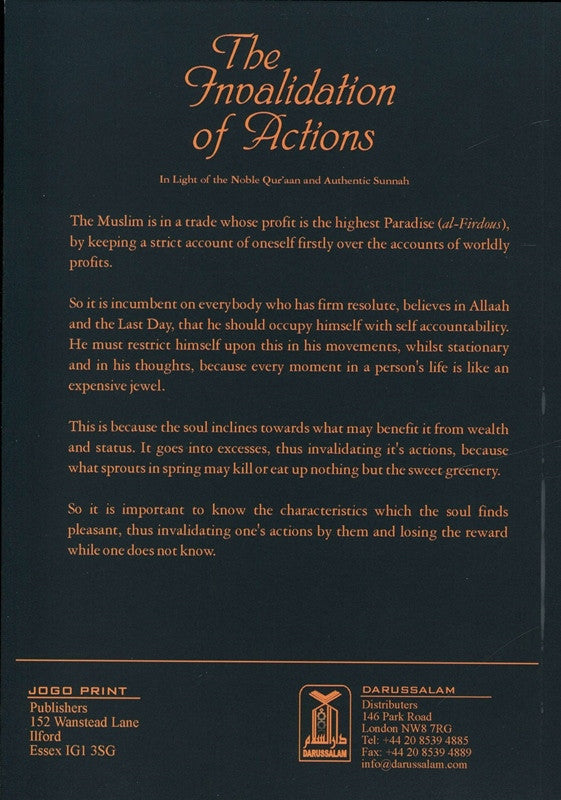
The Muslim is in a trade whose profit is the highest paradise, by keeping a strict account of one firstly over the accounts of worldly profits. So it is incumbent on everybody who has firm resolute, believes in Allah and the last day that he should occupy himself with self accountability. He must restrict himself upon this in his movements, whilst stationary and in his thoughts, because every moment in a person’s life is like an expensive jewel. This is because the soul inclines towards what may benefit it from wealth and status. It goes into excesses, thus invalidating its actions, because what sprouts in spring may kill or eat up nothing but the sweet greenery. So it is important to know the characteristics which the soul finds pleasant, thus invalidating one’s actions by them and losing the reward while one does not know.
Content:
1. Protecting Righteous Deeds
Explains the importance of safeguarding good actions.
Highlights causes that may nullify or diminish rewards.
Encourages constant self-accountability and sincerity.
2. Lessons from the Qur'an and Sunnah
Evidence-based discussion rooted in authentic Islamic texts.
Demonstrates how revelation guides believers in preserving their faith.
Connects practical actions with spiritual consequences.
3. The Concern of the Salaf
Explores the fear of the righteous predecessors regarding the acceptance of deeds.
Illustrates their humility and concern for sincerity.
Encourages believers to follow their example.
4. Major Causes of Invalidated Actions
The book discusses several serious matters, including:
Disbelief (Kufr), Shirk, Apostasy, and Hypocrisy.
Showing off (Riya').
Innovation in religion (Bid'ah).
Opposing the Messenger ﷺ in belief or practice.
Denial of Divine Decree (Qadr).
5. Sins that Endanger Good Deeds
Reminding others of favors while causing harm.
Neglecting important religious obligations.
Presumption concerning Allah.
Secret unlawful actions and hidden sins.
False testimony and acting upon falsehood.
6. Warnings Against Harmful Practices
Consulting fortune-tellers and soothsayers.
Addiction to intoxicants.
Disobedience to parents.
Other actions addressed in authentic Islamic texts that threaten spiritual well-being.
7. Importance of Correct Belief
Emphasizes sound Aqeedah as the foundation of accepted deeds.
Explains the relationship between belief and righteous actions.
Shows how corruption in faith affects worship.
8. Practical Spiritual Guidance
Encourages regular self-examination.
Helps readers identify dangers that may go unnoticed.
Motivates believers to seek sincerity and steadfastness.
الصفحة: 01
حُبوط الأعمال
في ضوء القرآن الكريم والسنة الصحيحة
للشيخ سليم بن عيد الهلالي
الصفحة: 02
المحتويات
دروس من الوحي.
مقدمة.
خوف السلف الصالح، رحمهم الله، من حُبوط أعمالهم وهم لا يشعرون:
مذهب السلف الصالح، رحمهم الله، في مسألة حُبوط الأعمال
1. الكفر، والشرك، والردة، والنفاق.
2. الرياء.
3. المن والأذى...
4. التكذيب بالقدر.
5. ترك صلاة العصر.
6. التجرؤ على الله.
7. مخالفة الرسول في الأقوال أو الأفعال.
8. الابتداع في الدين.
9. ارتكاب المحرمات في الخلوات.
10. الفرح والسرور بقتل المؤمنين.
11. الإقامة بين الكفار في دار الحرب.
12. إتيان العراف أو الكاهن.
13. عقوق الوالدين.
14. إدمان الخمر.
15. شهادة الزور والعمل بها.
16. اقتناء الكلاب إلا للحراسة أو الزرع أو الصيد.
17. العبد الآبق حتى يرجع إلى سيده.
الناشر
Invitation To Islam
مؤلف
- الشيخ سليم بن عيد الهلالي
الشحن والتوصيل
نقوم بشحن الطلبات مباشرة من مستودعاتنا في المملكة المتحدة والولايات المتحدة الأمريكية، ونقدم خيارات شحن متعددة لتناسب احتياجاتك. نحن نشحن بفخر إلى جميع أنحاء العالم.
عمليات التسليم في المملكة المتحدة (من مستودع المملكة المتحدة):
يصل الشحن القياسي عادةً في غضون 3-4 أيام عمل. يستغرق التسليم السريع 2-3 أيام عمل. نهدف إلى شحن الطلبات في نفس اليوم أو يوم العمل التالي، مع توفر خيارات التوصيل في اليوم التالي حيثما ينطبق ذلك.
عمليات التسليم في الولايات المتحدة الأمريكية (من مستودع الولايات المتحدة الأمريكية):
تصل الطلبات عادةً في غضون 4-7 أيام عمل.
أوروبا (يتم الشحن من المملكة المتحدة):
يستغرق التسليم القياسي حوالي 6-10 أيام عمل، مع توفر خدمات الشحن السريع في غضون 3-5 أيام عمل.
كندا:
الوقت المقدر للتسليم هو 5-10 أيام عمل.
الشحن في جميع أنحاء العالم:
تصل الطلبات الدولية بشكل عام في غضون 5-20 يوم عمل، اعتمادًا على الوجهة وطريقة الشحن المختارة.
للحصول على جداول زمنية دقيقة للتسليم بناءً على موقعك، يرجى الاتصال بنا عبر البريد الإلكتروني وسيقدم فريقنا معلومات مفصلة ومخصصة لعنوانك.
صفحات العينة - المحتوى
الصفحة: 01
حُبوط الأعمال
في ضوء القرآن الكريم والسنة الصحيحة
للشيخ سليم بن عيد الهلالي
الصفحة: 02
المحتويات
دروس من الوحي.
مقدمة.
خوف السلف الصالح، رحمهم الله، من حُبوط أعمالهم وهم لا يشعرون:
مذهب السلف الصالح، رحمهم الله، في مسألة حُبوط الأعمال
1. الكفر، والشرك، والردة، والنفاق.
2. الرياء.
3. المن والأذى...
4. التكذيب بالقدر.
5. ترك صلاة العصر.
6. التجرؤ على الله.
7. مخالفة الرسول في الأقوال أو الأفعال.
8. الابتداع في الدين.
9. ارتكاب المحرمات في الخلوات.
10. الفرح والسرور بقتل المؤمنين.
11. الإقامة بين الكفار في دار الحرب.
12. إتيان العراف أو الكاهن.
13. عقوق الوالدين.
14. إدمان الخمر.
15. شهادة الزور والعمل بها.
16. اقتناء الكلاب إلا للحراسة أو الزرع أو الصيد.
17. العبد الآبق حتى يرجع إلى سيده.
من هو Shaykh Saleem bin Eid al-Hilaali؟
Shaykh Saleem bin Eid al-Hilaali (Abu Usamah Saleem ibn 'Eed al-Hilaali) is a prominent contemporary Salafi scholar, author, and researcher of Hadith. Born in Palestine in 1957 CE (1377 AH), he was one of the closest students of Muhammad Nasiruddin al-Albani, studying under him for approximately 25 years. He later became a founding member of Markaz al-Imam al-Albani in Jordan and has authored more than 100 books on Aqeedah, Hadith, Fiqh, manners, and Islamic purification of the soul. His writings are widely translated and distributed throughout the Muslim world.