


الأئمة الأربعة - علي حمودة | سير أبي حنيفة ومالك والشافعي وأحمد بن حنبل
الأئمة الأربعة - علي حمودة | سير أبي حنيفة ومالك والشافعي وأحمد بن حنبل
Publisher:
Kube Publishing
Author:
علي حمودة
Language:
إنجليزي
Binding:
غلاف ناعم
Pages: 133
Size: 21 سم × 15 سم
لم نتمكن من تحميل توفر الاستلام


محتوى قابل للطي
وصف كتاب إسلامي
يقدم كتاب الأئمة الأربعة للمؤلف علي حمودة سيرًا ذاتية شيقة لأشهر أربعة علماء في الإسلام السني – الإمام أبو حنيفة، والإمام مالك، والإمام الشافعي، والإمام أحمد بن حنبل. يروي الكتاب بأسلوب قصصي سهل وممتع، ويبرز حياتهم وإرثهم والدروس التي لا تزال ذات صلة حتى اليوم.
يقدم كتاب الأئمة الأربعة سرداً ثاقباً وجذاباً لأربع شخصيات شامخة في الفقه الإسلامي السني:
الإمام أبو حنيفة
الإمام مالك
الإمام الشافعي
الإمام أحمد بن حنبل
المؤلف:
علي حمودة هو محاضر ومؤلف إسلامي مقيم في المملكة المتحدة، من أصل فلسطيني. درس في المجالات التعليمية الرئيسية قبل أن يتابع دراساته الإسلامية، وخدم في النهاية كمحاضر وباحث أول في مؤسسة البحوث والتنمية الإسلامية في لندن وكإمام في كارديف. تركز أعماله على التاريخ الإسلامي والروحانية والدروس العملية للمسلمين المعاصرين.
الناشر
Kube Publishing
مؤلف
- علي حمودة
الشحن والتوصيل
نقوم بشحن الطلبات مباشرة من مستودعاتنا في المملكة المتحدة والولايات المتحدة الأمريكية، ونقدم خيارات شحن متعددة لتناسب احتياجاتك. نحن نشحن بفخر إلى جميع أنحاء العالم.
عمليات التسليم في المملكة المتحدة (من مستودع المملكة المتحدة):
يصل الشحن القياسي عادةً في غضون 3-4 أيام عمل. يستغرق التسليم السريع 2-3 أيام عمل. نهدف إلى شحن الطلبات في نفس اليوم أو يوم العمل التالي، مع توفر خيارات التوصيل في اليوم التالي حيثما ينطبق ذلك.
عمليات التسليم في الولايات المتحدة الأمريكية (من مستودع الولايات المتحدة الأمريكية):
تصل الطلبات عادةً في غضون 4-7 أيام عمل.
أوروبا (يتم الشحن من المملكة المتحدة):
يستغرق التسليم القياسي حوالي 6-10 أيام عمل، مع توفر خدمات الشحن السريع في غضون 3-5 أيام عمل.
كندا:
الوقت المقدر للتسليم هو 5-10 أيام عمل.
الشحن في جميع أنحاء العالم:
تصل الطلبات الدولية بشكل عام في غضون 5-20 يوم عمل، اعتمادًا على الوجهة وطريقة الشحن المختارة.
للحصول على جداول زمنية دقيقة للتسليم بناءً على موقعك، يرجى الاتصال بنا عبر البريد الإلكتروني وسيقدم فريقنا معلومات مفصلة ومخصصة لعنوانك.
صفحات العينة - المحتوى
Page:01
ALI HAMMUDA
THE FOUR IMAMS
ADAPTED BY:
ZIMARINA SARWAR
Page:02
way of aldoliavs Honouring different opinions
Conter
How Imam al-Shafi'i worshipped
Leaving this world as a throne of gold awaits... noitmodello to afilsmed artT
Lessons we can learn
Greatness can often be traced back
to the efforts of mothers
Seek out and be part of the best company
ensbute bns anadoest : Important things deserve preparation
Different perspectives can all be equally valid Treat fame, admiration and public adoration with great caution
"won the Never allow yourself to get too complacent about your deeds
Imam Ahmad
Starting out life as an orphan
Onto journeys far from home with Yahya
The character of Imam Ahmad
. His refusal to accept favours
The writing on the wall
m69. His interactions with the people
elitut el an. His humility
no teahomem to tow. His dedication to worship
Putting his knowledge into practice His willingness to say "I don't know" Being troubled by fame
obil ni dreq nwo larit asri The greatest trial of Imam Ahmad's life ebrowan ylbh. What was the 'trial'?
The Caliph joins the corruption Turmoil spreads like wildfire .Al-Mu'tasim takes over as Caliph The imprisonment of Imam Ahmad The debates begin
The torture of Imam Ahmad begins
The rise of a new oppressor: al-Wathiq The tide turns with al-Mutawakkil
Being taught patience from a thief
Forgiven and forgotten?
The death of Imam Ahmad
Lessons we can learn
We prepare for the things we love Humility will enrich every aspect of your life
It is always safest to tread with caution Gather pearls of wisdom... even from a criminal
It takes bravery to stand alone against an ocean The truth will always make itself known eventually in your life?
A Final Thought
Many of us have family, friends and role models that we look up to people who Inspire us to achieve great things and become better versions of ourselves.
Teachers help us mester different subjects and seaches help us train sports we love, and all of them deserve our appreciation. Et all the people wo look up to, there is one particular group that we owe a huge amount to but w may not even realize why. These people dedicated their lives to lening and teaching, and we benefit from their efforts every day. Who are they? These are the scholars of Islam. Scholars spent their lives studying, researching and less ing behind the work for us to understand our life's purpose. But who exactly were these dedicated individuals who worked endlessly to preserve the knew! edge of Islam, so we can receive it today?
There have been countless scholars - male and female - throughout Matons upholding the religion in every age and era of human civilisation Fualled by sincerity and paveler, scholars have emerged in every corner of the world to study and bring our tradition to life. Of them all however, there are four particu lar Imams princes have ensured the test of time and who forever remain some of the most speed
These Four make you and me, they had their own persbo alities, backgrunds for tenores personal interests, customs and cultures.
Page:03
THE FOUR IMAMS
IMAM ABU HANIFAH
When an issue was being decided,
Abū Ḥanifah had a very particular approach: .The matter to be discussed (mas'alah) would be presented.
Every participant would be invited to speak on the topic.
. A discussion would take place back and forth (this sometimes lasted over a month!). p Once the council had decided they had explored the issue fully, they would ask for Imam Abu Hanifah's input. netto amami ant to atnsbuti
Abu Hanifah would share his stance and reconcile this with the strongest opinions of his council.ie
erinden
Only after everybody had reached a united decision and comfortable consensus, would that opinion be officially recorded as part of the figh of Imam Abu Hanifah.deal!
bvitelloer
It should be noted not all students always arrived at the same conclusion (differences of opinion are natural!). Not all opinions were a consensus, however everybody understood one another's perspectives deeply and respected them.
arrested
One of the great benefits of having such a council of people come together to share their opinions is that you can draw knowledge from a wide variety of backgrounds. Some of the scholars were experts in Qur'an recitation, some were masters of hadith, others had the deepest knowledge of the Arabic language, others were known for being committed to tazkiyah, while some were
serving as judges in legal courts.
Each of these people were invited to bring the full scope of their wide knowl- edge together and tackle issues from multiple different angles. With this ap- proach, experts from multiple fields are pooled together to give a balanced and
all-round perspective on all the issues being dealt with.
Best of the best:
The students supporting Imam Abu Hanifah nabuta
oddolen Earlier we learnt about the devoted relationship Imam Abu Ḥanifah had with his beloved teacher Ḥammad, however the chain of loyalty did not end there. When Imam Abū Ḥanifah began leading his own circles of study, he was blessed with students who were active, committed and proactive in supporting the work of their great teacher. Though all the Imams had dutiful students, Imam Abu Hanifah's were considered the ones who most enthusiastically spread his teachings and message as far as they could. Imam Abu Hanifah's two most famous students, al-Qāḍī Abū Yusuf and Muḥammad al-Shaybānī, went on to develop the Hanafi madhhab further. The number of books that Imam Abu Ḥanifah wrote himself are actually very few in number, it was his students who took on the privilege and responsibility of presenting the figh of their much- loved teacher throughout the world.
When Waki' heard a person saying: "Imam Abu Hanifah made a mistake," he responded: "How can he make a mistake when with him are the likes of Abu Yusuf and Zufar who are known for their Qiyās; Yaḥya b. Abi Zā'idah, Hafs ibn Ghiyäth, Hibban, and Mandal, all of whom are known for their memorization of hadith; Al-Qasim b. Ma'n who is known for his knowledge of the Arabic lan- guage; and Dawud al-Ta'ī and al-Fuḍayl b. 'lyaḍ who are known for their Zuhd (piety) and caution? Whoever has such people as his companions will rarely make mistakes, because if he does, they will correct him." 27
Whilst Abu Hanifah was pioneering with his fiqh council, he would not hide behind the group if an issue could not be solved. Rather, he took responsibility for this himself. If a matter remained unclear to Abū Ḥanifah, struggling to reach a conclusive opinion, he would say to his companions: leht Kufa altogether "This is due to my sins."
He would repent to Allah, and at times would stand in prayer until the matter became clear. He would then say: "My hope is that I have been forgiven." 28
It is not hard to see why Imam Abu Hanifah had the impact he did on not only his students, but also wider society. Every time Abū Ḥanifah took a new student into his class, he would see to it that the student was properly clothed
27 Abu Bakr Ahmad bin Ali al-Khatib al-Baghdadi
Tahqiq, Tarikh Baghdad, Där al-Kutub al-'Ilmiyah, Vol 16, p 359.
Ibn Hajar al-Haythami, Al-Khayrat al-Hisän Fi Manaqib al-Imam al-A'zam Abi Hanifah al-Nu'man Kitab, Matba'at al-Sa'adah, 1908, p 54.
Page:04
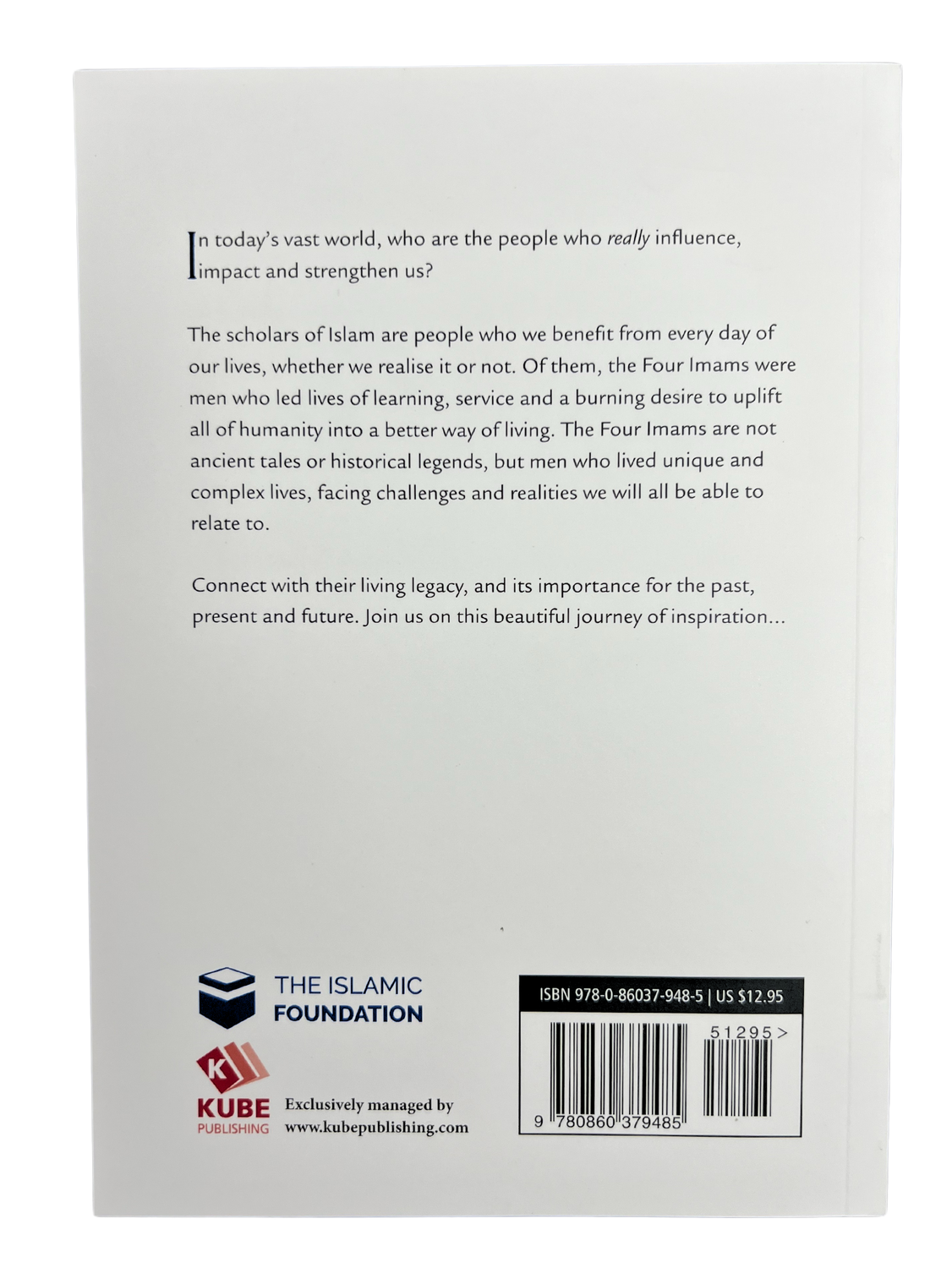
In today's vast world, who are the people who really influence, impact and strengthen us?
The scholars of Islam are people who we benefit from every day of our lives, whether we realise it or not. Of them, the Four Imams were men who led lives of learning, service and a burning desire to uplift all of humanity into a better way of living. The Four Imams are not ancient tales or historical legends, but men who lived unique and complex lives, facing challenges and realities we will all be able to relate to. Connect with their living legacy, and its importance for the past, present and future. Join us on this beautiful journey of inspiration
من هو Ali Hammuda؟
Ali Hammuda is a respected Islamic author, speaker, and educator known for his engaging and relatable style of conveying Islamic knowledge. His work focuses on strengthening faith, developing strong character, and inspiring positive change through lessons drawn from the Qur’an, Sunnah, and the lives of the Prophets and righteous predecessors.