


Release from the Shackles of Desires | Ibn Qayyim | Overcoming Desires
Release from the Shackles of Desires | Ibn Qayyim | Overcoming Desires
Publisher:
Dakwah Corner Publisher
Author:
ابن قيم
Language:
الإنجليزية
Binding:
غلاف ورقي
Pages: 54
Size: ١٨×١٣ سم
لم نتمكن من تحميل توفر الاستلام


محتوى قابل للطي
وصف كتاب إسلامي
Release from the Shackles of Desires | Ibn Qayyim | Overcoming Desires
Release from the Shackles of Desires by Imam Ibn Qayyim al-Jawziyyah is a concise yet profound work translated from a section of his renowned book Rawdat al-Muhibbin (The Garden of Lovers). The book explains the nature of human desires, why Allah created them as a test, and how believers can regulate and overcome them through sound intellect and divine guidance. Ibn Qayyim discusses the dangers of following unchecked desires and provides practical, faith-based methods for attaining self-discipline, spiritual purification, and closeness to Allah. Rooted in the Qur'an and authentic Sunnah, this beneficial work offers timeless advice for anyone striving to strengthen their character, resist temptation, and achieve spiritual growth through sincere worship and obedience to Allah.
From Author:
Release From The Shackles of Desires
Ibn Qayyim
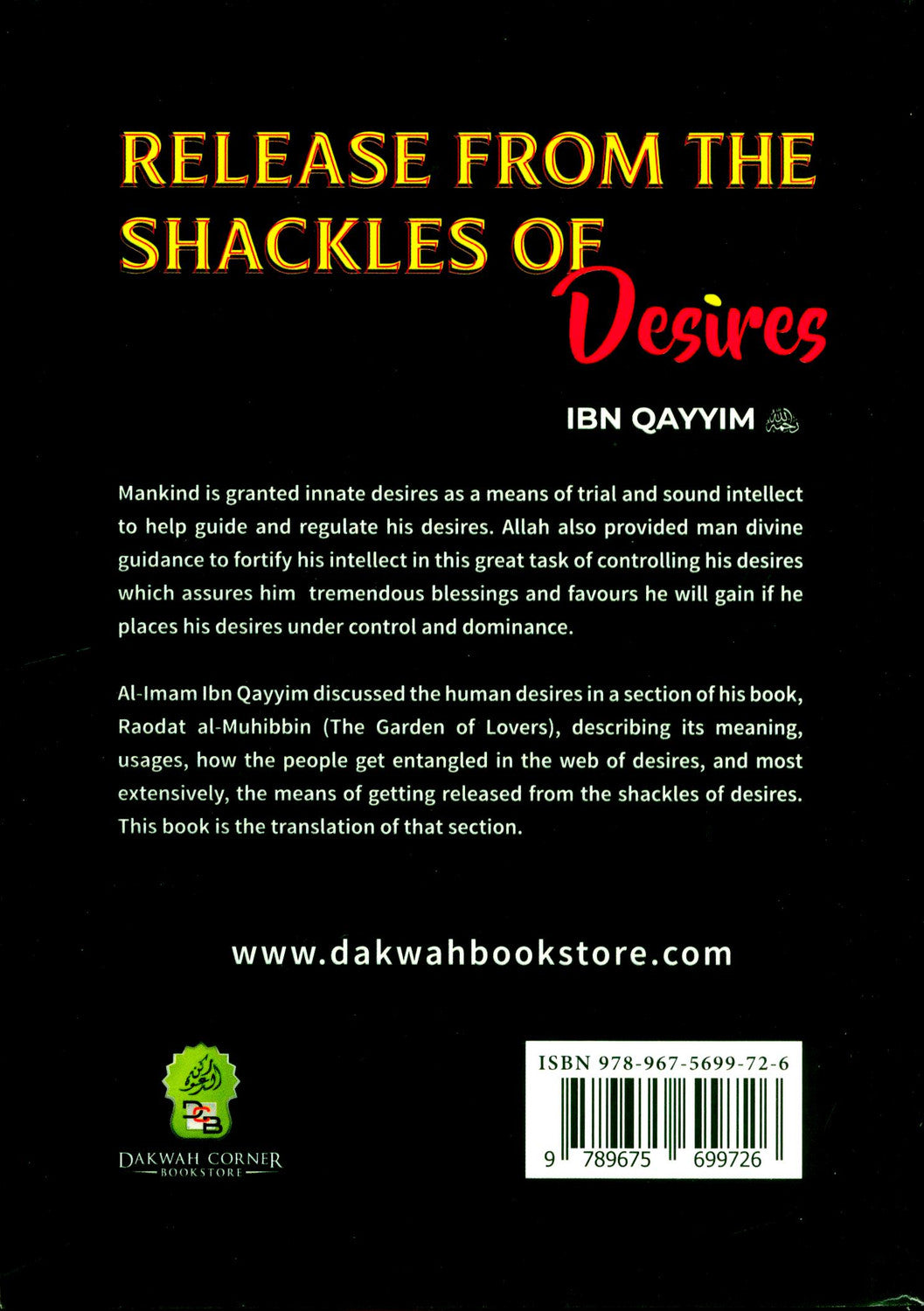
Mankind is granted innate desires as a means of trial and sound intellect to help guide and regulate his desires. Allah also provided man divine guidance to fortify his intellect in this great task of controlling his desires which assures him tremendous blessings and favors he will gain if he places his desires under control and dominance.
Al-Imam Ibn Qayyim discussed the human desires in a section of his book, Raodat Al-Muhibbin (The Garden of Lovers), describing its meaning, usages, how the people get entangled in the web of desires, and most extensively, the means of getting released from the shackles of desires. This book is the translation of that section.
Content:
Break Free from the Chains of Desires
Release from the Shackles of Desires by Ibn Qayyim al-Jawziyyah is a timeless work on spiritual purification and self-discipline. Translated by Abu Naasir Ibrahim Abdur-Rauf, this book explores the Islamic understanding of Hawaa (base desires) and offers practical guidance for overcoming the temptations that distance a believer from Allah.
Understanding Hawaa (Desires)
The book begins by explaining the meaning of Hawaa, describing it as the soul's inclination toward what it loves and desires. Drawing from the Qur'an and the Arabic language, Ibn al-Qayyim explains how unchecked desires can mislead a person, while disciplined desires become a means of attaining righteousness and success.
The Test of Human Nature
Allah has created human beings with natural desires as part of life's test, while also granting them intellect and divine revelation to distinguish right from wrong. The author explains how faith, wisdom, and self-control enable believers to govern their desires instead of becoming enslaved by them.
The Path to Spiritual Freedom
Adapted from Ibn al-Qayyim's renowned work Rawdat al-Muhibbin (The Garden of Lovers), this book outlines the causes of spiritual weakness and presents practical methods for overcoming sinful inclinations. It emphasizes remembrance of Allah, sincere repentance, and steadfast obedience as the keys to true inner freedom.
Rooted in the Qur'an and Sunnah
Throughout the book, Ibn al-Qayyim supports his teachings with verses from the Qur'an, Prophetic traditions, and profound insights from the early generations of Muslims. His timeless advice provides readers with practical steps to strengthen faith and develop greater self-discipline.
صفحة:01
التحرر من قيود الهوى
ابن القيم
ترجمة: أبو ناصر إبراهيم عبد الرؤوف
صفحة:02
فهرس المحتويات
ملاحظة المترجم
الفصل الأول: الهوى
الفصل الثاني: التحرر من القيود
صفحة:03
وَأَمَّا مَنْ خَافَ مَقَامَ رَبِّهِ وَنَهَى النَّفْسَ عَنِ الْهَوَىٰ
فَإِنَّ الْجَنَّةَ هِيَ الْمَأْوَىٰ
(النازعات: 40-41)
الفصل الأول
الهوى
الهوى: ميل النفس إلى الشيء. يقال: هَوِيَ الشيء يَهْوَاهُ هَوًى، كعَمِيَ يَعْمَى عَمًى.
وأما هَوَى الشيءُ يَهْوِي هُوِيّاً: أي سقط.
ويُطلق الهوى أيضاً على الشيء المَهْوِيّ، أي المحبوب، فيقال: "هذا هَوَى فلان"، و"فلانة هَوى فلان"، أي محبوبته.
صفحة:04
التحرر من قيود الهوى
ابن القيم
مُنح الإنسان رغبات فطرية لتكون وسيلة ابتلاء، وعقلاً سليماً ليساعده في توجيه رغباته وضبطها. كما أنعم الله على الإنسان بالهدي الإلهي ليعزز عقله في هذه المهمة العظيمة، ألا وهي التحكم في رغباته؛ الأمر الذي يضمن له نيل خيرات ونعم عظيمة إن هو أخضع رغباته للسيطرة والتحكم.
ناقش الإمام ابن القيم رغبات الإنسان في فصل من كتابه "روضة المحبين"، واصفاً معناها، واستخداماتها، وكيف يقع الناس في شباك الرغبات، والأهم من ذلك، الوسائل التي تمكن المرء من التحرر من قيود الهوى. وهذا الكتاب هو ترجمة لذلك الفصل.
الناشر
Dakwah Corner Publisher
مؤلف
- ابن قيم
الشحن والتوصيل
نقوم بشحن الطلبات مباشرة من مستودعاتنا في المملكة المتحدة والولايات المتحدة الأمريكية، ونقدم خيارات شحن متعددة لتناسب احتياجاتك. نحن نشحن بفخر إلى جميع أنحاء العالم.
عمليات التسليم في المملكة المتحدة (من مستودع المملكة المتحدة):
يصل الشحن القياسي عادةً في غضون 3-4 أيام عمل. يستغرق التسليم السريع 2-3 أيام عمل. نهدف إلى شحن الطلبات في نفس اليوم أو يوم العمل التالي، مع توفر خيارات التوصيل في اليوم التالي حيثما ينطبق ذلك.
عمليات التسليم في الولايات المتحدة الأمريكية (من مستودع الولايات المتحدة الأمريكية):
تصل الطلبات عادةً في غضون 4-7 أيام عمل.
أوروبا (يتم الشحن من المملكة المتحدة):
يستغرق التسليم القياسي حوالي 6-10 أيام عمل، مع توفر خدمات الشحن السريع في غضون 3-5 أيام عمل.
كندا:
الوقت المقدر للتسليم هو 5-10 أيام عمل.
الشحن في جميع أنحاء العالم:
تصل الطلبات الدولية بشكل عام في غضون 5-20 يوم عمل، اعتمادًا على الوجهة وطريقة الشحن المختارة.
للحصول على جداول زمنية دقيقة للتسليم بناءً على موقعك، يرجى الاتصال بنا عبر البريد الإلكتروني وسيقدم فريقنا معلومات مفصلة ومخصصة لعنوانك.
صفحات العينة - المحتوى
صفحة:01
التحرر من قيود الهوى
ابن القيم
ترجمة: أبو ناصر إبراهيم عبد الرؤوف
صفحة:02
فهرس المحتويات
ملاحظة المترجم
الفصل الأول: الهوى
الفصل الثاني: التحرر من القيود
صفحة:03
وَأَمَّا مَنْ خَافَ مَقَامَ رَبِّهِ وَنَهَى النَّفْسَ عَنِ الْهَوَىٰ
فَإِنَّ الْجَنَّةَ هِيَ الْمَأْوَىٰ
(النازعات: 40-41)
الفصل الأول
الهوى
الهوى: ميل النفس إلى الشيء. يقال: هَوِيَ الشيء يَهْوَاهُ هَوًى، كعَمِيَ يَعْمَى عَمًى.
وأما هَوَى الشيءُ يَهْوِي هُوِيّاً: أي سقط.
ويُطلق الهوى أيضاً على الشيء المَهْوِيّ، أي المحبوب، فيقال: "هذا هَوَى فلان"، و"فلانة هَوى فلان"، أي محبوبته.
صفحة:04
التحرر من قيود الهوى
ابن القيم
مُنح الإنسان رغبات فطرية لتكون وسيلة ابتلاء، وعقلاً سليماً ليساعده في توجيه رغباته وضبطها. كما أنعم الله على الإنسان بالهدي الإلهي ليعزز عقله في هذه المهمة العظيمة، ألا وهي التحكم في رغباته؛ الأمر الذي يضمن له نيل خيرات ونعم عظيمة إن هو أخضع رغباته للسيطرة والتحكم.
ناقش الإمام ابن القيم رغبات الإنسان في فصل من كتابه "روضة المحبين"، واصفاً معناها، واستخداماتها، وكيف يقع الناس في شباك الرغبات، والأهم من ذلك، الوسائل التي تمكن المرء من التحرر من قيود الهوى. وهذا الكتاب هو ترجمة لذلك الفصل.
من هو Ibn Qayyim؟
Ibn Qayyim al-Jawziyyah (1292–1350 CE) was a prominent Islamic scholar, jurist, and spiritual writer. A student of the famous Ibn Taymiyyah, he is known for his deep works on Islamic jurisprudence, theology, and spirituality. His writings, such as Madarij al-Salikin and Zad al-Ma'ad, remain influential in understanding repentance, the soul’s purification, and a practical approach to living a devout Muslim life.