


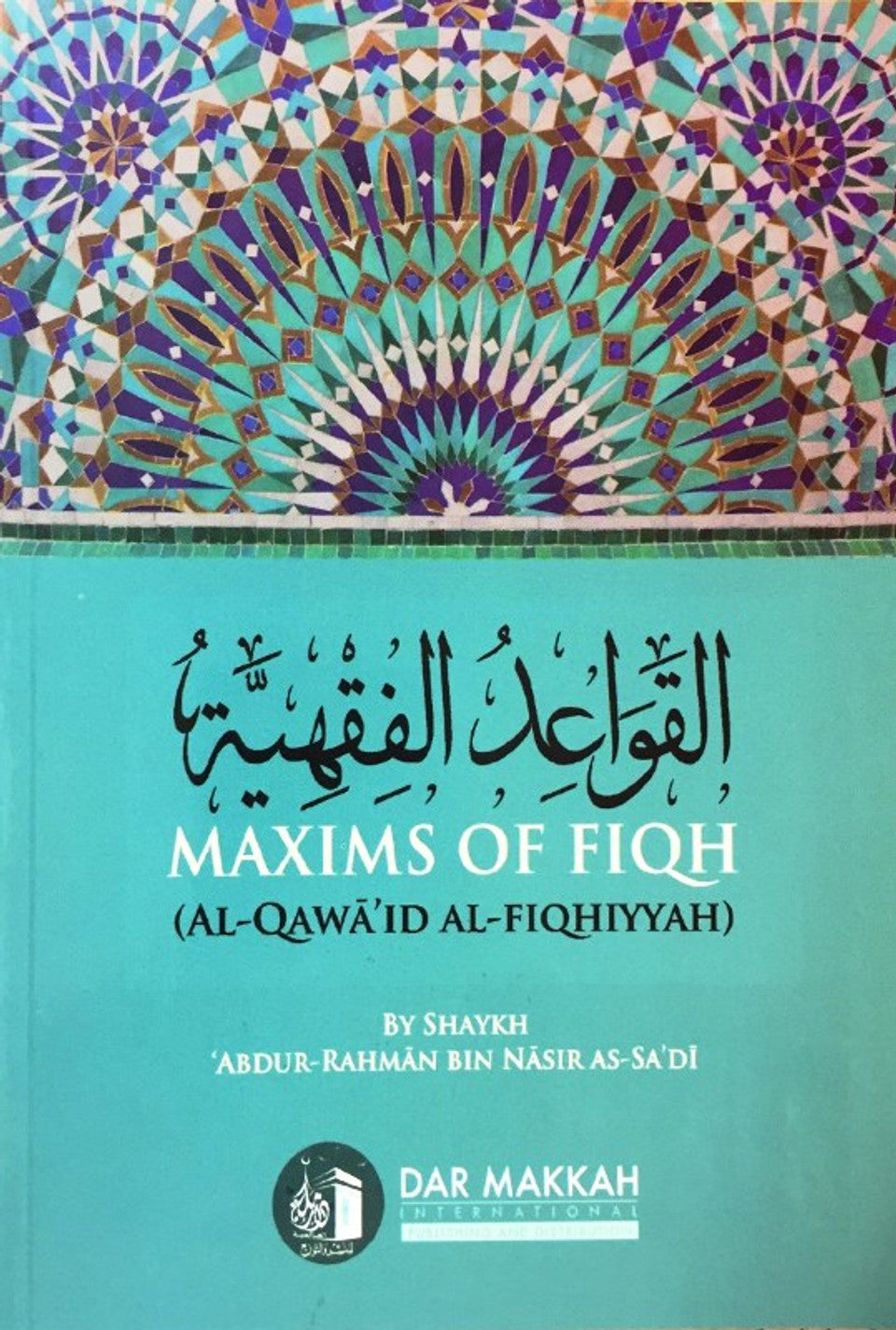
القواعد الفقهية – أصول الفقه الإسلامي ودليل الفقه
القواعد الفقهية – أصول الفقه الإسلامي ودليل الفقه
Publisher:
Dar Makkah International Publishing
Author:
الشيخ عبد الرحمن بن ناصر السعدي
Language:
إنجليزي
Binding:
غلاف مقوى
Pages: 52
Size: 20 × 13 سم
لم نتمكن من تحميل توفر الاستلام
محتوى قابل للطي
وصف كتاب إسلامي
"القواعد الفقهية" كتاب إسلامي توعوي يشرح المبادئ القانونية التأسيسية المستخدمة في الفقه الإسلامي. تساعد هذه القواعد الفقهية العلماء على فهم الأحكام الإسلامية وتنظيمها وتطبيقها في مواقف مختلفة وفقاً للقرآن والسنة والمبادئ الراسخة للشريعة الإسلامية.
يناقش الكتاب قواعد فقهية مهمة تشكل أساساً للعديد من الأحكام في العبادات والمعاملات والسلوك الشخصي والشؤون الاجتماعية. كما يوضح كيف توفر هذه المبادئ المرونة والتوازن والاتساق داخل الفقه الإسلامي، مع مساعدة القراء على فهم الحكمة الكامنة وراء الأحكام الشرعية.
لماذا ينبغي عليك قراءة هذا الكتاب
يساعد هذا الكتاب القراء على فهم المبادئ التأسيسية للفقه الإسلامي وكيفية تطبيق العلماء للأحكام الفقهية في الحياة اليومية.
تقدم هذه الصفحات من كتاب "القواعد الفقهية" للشيخ عبد الرحمن بن ناصر السعدي مبادئ مهمة في الفقه الإسلامي والقواعد القانونية. يشرح المحتوى كيف تستند الأحكام الإسلامية إلى النيات، والتيسير، والضرورة، واليقين، والعادات، ودرء المفاسد. كما يناقش مبادئ فقهية عملية تتعلق بالعبادات والحياة اليومية والشريعة الإسلامية بأسلوب واضح وتعليمي.
ص 01
القواعد الفقهية
تأليف الشيخ عبد الرحمن بن ناصر السعدي
دار مكة العالمية
ص 02
القواعد الفقهية
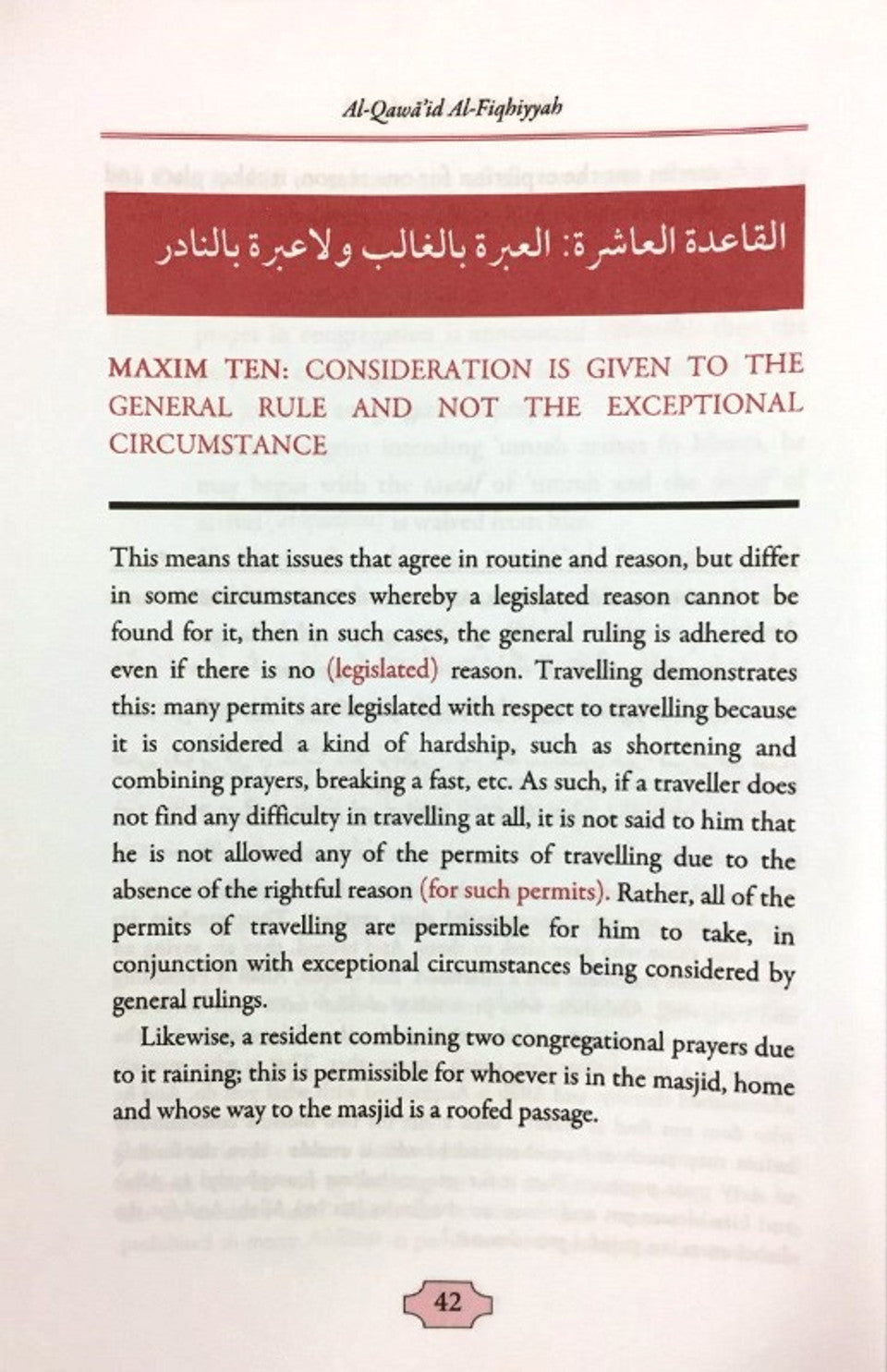
القاعدة العاشرة: العبرة بالغالب ولا عبرة بالنادر
ومعناها أن الأمور التي تتفق في العادة والسبب، ولكنها تختلف في بعض الأحوال بحيث لا يوجد لها سبب شرعي، ففي مثل هذه الحالات يتم العمل بالحكم العام حتى وإن انتفى السبب (الشرعي). والسفر يوضح ذلك: فقد شُرعت رخص كثيرة للسفر اعتبارا لمظنة المشقة، مثل قصر الصلاة والجمع، والفطر، ونحو ذلك. ولذلك، إذا لم يجد المسافر مشقة في سفره أصلاً، فلا يقال له إنه لا يجوز له شيء من رخص السفر لانتفاء السبب الموجب لها. بل كل رخص السفر مباحة له، مع اعتبار الأحوال النادرة بالقياس على الأحكام العامة.
وكذلك جمع المقيم بين صلاتين في جماعة بسبب المطر؛ فهذا جائز لمن هو في المسجد، أو في بيته، أو من كان طريقه إلى المسجد مغطى. 42
ص 03
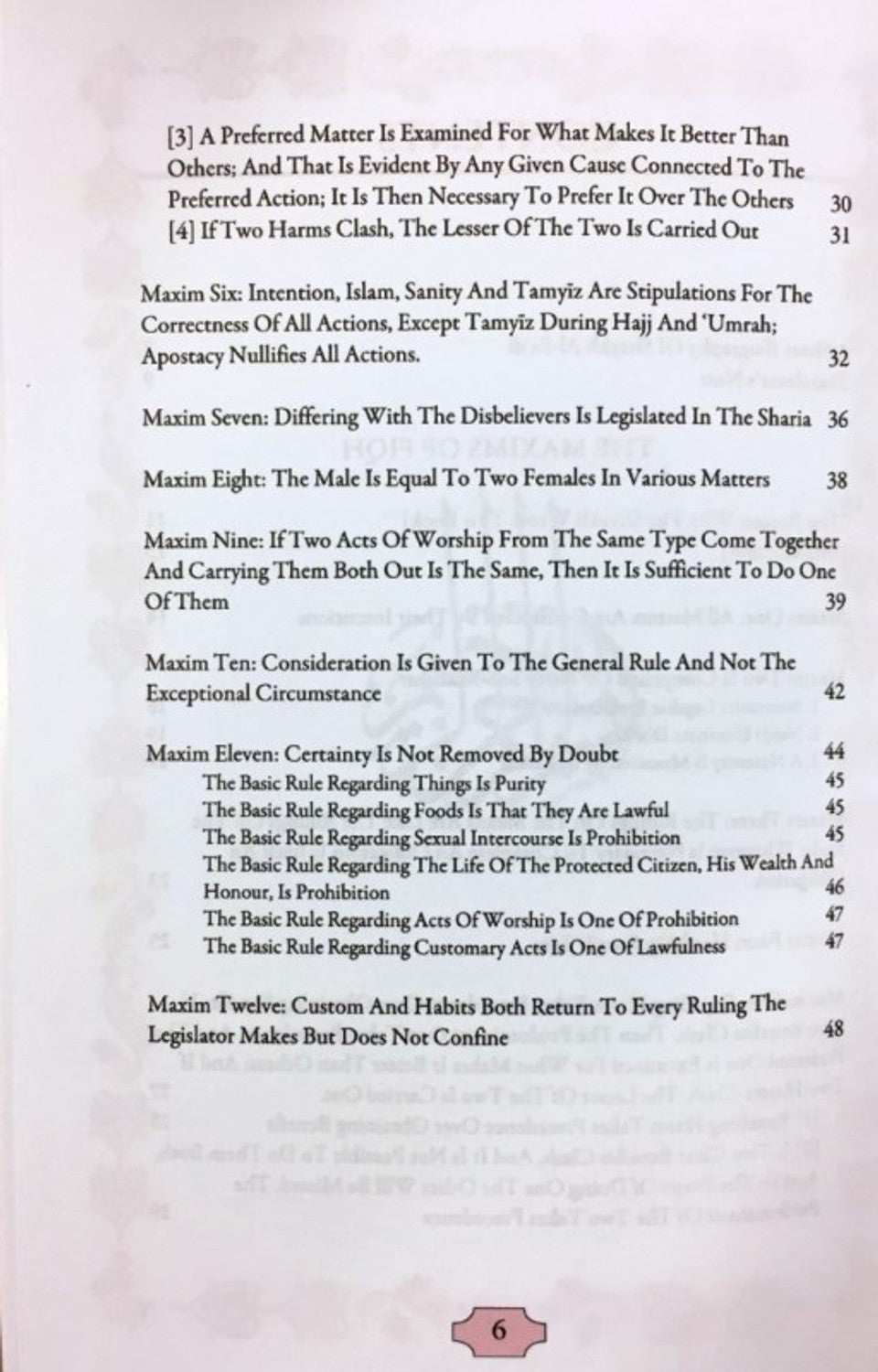
[3] المصلحة الراجحة يُنظر فيها إلى ما يجعلها أفضل من غيرها، ويتضح ذلك بأي سبب متعلق بالفعل المرجوح، فيتعين حينئذ ترجيحها على غيرها. [4] إذا تعارضت مفسدتان، روعي أعظمهما بارتكاب أخفهما.
القاعدة السادسة: النية، والإسلام، والعقل، والتمييز شروط لصحة جميع الأعمال، إلا التمييز في الحج والعمرة؛ والردة تبطل جميع الأعمال. 30 31 32
القاعدة السابعة: مخالفة الكفار شريعة في الإسلام. 36
القاعدة الثامنة: الذكر كأنثيين في مسائل متنوعة. 38
القاعدة التاسعة: إذا اجتمعت عبادتان من جنس واحد وكان القيام بهما على نفس الوجه، فإنه يكفي القيام بإحداهما. 39
القاعدة العاشرة: العبرة بالغالب لا بالنادر. 42
القاعدة الحادية عشرة: اليقين لا يزول بالشك.
الأصل في الأشياء الطهارة. 44 45
الأصل في الأطعمة الحل. 45
الأصل في الأبضاع التحريم. 45
الأصل في دم المعصوم وماله وعرضه التحريم.
الأصل في العبادات الحظر.
الأصل في العادات الإباحة.
القاعدة الثانية عشرة: العادات والتقاليد مرجع لكل حكم وضعه الشارع ولم يحدده.
ص 04
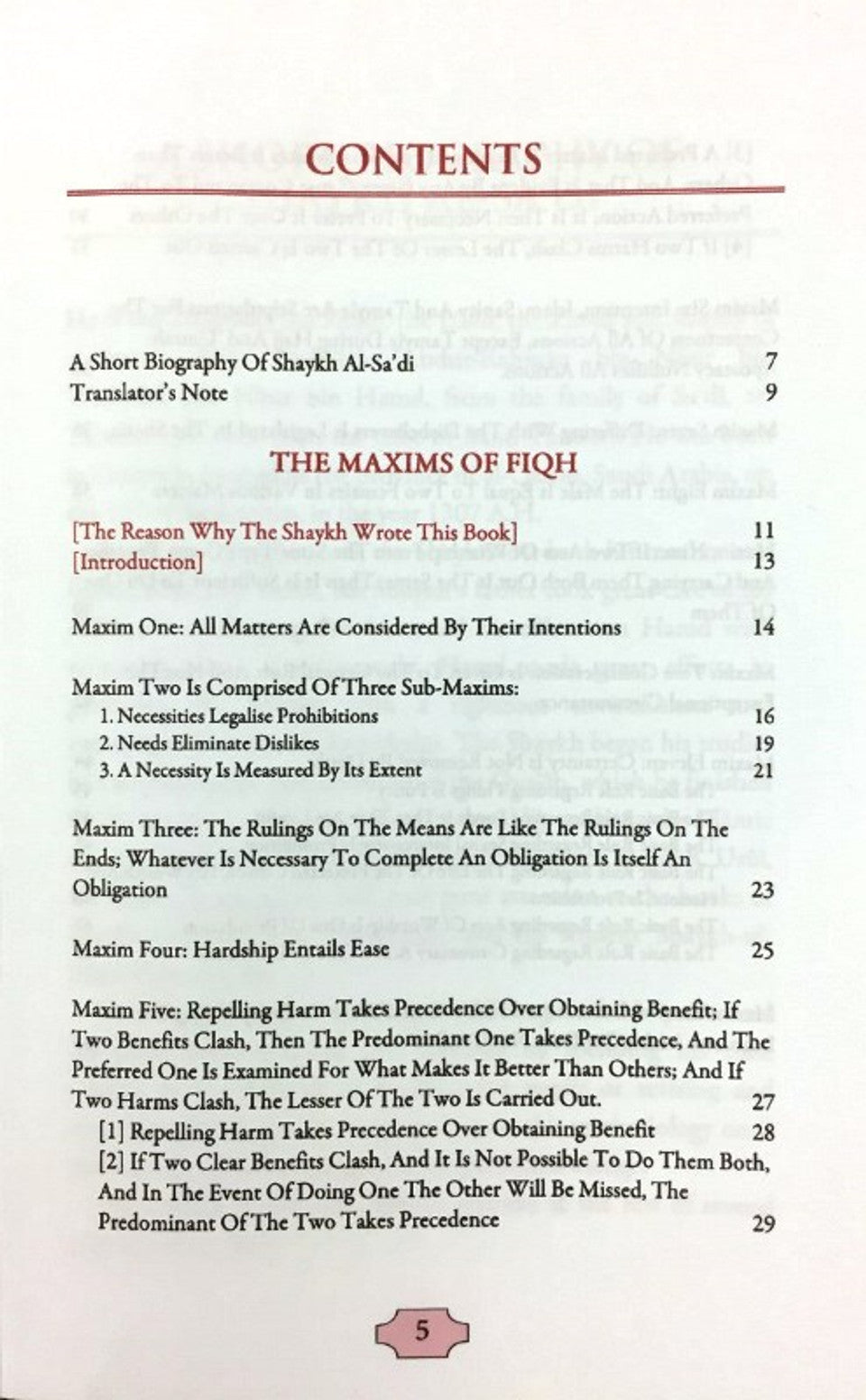
المحتويات
نبذة مختصرة عن حياة الشيخ السعدي
ملاحظة المترجم
القواعد الفقهية
[سبب تأليف الشيخ لهذا الكتاب]
[المقدمة]
القاعدة الأولى: الأمور بمقاصدها.
القاعدة الثانية وتتضمن ثلاث قواعد فرعية:
1. الضرورات تبيح المحظورات.
2. الحاجات ترفع الكراهة.
3. الضرورة تقدر بقدرها.
القاعدة الثالثة: أحكام الوسائل كأحكام المقاصد؛ وما لا يتم الواجب إلا به فهو واجب.
القاعدة الرابعة: المشقة تجلب التيسير.
القاعدة الخامسة: درء المفاسد مقدم على جلب المصالح؛ وإذا تعارضت مصلحتان، قُدمت الأرجح منهما، ويُنظر في المصلحة الراجحة إلى ما يجعلها أفضل من غيرها؛ وإذا تعارضت مفسدتان، روعي أعظمهما بارتكاب أخفهما.
[1] درء المفاسد مقدم على جلب المصالح.
[2] إذا تعارضت مصلحتان ظاهرتان، ولم يمكن القيام بهما معاً، وإذا فُعلت إحداهما فاتت الأخرى، قُدمت الأرجح منهما.
الناشر
Dar Makkah International Publishing
مؤلف
- الشيخ عبد الرحمن بن ناصر السعدي
الشحن والتوصيل
نقوم بشحن الطلبات مباشرة من مستودعاتنا في المملكة المتحدة والولايات المتحدة الأمريكية، ونقدم خيارات شحن متعددة لتناسب احتياجاتك. نحن نشحن بفخر إلى جميع أنحاء العالم.
عمليات التسليم في المملكة المتحدة (من مستودع المملكة المتحدة):
يصل الشحن القياسي عادةً في غضون 3-4 أيام عمل. يستغرق التسليم السريع 2-3 أيام عمل. نهدف إلى شحن الطلبات في نفس اليوم أو يوم العمل التالي، مع توفر خيارات التوصيل في اليوم التالي حيثما ينطبق ذلك.
عمليات التسليم في الولايات المتحدة الأمريكية (من مستودع الولايات المتحدة الأمريكية):
تصل الطلبات عادةً في غضون 4-7 أيام عمل.
أوروبا (يتم الشحن من المملكة المتحدة):
يستغرق التسليم القياسي حوالي 6-10 أيام عمل، مع توفر خدمات الشحن السريع في غضون 3-5 أيام عمل.
كندا:
الوقت المقدر للتسليم هو 5-10 أيام عمل.
الشحن في جميع أنحاء العالم:
تصل الطلبات الدولية بشكل عام في غضون 5-20 يوم عمل، اعتمادًا على الوجهة وطريقة الشحن المختارة.
للحصول على جداول زمنية دقيقة للتسليم بناءً على موقعك، يرجى الاتصال بنا عبر البريد الإلكتروني وسيقدم فريقنا معلومات مفصلة ومخصصة لعنوانك.
صفحات العينة - المحتوى
ص 01
القواعد الفقهية
تأليف الشيخ عبد الرحمن بن ناصر السعدي
دار مكة العالمية
ص 02
القواعد الفقهية
القاعدة العاشرة: العبرة بالغالب ولا عبرة بالنادر
ومعناها أن الأمور التي تتفق في العادة والسبب، ولكنها تختلف في بعض الأحوال بحيث لا يوجد لها سبب شرعي، ففي مثل هذه الحالات يتم العمل بالحكم العام حتى وإن انتفى السبب (الشرعي). والسفر يوضح ذلك: فقد شُرعت رخص كثيرة للسفر اعتبارا لمظنة المشقة، مثل قصر الصلاة والجمع، والفطر، ونحو ذلك. ولذلك، إذا لم يجد المسافر مشقة في سفره أصلاً، فلا يقال له إنه لا يجوز له شيء من رخص السفر لانتفاء السبب الموجب لها. بل كل رخص السفر مباحة له، مع اعتبار الأحوال النادرة بالقياس على الأحكام العامة.
وكذلك جمع المقيم بين صلاتين في جماعة بسبب المطر؛ فهذا جائز لمن هو في المسجد، أو في بيته، أو من كان طريقه إلى المسجد مغطى. 42
ص 03
[3] المصلحة الراجحة يُنظر فيها إلى ما يجعلها أفضل من غيرها، ويتضح ذلك بأي سبب متعلق بالفعل المرجوح، فيتعين حينئذ ترجيحها على غيرها. [4] إذا تعارضت مفسدتان، روعي أعظمهما بارتكاب أخفهما.
القاعدة السادسة: النية، والإسلام، والعقل، والتمييز شروط لصحة جميع الأعمال، إلا التمييز في الحج والعمرة؛ والردة تبطل جميع الأعمال. 30 31 32
القاعدة السابعة: مخالفة الكفار شريعة في الإسلام. 36
القاعدة الثامنة: الذكر كأنثيين في مسائل متنوعة. 38
القاعدة التاسعة: إذا اجتمعت عبادتان من جنس واحد وكان القيام بهما على نفس الوجه، فإنه يكفي القيام بإحداهما. 39
القاعدة العاشرة: العبرة بالغالب لا بالنادر. 42
القاعدة الحادية عشرة: اليقين لا يزول بالشك.
الأصل في الأشياء الطهارة. 44 45
الأصل في الأطعمة الحل. 45
الأصل في الأبضاع التحريم. 45
الأصل في دم المعصوم وماله وعرضه التحريم.
الأصل في العبادات الحظر.
الأصل في العادات الإباحة.
القاعدة الثانية عشرة: العادات والتقاليد مرجع لكل حكم وضعه الشارع ولم يحدده.
ص 04
المحتويات
نبذة مختصرة عن حياة الشيخ السعدي
ملاحظة المترجم
القواعد الفقهية
[سبب تأليف الشيخ لهذا الكتاب]
[المقدمة]
القاعدة الأولى: الأمور بمقاصدها.
القاعدة الثانية وتتضمن ثلاث قواعد فرعية:
1. الضرورات تبيح المحظورات.
2. الحاجات ترفع الكراهة.
3. الضرورة تقدر بقدرها.
القاعدة الثالثة: أحكام الوسائل كأحكام المقاصد؛ وما لا يتم الواجب إلا به فهو واجب.
القاعدة الرابعة: المشقة تجلب التيسير.
القاعدة الخامسة: درء المفاسد مقدم على جلب المصالح؛ وإذا تعارضت مصلحتان، قُدمت الأرجح منهما، ويُنظر في المصلحة الراجحة إلى ما يجعلها أفضل من غيرها؛ وإذا تعارضت مفسدتان، روعي أعظمهما بارتكاب أخفهما.
[1] درء المفاسد مقدم على جلب المصالح.
[2] إذا تعارضت مصلحتان ظاهرتان، ولم يمكن القيام بهما معاً، وإذا فُعلت إحداهما فاتت الأخرى، قُدمت الأرجح منهما.
من هو عبد الرحمن بن ناصر السعدي؟
كان الشيخ عبد الرحمن بن ناصر السعدي (١٨٨٩-١٩٥٦) عالمًا وفقيهًا وعالم دين سعوديًا بارزًا، اشتهر بخبرته في تفسير القرآن الكريم والفقه الإسلامي. يُعدّ كتابه الأشهر "تفسير السعدي" (تيسير الكريم الرحمن في تفسير كلام المنان)، تفسيرًا موجزًا وواسع الفهم للقرآن الكريم، يتميز بوضوحه وبساطته. ركّز السعدي على جعل التعاليم الإسلامية مفهومة وعملية للمسلمين العاديين، داعيًا إلى نهج متوازن ومباشر في الإيمان والعبادة قائم على القرآن والسنة. ولا تزال تعاليمه محل تقدير لأهميتها وعمقها في الدراسات الإسلامية.