


1
/
ل
7
الآداب الإسلامية – دليل شامل للأخلاق الحميدة والسلوك القويم في الإسلام
الآداب الإسلامية – دليل شامل للأخلاق الحميدة والسلوك القويم في الإسلام
No reviews
Publisher:
Claritas Books
Author:
الشيخ عبد الفتاح أبو غدة
Language:
إنجليزي
Binding:
غلاف ناعم
Pages: 101
Size: 14 × 22 سم
السعر العادي
$13.99 USD
السعر العادي
سعر البيع
$13.99 USD
سعر الوحدة
/
لكل
يتم احتساب الشحن عند الخروج.
لم نتمكن من تحميل توفر الاستلام


محتوى قابل للطي
وصف كتاب إسلامي
الآداب الإسلامية – دليل كامل للآداب والسلوك الحميد في الإسلام
كتاب "الآداب الإسلامية" لـ الشيخ عبد الفتاح أبو غدة هو دليل عملي للآداب والسلوك الإسلامي الصحيح. يشرح الكتاب الآداب الأساسية في الحياة اليومية، بما في ذلك التفاعلات الاجتماعية، وزيارة الآخرين، وآداب المحادثة، وآداب الطعام بناءً على التعاليم الإسلامية.
من المؤلف:
كتاب "الآداب الإسلامية"، الذي كتبه أحد أبرز علماء القرن العشرين، هو كتاب حيوي يجسد الشخصية الإسلامية الراقية. كان الشيخ عبد الفتاح أبو غدة (1917-1997) عالمًا رائدًا في مجال الحديث، وسعى ليس فقط في رواية الأحاديث النبوية، بل أيضًا في جعلها حقيقة حية. يناقش هذا الكتاب الآداب الأساسية ويغطي المجالات التالية: نطاق الآداب الإسلامية، أهمية المظهر، دخول المنزل ومغادرته، آداب الزيارة، آداب المحادثة، الآداب الاجتماعية، التواصل مع غير المسلمين، آداب الطعام، حفلات الزفاف، زيارة المريض، التعازي.
الصفحة ٠١
...يسخر قوم من قوم، لعلهم أن يكونوا خيراً منهم، ولا نساء من نساء... ولا أحد... لا... ولا أحد فيها... وإذا لم تجدوا فيها أحداً، ف... خير من الأول، ولا تعيبوا أنفسكم... لم يكن فاحشاً ولا متفحشاً... فاحش... أسماء. بئس الاسم... أن تشتم... ولا كان يستمع إلى... فاحشاً ولا... فِعْل... خُلُقٍ حَسَن... الله. إن الله... من لم يتب... التحدث بوضوح... الحصول على إذن قبل الدخول... ولا تُصَعِّر خَدَّك للناس ولا تمش في الأرض مرحاً إن الله لا يحب... (نساء) يسخرن من نساء... يكرهه (فكرهتموه)... لعل الأخيرات خير من... يقبل التوبة، رحيم. يا أيها الذين آمنوا... الأخيرات خير من... اذهبوا... هم... خير من... لا تستأذنوا... والله... الأخلاق الإسلامية... الشيخ عبد الفتاح أبو غدة.
الصفحة ٠٢
نشر دار "أويكنينج للنشر" (Awakening Publications)، مركز أبلاندز للأعمال، شارع برنارد، سوانزي، SA2 0DR، المملكة المتحدة.
دار "أويكنينج للنشر"، مركز أبلاندز للأعمال، شارع برنارد، سوانزي، SA2 0DR، المملكة المتحدة. ص.ب ٣٦٠٠٠٩، ميلبيتاس، كاليفورنيا ٩٥٠٣٦، الولايات المتحدة الأمريكية.
جميع الحقوق محفوظة لدار "أويكنينج للنشر" ٢٠١٧. هذا الكتاب محمي بحقوق الطبع والنشر. مع مراعاة الاستثناءات القانونية وأحكام اتفاقيات الترخيص الجماعي ذات الصلة، لا يجوز إعادة إنتاج أي جزء منه دون إذن كتابي من دار "أويكنينج للنشر".
الطبعة الأولى: مايو ٢٠٠١ / ربيع الأول ١٤٢٢. الطبعة الثانية: يونيو ٢٠٠٣ / ربيع الأول ١٤٢٤. الطبعة الثالثة: يوليو ٢٠٠٧ / رجب ١٤٢٨. الطبعة الرابعة: يناير ٢٠١٧ / جمادى الأولى ١٤٣٨.
طُبع بواسطة شركة "ميجا برنتنج" في تركيا. تم التنضيد بخط "بيمبو" ١١/١٤.
سجل فهرسة هذا الكتاب متاح لدى المكتبة البريطانية. بيانات الفهرسة الخاصة بمكتبة الكونجرس.
الرسول الكريم - الأخلاق الإسلامية - تأليف الشيخ عبد الفتاح أبو غدة، ترجمة محمد زاهد أبو غدة، تحرير س. م. حسن البنا. صفحات متعددة. يتضمن مراجع ببليوغرافية. ١. الإسلام - عام - علم الاجتماع. ١. العنوان.
شكر خاص لـ: وسيم، أيمن، هبة، عطية، عبد الباسط، علياء، معتصم، نديم، وجيلاني.
الصفحة ٠٣
المحتويات:
تصدير.
مقدمة المترجم.
مقدمة المؤلف.
الفصل الأول: نطاق الأخلاق الإسلامية.
الفصل الثاني: أهمية المظهر.
الفصل الثالث: آداب الزيارة.
الفصل الرابع: آداب دخول المنزل والخروج منه.
الفصل الخامس: آداب الحديث.
الفصل السادس: الآداب الاجتماعية.
الفصل السابع: التعامل مع غير المسلمين.
الفصل الثامن: آداب الأكل والشرب.
الفصل التاسع: آداب الزفاف.
الفصل العاشر: عيادة المريض.
الفصل الحادي عشر: آداب السفر.
الفصل الثاني عشر: التعازي.
ملحق: سيرة المؤلف. هوامش.
الصفحة ٠٤
عاش معظم حياته. سيمكنك هذا الكتاب من الحصول على لمحات ثاقبة عن شخصيته وأخلاقه وتفانيه في مشاركتها مع إخوانه وأخواته المسلمين ورؤيتهم يطبقونها في جميع جوانب حياتهم.
على الرغم من أن هذه هي الترجمة الأولى لهذا الكتاب، إلا أن هناك كتّاباً كتبوا في هذا الموضوع باستخدام الطبعة العربية بشكل مكثف مع تجاهل تام للحقوق الفكرية. هذه الترجمة هي نسخة موسعة من الطبعة العربية الأولى؛ حوالي ثلثها مواد جديدة من ملاحظات والدي وإضافاته. الأحاديث المذكورة موثقة، وكُتبت الأسماء العربية بناءً على ذلك مع بعض التعديلات وفقاً لدليل شيكاغو للأسلوب.
أود أن أشكر أولئك الذين راجعوا الترجمة وشاركوا ملاحظاتهم القيمة، وخاصة الأخت هبة عطية والأخ عبد الباسط خان. جزاهم الله خيراً. سأكون ممتناً لسماع تعليقات القراء واقتراحاتهم. كما أدعو أصدقاء والدي، طيب الله ثراه، لمشاركتنا القصص والحكايات والصور والأشرطة والفيديوهات ليتم إدراجها في كتاب قادم مخصص بالكامل لحياته العظيمة.
أدعو الله بأفضل الثواب لنبينا، وورثته -علماء الإسلام- ومن تبع طريقهم إلى السعادة والنجاة في الدنيا والآخرة. آمين.
محمد زاهد أبو غدة، ديسمبر ٢٠٠٠، تورونتو، كندا.
مقدمة المؤلف:
الحمد لله رب العالمين، وأفضل الصلاة والسلام على رسول الله محمد، وعلى آله وصحبه وتابعيه الصالحين الذين اتبعوا هديه وآدابه. اللهم! وفقنا لاتباعهم في أقوالنا وأفعالنا حتى نغادر هذه الحياة. هذا كتاب صغير في آداب الإسلام جمعت فيه نصوصاً مختارة حول هذا الموضوع المهم. الأحاديث المذكورة في هذا الكتاب إما صحيحة أو حسنة.
لقد كتبت هذا الكتاب لأنني رأيت الكثير من إخواني وأخواتي الأعزاء يتجاهلون هذه الآداب ويسيئون تفسيرها. ومن خلال تجميعه، آمل أن أذكرهم بهذه الآداب. لا أدعي أنني أفضل أو أقل حاجة إلى ممارسة هذه الآداب؛ ولكنها واجب الأمر بالمعروف والنهي عن المنكر واتباع أوامر الله: "وذكر فإن الذكرى تنفع المؤمنين" (القرآن، ٥١:٥٥).
جعلنا الله جميعاً نستفيد من التذكير بالخير وجعل هذا نافعاً لي وللقراء. حفظنا الله وكان هادينا في الدنيا والآخرة.
الشيخ عبد الفتاح أبو غدة، ١ محرم ١٤١٢، الرياض، المملكة العربية السعودية.
الصفحة ٠٥
ترسيخ الإسلام في جميع مجالات المجتمع. كان كثيراً ما يقول: "لا أبالي حين أُقتل مسلماً، على أي جنب كان في الله مصرعي".
اختار الشيخ أبو غدة الكتابة في هذا الموضوع لأنه لاحظ الكثير من الناس يتجاهلون هذه الآداب الأساسية أو يسيئون تفسيرها. لذا، فإنه لشرف لدار "أويكنينج للنشر" أن تنشر مثل هذا الكتاب، في مثل هذا الموضوع، ومن قِبَل مثل هذا الشخص.
س. م. حسن البنا، مايو ٢٠٠١، لندن.
مقدمة المترجم:
الحمد لله، والصلاة الكاملة على رسوله محمد، هدية الله الرحيمة للبشرية. يجسد هذا الكتاب شخصية المؤلف، والدي المحترم. في أخلاقه وأسلوبه، كان كاملاً بقدر ما يستطيع البشر في اتباع مثال النبي ﷺ الذي صوره الله في القرآن: "وإنك لعلى خلق عظيم" (القرآن، ٦٨:٤).
كان والدي مراقباً دقيقاً يلاحظ أدنى خطأ في الآداب والأسلوب، وكان يتمتع بحس جمالي رفيع في وضع كل عنصر، سواء كانت أريكة أو حذاء في مكانه الصحيح. بارك الله فيه. كان حريصاً جداً على غرس هذه الآداب الرفيعة فيمن حوله: أطفاله وأحفاده وطلابه. لم يكن المظهر أقل أهمية بالنسبة له على الرغم من تواضعه الشديد. لم تستطع أن تجد خطأً في لحيته وشاربه المقصوصين والممشطين، وأظافره المقلمة، وملابسه النظيفة الناصعة، وحذائه اللامع النظيف. عندما تقترب منه، تستمتع برائحة عطره المفضل، الذي ركبه له خصيصاً صانع عطور مخلص في حلب، المدينة التي أحبته حباً لا يوصف.
كان هذا الكتاب عزيزاً على قلبه لأنه كان يشعر بأن المسلمين يمتلكون ثروة عظيمة من الآداب والأساليب المتجلية في حياة نبينا وحياة أصحابه، وكذلك حياة علماء المسلمين العظماء الذين قضى حياته في دراسة سيرهم.
الصفحة ٠٦
الفصل الأول: نطاق الأخلاق الإسلامية.
لدين الإسلام قواعد آداب وأخلاق تغطي كل جانب من جوانب الحياة. وهي قابلة للتطبيق على المجتمع بأسره: الصغار والكبار، الرجال والنساء. يجب ألا ننسى أن النبي ﷺ قال: "إنما النساء شقائق الرجال". وبناءً عليه، فإن ما هو مطلوب من الرجال في التزام الأخلاق الإسلامية، مطلوب كذلك من النساء؛ لأنهما معاً يشكلان المجتمع المسلم، ومن خلالهما يُقدَّم الإسلام ويُعرف.
تغطي هذه الآداب حتى الأعمال البسيطة، مثل دخول الحمام أو الخروج منه، ووضعية الجلوس، وتنظيف النفس. في عهد النبي ﷺ، قال أحد المشركين ساخراً لسلمان الفارسي: "قد علمكم نبيكم كل شيء حتى الخراءة؟"، أجاب سلمان: "أجل، لقد نهانا النبي أن نستقبل القبلة عند التبول أو التغوط". وأضاف سلمان: "نهانا النبي أن نستنجي باليمين، وأن نستنجي بأقل من ثلاثة أحجار".
يدعو الإسلام إلى هذه الآداب ويؤكد عليها من أجل إكمال الشخصية الإسلامية وإحداث الانسجام بين الناس. لا شك أن تجسيد هذه الأخلاق والفضائل يعزز الأسلوب والصفات الشخصية، ويصقل الشخصية، ويقربنا من قلوب وعقول الآخرين. كما أنها تجعل الحياة أسهل لأننا نعرف ما يجب فعله وما نتوقعه من الآخرين. الآداب التالية هي جوهر الإسلام ومقاصده وأهدافه. وتسميتها "آداباً" لا يعني بأي حال من الأحوال...
الصفحة ٠٧
"يا أيها الذين آمنوا لا..."
الأخلاق الإسلامية
الشيخ عبد الفتاح أبو غدة
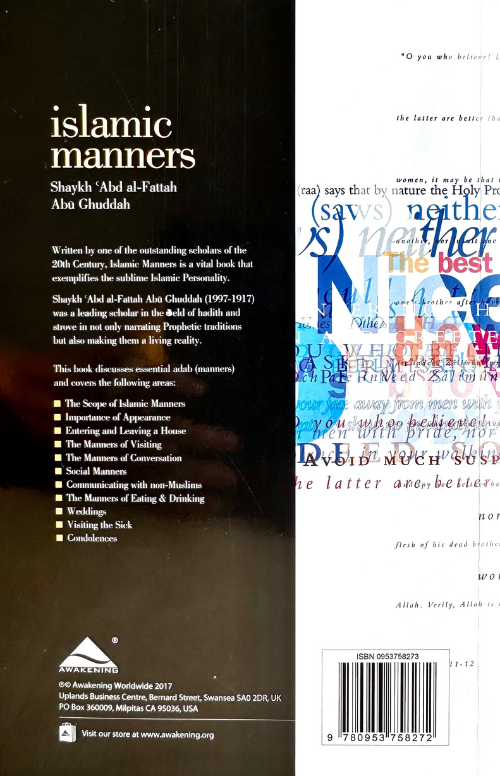
كتبه أحد أبرز علماء القرن العشرين، "الأخلاق الإسلامية" كتاب حيوي يجسد الشخصية الإسلامية السامية.
كان الشيخ عبد الفتاح أبو غدة (١٩١٧-١٩٩٧) عالماً رائداً في مجال الحديث، ولم يجتهد في رواية السنن النبوية فحسب، بل في جعلها واقعاً حياً.
يناقش هذا الكتاب الآداب الأساسية ويغطي المجالات التالية:
نطاق الأخلاق الإسلامية، أهمية المظهر، دخول المنزل والخروج منه، آداب الزيارة، آداب الحديث، الآداب الاجتماعية، التعامل مع غير المسلمين، آداب الأكل والشرب، الزفاف، عيادة المريض، التعازي.
لعل الأخيرات خير من... نساء، لعل... (رضي الله عنها) تقول إن طبيعة النبي الكريم... (صلى الله عليه وسلم) لم يكن هذا ولا ذاك... الأفضل... يا أيها الذين... وجهك... لا تصعر خدك للناس... كبر... ولا... تجنب الكثير... الأخيرات خير من... لحم أخيه ميتاً؟
أويكنينج (Awakening)
أويكنينج وورلدوايد، مركز أبلاندز للأعمال، شارع برنارد، سوانزي SA2 0DR، المملكة المتحدة.
ص.ب ٣٦٠٠٠٩، ميلبيتاس CA ٩٥٠٣٦، الولايات المتحدة الأمريكية.
تفضلوا بزيارة متجرنا على www.awakening.org
الله. إن الله هو...
الناشر
Claritas Books
مؤلف
- الشيخ عبد الفتاح أبو غدة
الشحن والتوصيل
نقوم بشحن الطلبات مباشرة من مستودعاتنا في المملكة المتحدة والولايات المتحدة الأمريكية، ونقدم خيارات شحن متعددة لتناسب احتياجاتك. نحن نشحن بفخر إلى جميع أنحاء العالم.
عمليات التسليم في المملكة المتحدة (من مستودع المملكة المتحدة):
يصل الشحن القياسي عادةً في غضون 3-4 أيام عمل. يستغرق التسليم السريع 2-3 أيام عمل. نهدف إلى شحن الطلبات في نفس اليوم أو يوم العمل التالي، مع توفر خيارات التوصيل في اليوم التالي حيثما ينطبق ذلك.
عمليات التسليم في الولايات المتحدة الأمريكية (من مستودع الولايات المتحدة الأمريكية):
تصل الطلبات عادةً في غضون 4-7 أيام عمل.
أوروبا (يتم الشحن من المملكة المتحدة):
يستغرق التسليم القياسي حوالي 6-10 أيام عمل، مع توفر خدمات الشحن السريع في غضون 3-5 أيام عمل.
كندا:
الوقت المقدر للتسليم هو 5-10 أيام عمل.
الشحن في جميع أنحاء العالم:
تصل الطلبات الدولية بشكل عام في غضون 5-20 يوم عمل، اعتمادًا على الوجهة وطريقة الشحن المختارة.
للحصول على جداول زمنية دقيقة للتسليم بناءً على موقعك، يرجى الاتصال بنا عبر البريد الإلكتروني وسيقدم فريقنا معلومات مفصلة ومخصصة لعنوانك.
صفحات العينة - المحتوى
الصفحة ٠١
...يسخر قوم من قوم، لعلهم أن يكونوا خيراً منهم، ولا نساء من نساء... ولا أحد... لا... ولا أحد فيها... وإذا لم تجدوا فيها أحداً، ف... خير من الأول، ولا تعيبوا أنفسكم... لم يكن فاحشاً ولا متفحشاً... فاحش... أسماء. بئس الاسم... أن تشتم... ولا كان يستمع إلى... فاحشاً ولا... فِعْل... خُلُقٍ حَسَن... الله. إن الله... من لم يتب... التحدث بوضوح... الحصول على إذن قبل الدخول... ولا تُصَعِّر خَدَّك للناس ولا تمش في الأرض مرحاً إن الله لا يحب... (نساء) يسخرن من نساء... يكرهه (فكرهتموه)... لعل الأخيرات خير من... يقبل التوبة، رحيم. يا أيها الذين آمنوا... الأخيرات خير من... اذهبوا... هم... خير من... لا تستأذنوا... والله... الأخلاق الإسلامية... الشيخ عبد الفتاح أبو غدة.
الصفحة ٠٢
نشر دار "أويكنينج للنشر" (Awakening Publications)، مركز أبلاندز للأعمال، شارع برنارد، سوانزي، SA2 0DR، المملكة المتحدة.
دار "أويكنينج للنشر"، مركز أبلاندز للأعمال، شارع برنارد، سوانزي، SA2 0DR، المملكة المتحدة. ص.ب ٣٦٠٠٠٩، ميلبيتاس، كاليفورنيا ٩٥٠٣٦، الولايات المتحدة الأمريكية.
جميع الحقوق محفوظة لدار "أويكنينج للنشر" ٢٠١٧. هذا الكتاب محمي بحقوق الطبع والنشر. مع مراعاة الاستثناءات القانونية وأحكام اتفاقيات الترخيص الجماعي ذات الصلة، لا يجوز إعادة إنتاج أي جزء منه دون إذن كتابي من دار "أويكنينج للنشر".
الطبعة الأولى: مايو ٢٠٠١ / ربيع الأول ١٤٢٢. الطبعة الثانية: يونيو ٢٠٠٣ / ربيع الأول ١٤٢٤. الطبعة الثالثة: يوليو ٢٠٠٧ / رجب ١٤٢٨. الطبعة الرابعة: يناير ٢٠١٧ / جمادى الأولى ١٤٣٨.
طُبع بواسطة شركة "ميجا برنتنج" في تركيا. تم التنضيد بخط "بيمبو" ١١/١٤.
سجل فهرسة هذا الكتاب متاح لدى المكتبة البريطانية. بيانات الفهرسة الخاصة بمكتبة الكونجرس.
الرسول الكريم - الأخلاق الإسلامية - تأليف الشيخ عبد الفتاح أبو غدة، ترجمة محمد زاهد أبو غدة، تحرير س. م. حسن البنا. صفحات متعددة. يتضمن مراجع ببليوغرافية. ١. الإسلام - عام - علم الاجتماع. ١. العنوان.
شكر خاص لـ: وسيم، أيمن، هبة، عطية، عبد الباسط، علياء، معتصم، نديم، وجيلاني.
الصفحة ٠٣
المحتويات:
تصدير.
مقدمة المترجم.
مقدمة المؤلف.
الفصل الأول: نطاق الأخلاق الإسلامية.
الفصل الثاني: أهمية المظهر.
الفصل الثالث: آداب الزيارة.
الفصل الرابع: آداب دخول المنزل والخروج منه.
الفصل الخامس: آداب الحديث.
الفصل السادس: الآداب الاجتماعية.
الفصل السابع: التعامل مع غير المسلمين.
الفصل الثامن: آداب الأكل والشرب.
الفصل التاسع: آداب الزفاف.
الفصل العاشر: عيادة المريض.
الفصل الحادي عشر: آداب السفر.
الفصل الثاني عشر: التعازي.
ملحق: سيرة المؤلف. هوامش.
الصفحة ٠٤
عاش معظم حياته. سيمكنك هذا الكتاب من الحصول على لمحات ثاقبة عن شخصيته وأخلاقه وتفانيه في مشاركتها مع إخوانه وأخواته المسلمين ورؤيتهم يطبقونها في جميع جوانب حياتهم.
على الرغم من أن هذه هي الترجمة الأولى لهذا الكتاب، إلا أن هناك كتّاباً كتبوا في هذا الموضوع باستخدام الطبعة العربية بشكل مكثف مع تجاهل تام للحقوق الفكرية. هذه الترجمة هي نسخة موسعة من الطبعة العربية الأولى؛ حوالي ثلثها مواد جديدة من ملاحظات والدي وإضافاته. الأحاديث المذكورة موثقة، وكُتبت الأسماء العربية بناءً على ذلك مع بعض التعديلات وفقاً لدليل شيكاغو للأسلوب.
أود أن أشكر أولئك الذين راجعوا الترجمة وشاركوا ملاحظاتهم القيمة، وخاصة الأخت هبة عطية والأخ عبد الباسط خان. جزاهم الله خيراً. سأكون ممتناً لسماع تعليقات القراء واقتراحاتهم. كما أدعو أصدقاء والدي، طيب الله ثراه، لمشاركتنا القصص والحكايات والصور والأشرطة والفيديوهات ليتم إدراجها في كتاب قادم مخصص بالكامل لحياته العظيمة.
أدعو الله بأفضل الثواب لنبينا، وورثته -علماء الإسلام- ومن تبع طريقهم إلى السعادة والنجاة في الدنيا والآخرة. آمين.
محمد زاهد أبو غدة، ديسمبر ٢٠٠٠، تورونتو، كندا.
مقدمة المؤلف:
الحمد لله رب العالمين، وأفضل الصلاة والسلام على رسول الله محمد، وعلى آله وصحبه وتابعيه الصالحين الذين اتبعوا هديه وآدابه. اللهم! وفقنا لاتباعهم في أقوالنا وأفعالنا حتى نغادر هذه الحياة. هذا كتاب صغير في آداب الإسلام جمعت فيه نصوصاً مختارة حول هذا الموضوع المهم. الأحاديث المذكورة في هذا الكتاب إما صحيحة أو حسنة.
لقد كتبت هذا الكتاب لأنني رأيت الكثير من إخواني وأخواتي الأعزاء يتجاهلون هذه الآداب ويسيئون تفسيرها. ومن خلال تجميعه، آمل أن أذكرهم بهذه الآداب. لا أدعي أنني أفضل أو أقل حاجة إلى ممارسة هذه الآداب؛ ولكنها واجب الأمر بالمعروف والنهي عن المنكر واتباع أوامر الله: "وذكر فإن الذكرى تنفع المؤمنين" (القرآن، ٥١:٥٥).
جعلنا الله جميعاً نستفيد من التذكير بالخير وجعل هذا نافعاً لي وللقراء. حفظنا الله وكان هادينا في الدنيا والآخرة.
الشيخ عبد الفتاح أبو غدة، ١ محرم ١٤١٢، الرياض، المملكة العربية السعودية.
الصفحة ٠٥
ترسيخ الإسلام في جميع مجالات المجتمع. كان كثيراً ما يقول: "لا أبالي حين أُقتل مسلماً، على أي جنب كان في الله مصرعي".
اختار الشيخ أبو غدة الكتابة في هذا الموضوع لأنه لاحظ الكثير من الناس يتجاهلون هذه الآداب الأساسية أو يسيئون تفسيرها. لذا، فإنه لشرف لدار "أويكنينج للنشر" أن تنشر مثل هذا الكتاب، في مثل هذا الموضوع، ومن قِبَل مثل هذا الشخص.
س. م. حسن البنا، مايو ٢٠٠١، لندن.
مقدمة المترجم:
الحمد لله، والصلاة الكاملة على رسوله محمد، هدية الله الرحيمة للبشرية. يجسد هذا الكتاب شخصية المؤلف، والدي المحترم. في أخلاقه وأسلوبه، كان كاملاً بقدر ما يستطيع البشر في اتباع مثال النبي ﷺ الذي صوره الله في القرآن: "وإنك لعلى خلق عظيم" (القرآن، ٦٨:٤).
كان والدي مراقباً دقيقاً يلاحظ أدنى خطأ في الآداب والأسلوب، وكان يتمتع بحس جمالي رفيع في وضع كل عنصر، سواء كانت أريكة أو حذاء في مكانه الصحيح. بارك الله فيه. كان حريصاً جداً على غرس هذه الآداب الرفيعة فيمن حوله: أطفاله وأحفاده وطلابه. لم يكن المظهر أقل أهمية بالنسبة له على الرغم من تواضعه الشديد. لم تستطع أن تجد خطأً في لحيته وشاربه المقصوصين والممشطين، وأظافره المقلمة، وملابسه النظيفة الناصعة، وحذائه اللامع النظيف. عندما تقترب منه، تستمتع برائحة عطره المفضل، الذي ركبه له خصيصاً صانع عطور مخلص في حلب، المدينة التي أحبته حباً لا يوصف.
كان هذا الكتاب عزيزاً على قلبه لأنه كان يشعر بأن المسلمين يمتلكون ثروة عظيمة من الآداب والأساليب المتجلية في حياة نبينا وحياة أصحابه، وكذلك حياة علماء المسلمين العظماء الذين قضى حياته في دراسة سيرهم.
الصفحة ٠٦
الفصل الأول: نطاق الأخلاق الإسلامية.
لدين الإسلام قواعد آداب وأخلاق تغطي كل جانب من جوانب الحياة. وهي قابلة للتطبيق على المجتمع بأسره: الصغار والكبار، الرجال والنساء. يجب ألا ننسى أن النبي ﷺ قال: "إنما النساء شقائق الرجال". وبناءً عليه، فإن ما هو مطلوب من الرجال في التزام الأخلاق الإسلامية، مطلوب كذلك من النساء؛ لأنهما معاً يشكلان المجتمع المسلم، ومن خلالهما يُقدَّم الإسلام ويُعرف.
تغطي هذه الآداب حتى الأعمال البسيطة، مثل دخول الحمام أو الخروج منه، ووضعية الجلوس، وتنظيف النفس. في عهد النبي ﷺ، قال أحد المشركين ساخراً لسلمان الفارسي: "قد علمكم نبيكم كل شيء حتى الخراءة؟"، أجاب سلمان: "أجل، لقد نهانا النبي أن نستقبل القبلة عند التبول أو التغوط". وأضاف سلمان: "نهانا النبي أن نستنجي باليمين، وأن نستنجي بأقل من ثلاثة أحجار".
يدعو الإسلام إلى هذه الآداب ويؤكد عليها من أجل إكمال الشخصية الإسلامية وإحداث الانسجام بين الناس. لا شك أن تجسيد هذه الأخلاق والفضائل يعزز الأسلوب والصفات الشخصية، ويصقل الشخصية، ويقربنا من قلوب وعقول الآخرين. كما أنها تجعل الحياة أسهل لأننا نعرف ما يجب فعله وما نتوقعه من الآخرين. الآداب التالية هي جوهر الإسلام ومقاصده وأهدافه. وتسميتها "آداباً" لا يعني بأي حال من الأحوال...
الصفحة ٠٧
"يا أيها الذين آمنوا لا..."
الأخلاق الإسلامية
الشيخ عبد الفتاح أبو غدة
كتبه أحد أبرز علماء القرن العشرين، "الأخلاق الإسلامية" كتاب حيوي يجسد الشخصية الإسلامية السامية.
كان الشيخ عبد الفتاح أبو غدة (١٩١٧-١٩٩٧) عالماً رائداً في مجال الحديث، ولم يجتهد في رواية السنن النبوية فحسب، بل في جعلها واقعاً حياً.
يناقش هذا الكتاب الآداب الأساسية ويغطي المجالات التالية:
نطاق الأخلاق الإسلامية، أهمية المظهر، دخول المنزل والخروج منه، آداب الزيارة، آداب الحديث، الآداب الاجتماعية، التعامل مع غير المسلمين، آداب الأكل والشرب، الزفاف، عيادة المريض، التعازي.
لعل الأخيرات خير من... نساء، لعل... (رضي الله عنها) تقول إن طبيعة النبي الكريم... (صلى الله عليه وسلم) لم يكن هذا ولا ذاك... الأفضل... يا أيها الذين... وجهك... لا تصعر خدك للناس... كبر... ولا... تجنب الكثير... الأخيرات خير من... لحم أخيه ميتاً؟
أويكنينج (Awakening)
أويكنينج وورلدوايد، مركز أبلاندز للأعمال، شارع برنارد، سوانزي SA2 0DR، المملكة المتحدة.
ص.ب ٣٦٠٠٠٩، ميلبيتاس CA ٩٥٠٣٦، الولايات المتحدة الأمريكية.
تفضلوا بزيارة متجرنا على www.awakening.org
الله. إن الله هو...
من هو Shaykh Abd Al-Fattah Abu Ghuddah؟
Dr. S. Dawood Shah is known for his scholarly work on Seerah (the life and example of Prophet Muhammad ﷺ) and Islamic studies. In this book, he presents the educational aspects of the Prophet’s life with clarity and relevance to readers today.
العملاء يساعدون الآخرين من خلال التقييمات - جزاك اللهُ خيراً
4.94 ★ (49)
Verified