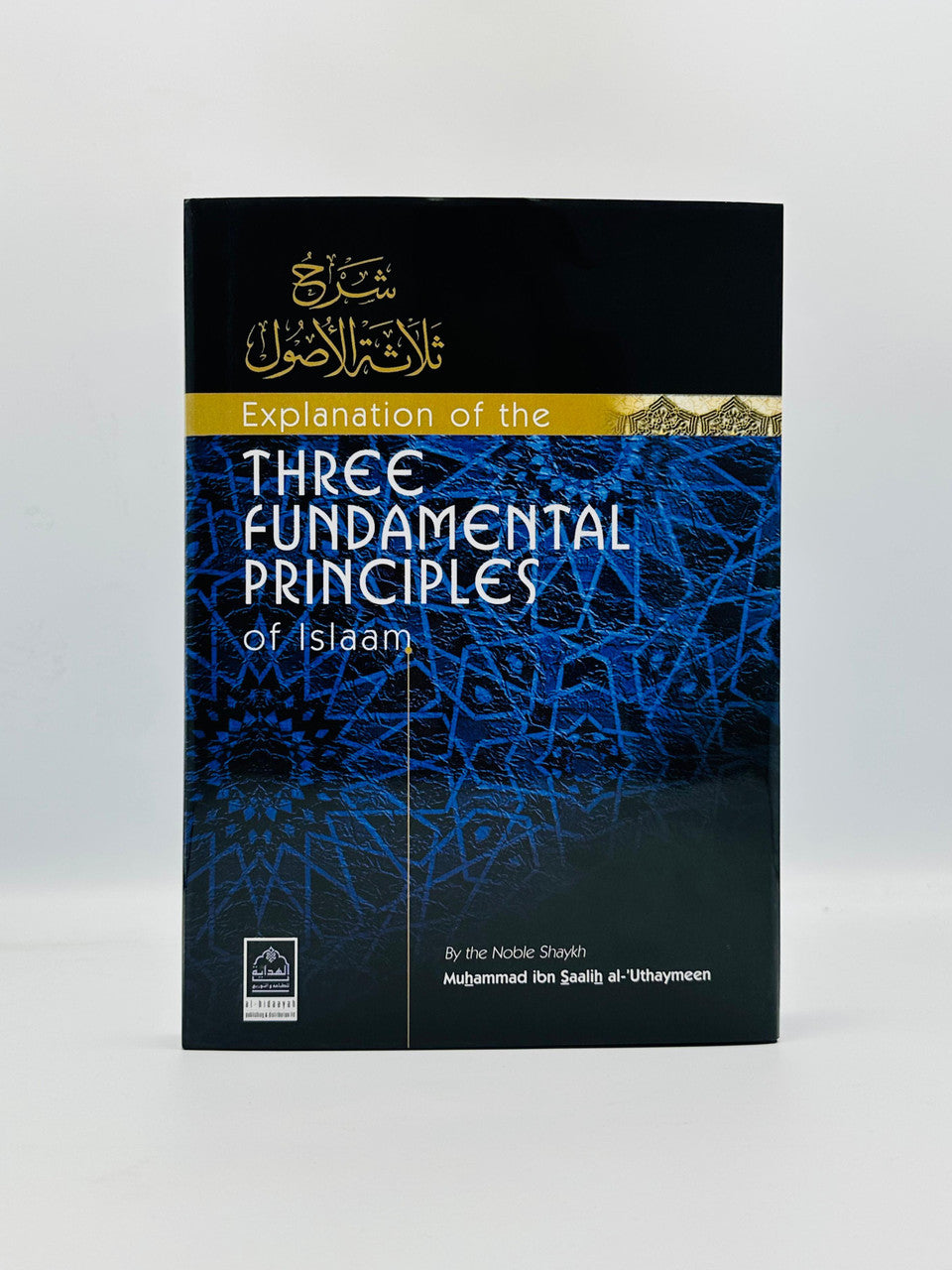
شرح أصول الإسلام الثلاثة – دليل التوحيد
Publisher:
Al Hidaayah Publishing
Author:
الشيخ محمد بن صالح العثيمين
Language:
إنجليزي
Binding:
غلاف مقوى
Pages: 260
Size: 16 × 21 سم
لم نتمكن من تحميل توفر الاستلام
محتوى قابل للطي
وصف كتاب إسلامي
شرح أصول الإسلام الثلاثة دليلٌ خالدٌ يُوضّح أركان الإيمان الأساسية: معرفة الله ودينه ورسوله ﷺ. ألّفه الشيخ محمد بن عبد الوهاب، وشرحه علماءٌ مرموقون، ويُقدّم فهمًا مبسطًا وعميقًا للعقيدة والتوحيد. مثاليٌّ للمبتدئين وطلبة العلم، فهو بمثابة خارطة طريقٍ لتقوية الإيمان وممارسة الإسلام على أسسٍ صحيحة.
من المؤلف:
كان الشيخ محمد بن صالح العثيمين (١٩٢٥-٢٠٠١) عالمًا فقهيًا ومعلمًا سعوديًا رائدًا. اشتهر بمعرفته العميقة بالقرآن الكريم والحديث والفقه والعقيدة، وألّف العديد من الكتب وألقى محاضرات لا تزال تُفيد المسلمين في جميع أنحاء العالم. وتجعله شروحه وفتاويه الواضحة من أبرز علماء العصر الحديث.
الناشر
Al Hidaayah Publishing
مؤلف
- الشيخ محمد بن صالح العثيمين
الشحن والتوصيل
نقوم بشحن الطلبات مباشرة من مستودعاتنا في المملكة المتحدة والولايات المتحدة الأمريكية، ونقدم خيارات شحن متعددة لتناسب احتياجاتك. نحن نشحن بفخر إلى جميع أنحاء العالم.
عمليات التسليم في المملكة المتحدة (من مستودع المملكة المتحدة):
يصل الشحن القياسي عادةً في غضون 3-4 أيام عمل. يستغرق التسليم السريع 2-3 أيام عمل. نهدف إلى شحن الطلبات في نفس اليوم أو يوم العمل التالي، مع توفر خيارات التوصيل في اليوم التالي حيثما ينطبق ذلك.
عمليات التسليم في الولايات المتحدة الأمريكية (من مستودع الولايات المتحدة الأمريكية):
تصل الطلبات عادةً في غضون 4-7 أيام عمل.
أوروبا (يتم الشحن من المملكة المتحدة):
يستغرق التسليم القياسي حوالي 6-10 أيام عمل، مع توفر خدمات الشحن السريع في غضون 3-5 أيام عمل.
كندا:
الوقت المقدر للتسليم هو 5-10 أيام عمل.
الشحن في جميع أنحاء العالم:
تصل الطلبات الدولية بشكل عام في غضون 5-20 يوم عمل، اعتمادًا على الوجهة وطريقة الشحن المختارة.
للحصول على جداول زمنية دقيقة للتسليم بناءً على موقعك، يرجى الاتصال بنا عبر البريد الإلكتروني وسيقدم فريقنا معلومات مفصلة ومخصصة لعنوانك.
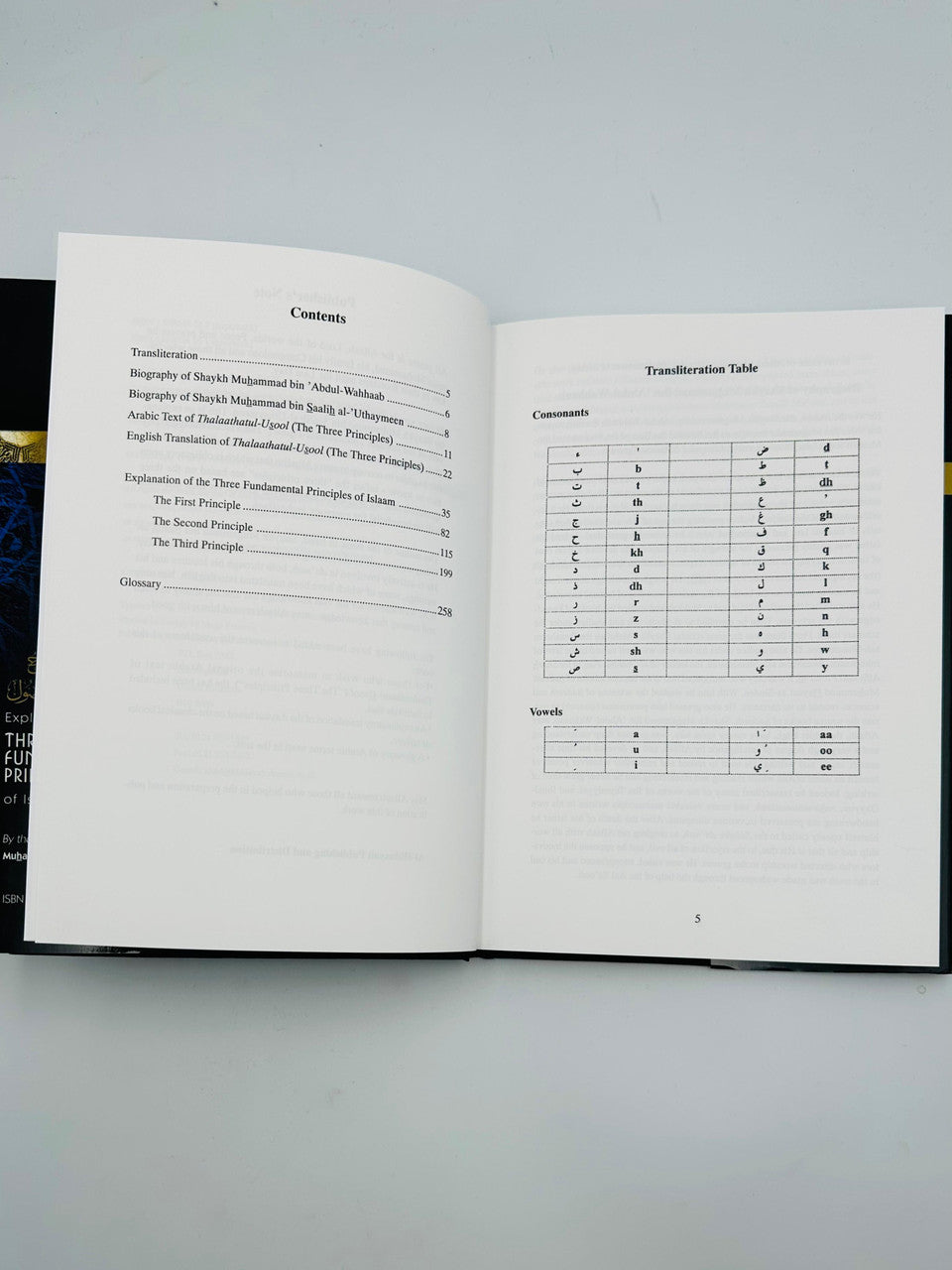
صفحات العينة - المحتوى
Page:01
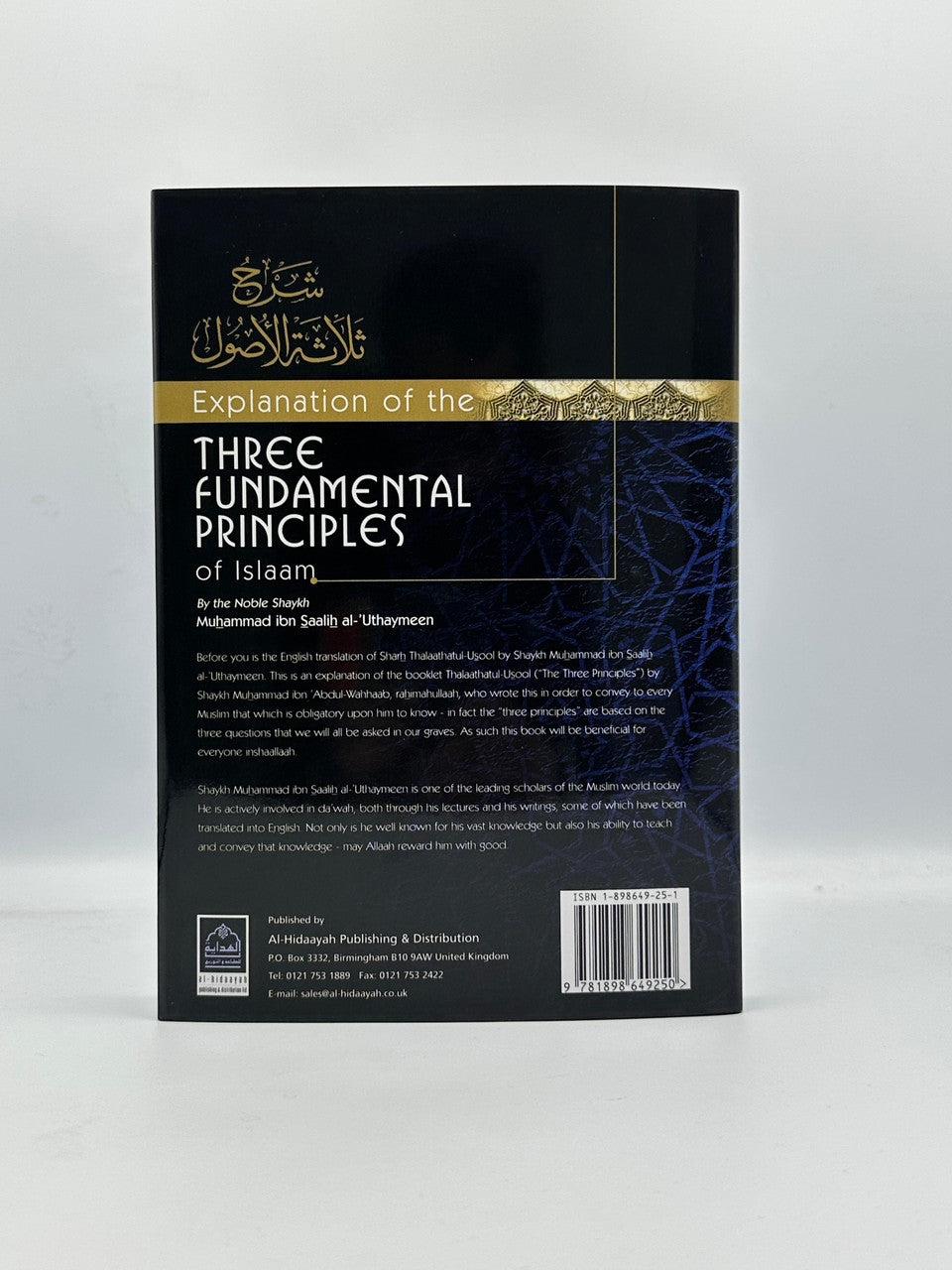
شراج ثلاثة الأصول
Explanation of the THAT THREE
FUNDAMENTAL PRINCIPLES
of Islaam
By the Noble Shaykh
Muhammad ibn Saalih al-'Uthaymeen
Before you is the English translation of Sharh Thalaathatul-Usool by Shaykh Muhammad ibn Saalih al-'Uthaymeen. This is an explanation of the booklet Thalaathatul-Usool ("The Three Principles") by Shaykh Muhammad ibn 'Abdul-Wahhaab, rahimahullaah, who wrote this in order to convey to every Muslim that which is obligatory upon him to know in fact the "three principles" are based on the three questions that we will all be asked in our graves. As such this book will be beneficial for everyone inshaallaah.
Shaykh Muhammad ibn Saalih al-'Uthaymeen is one of the leading scholars of the Muslim world today He is actively involved in da'wah, both through his lectures and his writings, some of which have been translated into English. Not only is he well known for his vast knowledge but also his ability to teach and convey that knowledge may Allaah reward him with good.
Page:02
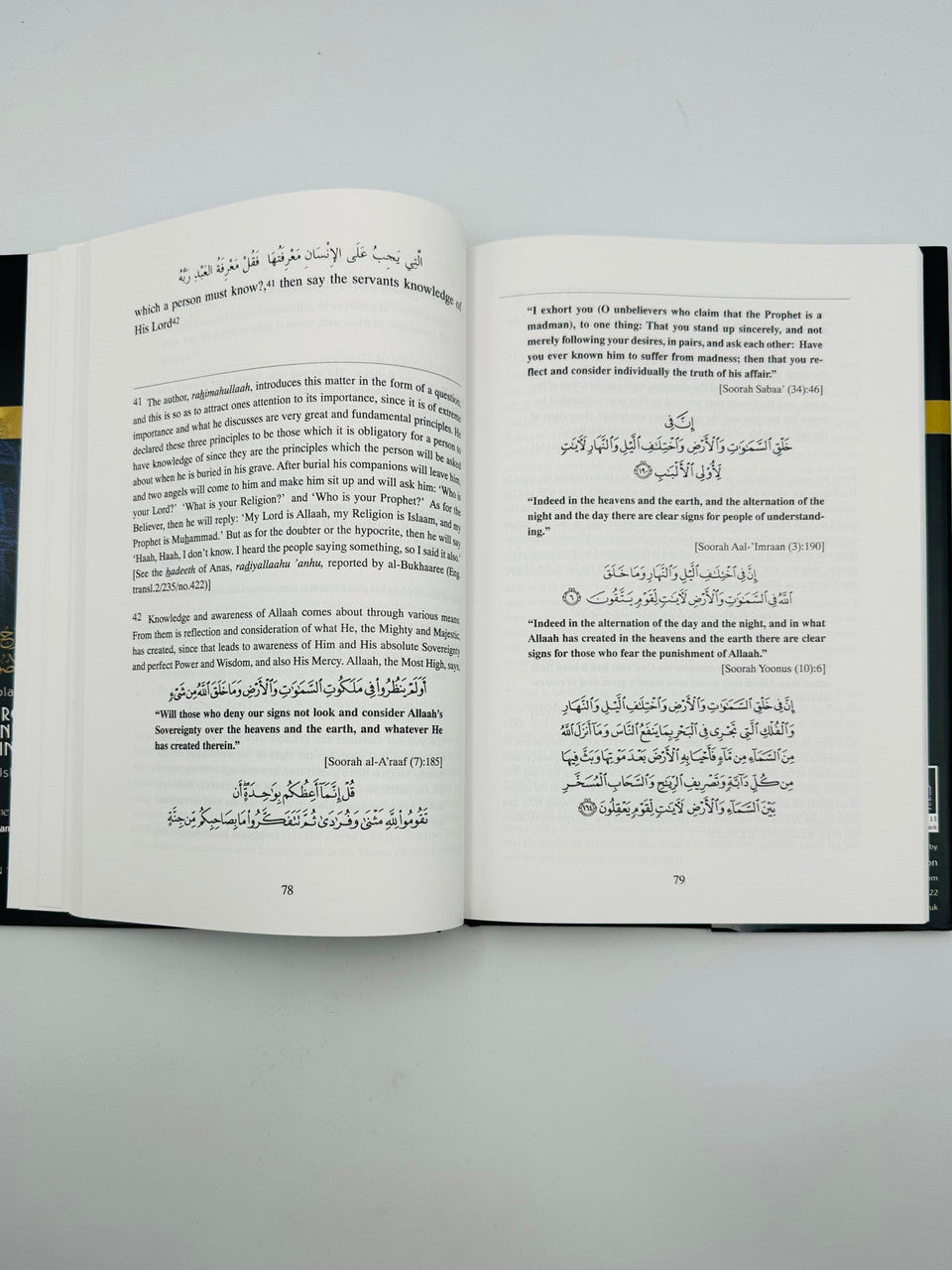
الَّتِي يَحِبُّ عَلَى الْإِنْسَانِ مَعْرِفَتُهَا فَقُلْ مَعْرِفَةُ العَبْدِ رَبَّهُ
which a person must know?,41 then say the servants knowledge of
His Lord42
41 The author, rahimahullaah, introduces this matter in the form of a question and this is so as to attract ones attention to its importance, since it is of extreme importance and what he discusses are very great and fundamental principles. He declared these three principles to be those which it is obligatory for a person to have knowledge of since they are the principles which the person will be asked about when he is buried in his grave. After burial his companions will leave him and two angels will come to him and make him sit up and will ask him: 'Who is your Lord?' 'What is your Religion?' and 'Who is your Prophet?" As for the Believer, then he will reply: 'My Lord is Allaah, my Religion is Islaam, and my Prophet is Muhammad.' But as for the doubter or the hypocrite, then he will say 'Haah, Haah, I don't know. I heard the people saying something, so I said it also [See the hadeeth of Anas, radiyallaahu 'anhu, reported by al-Bukhaaree (Eng
transl.2/235/no.422)]
42 Knowledge and awareness of Allaah comes about through various means From them is reflection and consideration of what He, the Mighty and Majestic has created, since that leads to awareness of Him and His absolute Sovereignty and perfect Power and Wisdom, and also His Mercy. Allaah, the Most High, says
أَوَلَمْ يَنظُرُوا فِي مَلَكُوتِ السَّمَوَاتِ وَالْأَرْضِ وَمَا خَلَقَ اللَّهُ مِن شَيْءٍ
"Will those who deny our signs not look and consider Allaah's Sovereignty over the heavens and the earth, and whatever He has created therein."
[Soorah al-A'raaf (7):185]
قُلْ إِنَّمَا أَعِظُكُم بِوَاحِدَةٍ أَن
تَقُومُوا لِلَّهِ مَثْنَى وَفُرَدَى ثُمَّ تَتَفَكَّرُوا مَا بِصَاحِبِكُم مِّن جِنَّةٍ
"I exhort you (O unbelievers who claim that the Prophet is a madman), to one thing: That you stand up sincerely, and not merely following your desires, in pairs, and ask each other: Have you ever known him to suffer from madness; then that you re- flect and consider individually the truth of his affair."
[Soorah Sabaa' (34):46]
إنَّ فِي خَلْقِ السَّمَوَاتِ وَالْأَرْضِ وَاخْتِلَافِ الَّيْلِ وَالنَّهَارِ لَا يَتِ لِأُولِي الْأَلْبَابِ
"Indeed in the heavens and the earth, and the alternation of the night and the day there are clear signs for people of understand- ing."
[Soorah Aal-'Imraan (3):190]
إِنَّ فِي اخْتِلَافِ الَّيْلِ وَالنَّهَارِ وَمَا خَلَقَ
اللَّهُ فِي السَّمَوَاتِ وَالْأَرْضِ لَآيَاتٍ لِقَوْمٍ يَتَّقُون
"Indeed in the alternation of the day and the night, and in what Allaah has created in the heavens and the earth there are clear signs for those who fear the punishment of Allaah."
[Soorah Yoonus (10):6]
إِنَّ فِي خَلْقِ السَّمَوَاتِ وَالْأَرْضِ وَاخْتِلَفِ الَّيْلِ وَالنَّهَارِ وَالْفُلْكِ الَّتِي تَجْرِي فِي الْبَحْرِ بِمَا يَنفَعُ النَّاسَ وَمَا أَنزَلَ اللَّهُ مِنَ السَّمَاءِ مِنْ مَاءٍ فَأَحْيَا بِهِ الْأَرْضَ بَعْدَ مَوْتِهَا وَبَثَّ فِيهَا مِن كُلِّ دَابَّةٍ وَتَصْرِيفِ الرِّيحِ وَالسَّحَابِ الْمُسَخَّرِ بَيْنَ السَّمَاءِ وَالْأَرْضِ لَآيَاتٍ لِقَوْمٍ يَعْقِلُونَ
Page:03
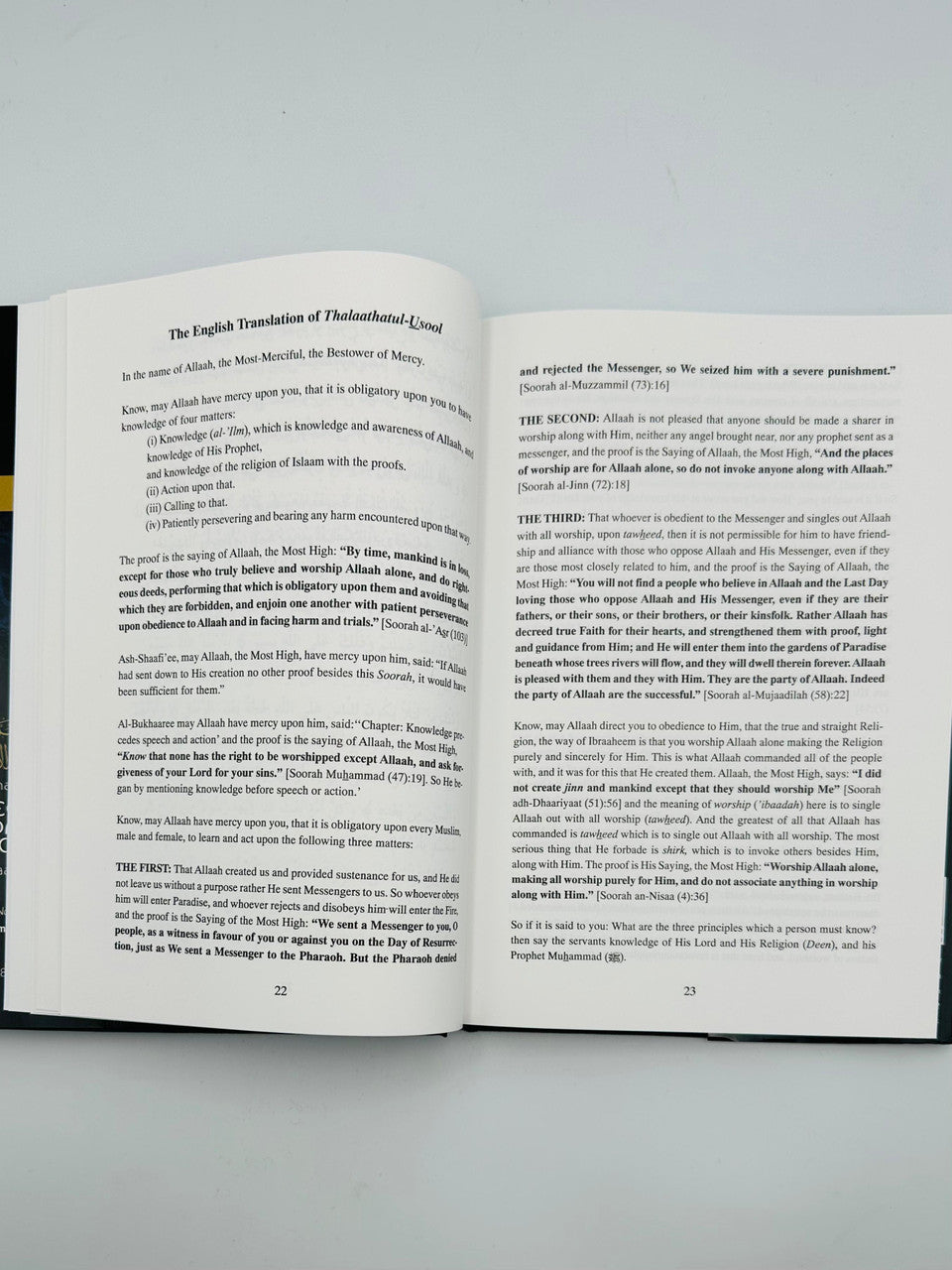
The English Translation of Thalaathatul-Usool In the name of Allaah, the Most-Merciful, the Bestower of Mercy.
Know, may Allaah have mercy upon you, that it is obligatory upon you to have (i) Knowledge (al-'Ilm), which is knowledge and awareness of Allaah, and
knowledge of four matters:
knowledge of His Prophet,
and knowledge of the religion of Islaam with the proofs.
(ii) Action upon that. (iii) Calling to that.
(iv) Patiently persevering and bearing any harm encountered upon that way The proof is the saying of Allaah, the Most High: "By time, mankind is in loss except for those who truly believe and worship Allaah alone, and do right eous deeds, performing that which is obligatory upon them and avoiding that which they are forbidden, and enjoin one another with patient perseverance upon obedience to Allaah and in facing harm and trials." [Soorah al-'Asr (103) Ash-Shaafi'ee, may Allaah, the Most High, have mercy upon him, said: "If Allaah had sent down to His creation no other proof besides this Soorah, it would have
been sufficient for them."
Al-Bukhaaree may Allaah have mercy upon him, said:"Chapter: Knowledge pre- cedes speech and action' and the proof is the saying of Allaah, the Most High, "Know that none has the right to be worshipped except Allaah, and ask for giveness of your Lord for your sins." [Soorah Muhammad (47):19]. So He be gan by mentioning knowledge before speech or action.'
Know, may Allaah have mercy upon you, that it is obligatory upon every Muslim, male and female, to learn and act upon the following three matters:
THE FIRST: That Allaah created us and provided sustenance for us, and He did not leave us without a purpose rather He sent Messengers to us. So whoever obeys him will enter Paradise, and whoever rejects and disobeys him will enter the Fire, and the proof is the Saying of the Most High: "We sent a Messenger to you, 0 people, as a witness in favour of you or against you on the Day of Resurrec tion, just as We sent a Messenger to the Pharaoh. But the Pharaoh denied
and rejected the Messenger, so We seized him with [Soorah al-Muzzammil (73):16)
severe punishment."
THE SECOND: Allaah is not pleased that anyone should be made a sharer in worship along with Him, neither any angel brought near, nor any prophet sent as a messenger, and the proof is the Saying of Allaah, the Most High, "And the places of worship are for Allaah alone, so do not invoke anyone along with Allaah." [Soorah al-Jinn (72):18]
THE THIRD: That whoever is obedient to the Messenger and singles out Allaah with all worship, upon tawheed, then it is not permissible for him to have friend- ship and alliance with those who oppose Allaah and His Messenger, even if they are those most closely related to him, and the proof is the Saying of Allaah, the Most High: "You will not find a people who believe in Allaah and the Last Day loving those who oppose Allaah and His Messenger, even if they are their fathers, or their sons, or their brothers, or their kinsfolk. Rather Allaah has decreed true Faith for their hearts, and strengthened them with proof, light and guidance from Him; and He will enter them into the gardens of Paradise beneath whose trees rivers will flow, and they will dwell therein forever. Allaah is pleased with them and they with Him. They are the party of Allaah. Indeed the party of Allaah are the successful." [Soorah al-Mujaadilah (58):22]
Know, may Allaah direct you to obedience to Him, that the true and straight Reli- gion, the way of Ibraaheem is that you worship Allaah alone making the Religion purely and sincerely for Him. This is what Allaah commanded all of the people with, and it was for this that He created them. Allaah, the Most High, says: "I did not create jinn and mankind except that they should worship Me" [Soorah adh-Dhaariyaat (51):56] and the meaning of worship ('ibaadah) here is to single Allaah out with all worship (tawheed). And the greatest of all that Allaah has commanded is tawheed which is to single out Allaah with all worship. The most serious thing that He forbade is shirk, which is to invoke others besides Him, along with Him. The proof is His Saying, the Most High: "Worship Allaah alone, making all worship purely for Him, and do not associate anything in worship along with Him." [Soorah an-Nisaa (4):36]
So if it is said to you: What are the three principles which a person must know? then say the servants knowledge of His Lord and His Religion (Deen), and his Prophet Muhammad (5).
page:04
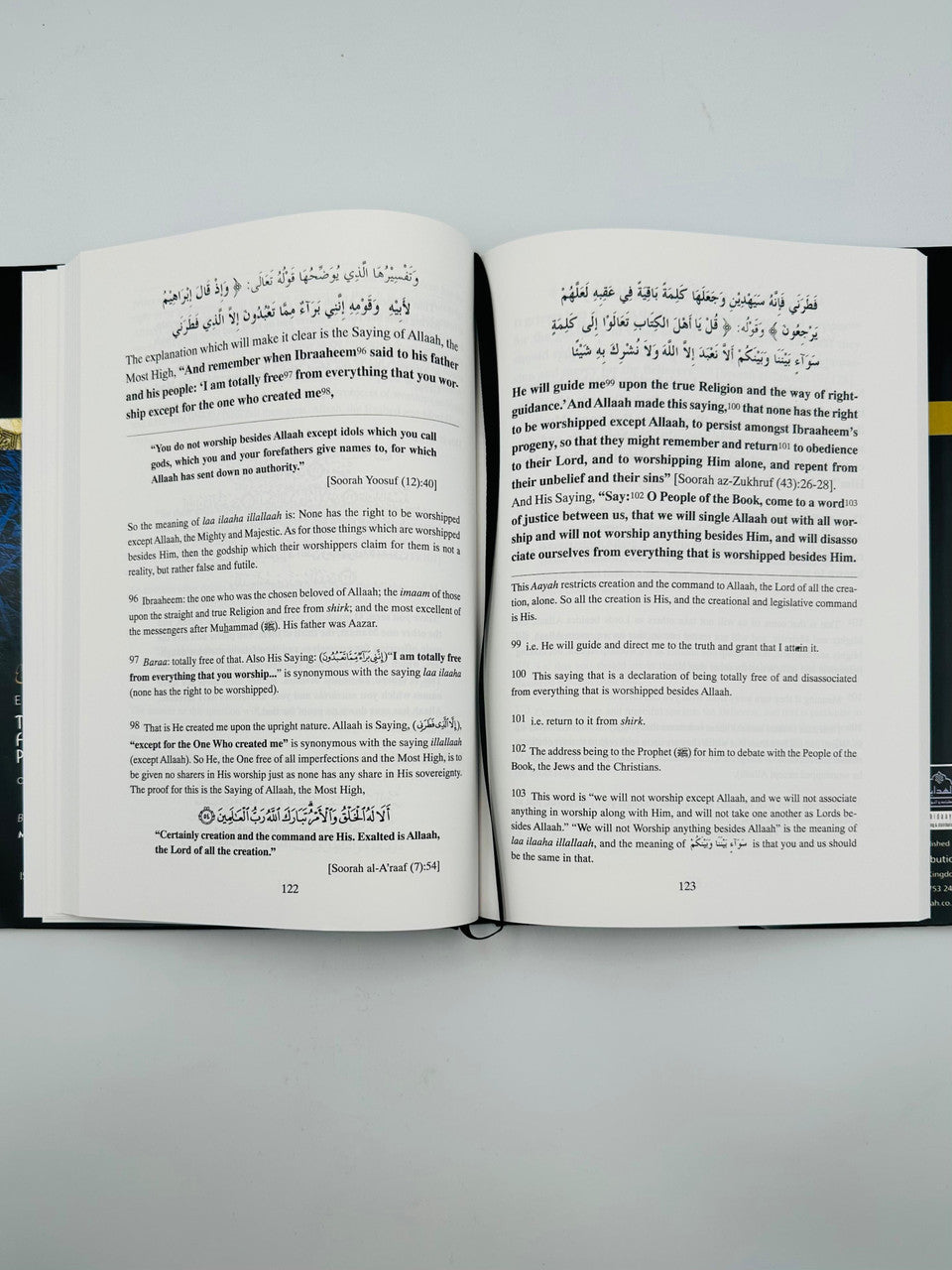
وَتَفْسِيرُهَا الَّذِي يُوَضْحُهَا قَوْلُهُ تَعَالَى: ﴿ وَإِذْ قَالَ إِبْرَاهِيمُ
لأَبِيْهِ وَقَوْمِهِ إِنَّنِي بَرَاءُ مِمَّا تَعْبُدُونَ إِلَّا الَّذِي فَطَرَني
The explanation which will make it clear is the Saying of Allaah, the Most High, "And remember when Ibraaheem96 said to his father and his people: 'I am totally free97 from everything that you wor
ship except for the one who created me98,
"You do not worship besides Allaah except idols which you call gods, which you and your forefathers give names to, for which
Allaah has sent down no authority."
[Soorah Yoosuf (12):40]
So the meaning of laa ilaaha illallaah is: None has the right to be worshipped except Allaah, the Mighty and Majestic. As for those things which are worshipped besides Him, then the godship which their worshippers claim for them is not a
reality, but rather false and futile.
96 Ibraaheem: the one who was the chosen beloved of Allaah; the imaam of those upon the straight and true Religion and free from shirk; and the most excellent of the messengers after Muhammad (3). His father was Aazar.
97 Baraa: totally free of that. Also His Saying: ("I am totally free from everything that you worship..." is synonymous with the saying laa ilaaha (none has the right to be worshipped).
98 That is He created me upon the upright nature. Allaah is Saying, (), "except for the One Who created me" is synonymous with the saying illallaah (except Allaah). So He, the One free of all imperfections and the Most High, is to be given no sharers in His worship just as none has any share in His sovereignty. The proof for this is the Saying of Allaah, the Most High,
أَلَا لَهُ الْخَلْقُ وَالْأَمْر تَبَارَكَ اللَّهُ رَبُّ الْعَالَمِينَ لا
"Certainly creation and the command are His. Exalted is Allaah, the Lord of all the creation."
فَطَرَنَي فَإِنَّهُ سَيَهْدِيْنِ وَجَعَلَهَا كَلِمَةً بَاقِيَةً فِي عَقِبِهِ لَعَلَّهُمْ يَرْجِعُونَ ﴾ وَقَوْلُهُ: ﴿ قُلْ يَا أَهْلَ الْكِتَابِ تَعَالَوْا إِلَى كَلِمَةٍ
سَوَاء بَيْنَنَا وَبَيْنَكُمْ أَلَّا نَعْبَدَ إِلَّا اللَّهَ وَلَا نُشْرِكَ بِهِ شَيْئًا
He will guide me99 upon the true Religion and the way of right- guidance.' And Allaah made this saying,100 that none has the right to be worshipped except Allaah, to persist amongst Ibraaheem's progeny, so that they might remember and return101 to obedience to their Lord, and to worshipping Him alone, and repent from their unbelief and their sins" [Soorah az-Zukhruf (43):26-28]. And His Saying, "Say: 102 O People of the Book, come to a word 103 of justice between us, that we will single Allaah out with all wor- ship and will not worship anything besides Him, and will disasso ciate ourselves from everything that is worshipped besides Him.
This Aayah restricts creation and the command to Allaah, the Lord of all the crea- tion, alone. So all the creation is His, and the creational and legislative command is His.
99 i.e. He will guide and direct me to the truth and grant that I attein it.
100 This saying that is a declaration of being totally free of and disassociated from everything that is worshipped besides Allaah.
101 i.e. return to it from shirk.
102 The address being to the Prophet (5) for him to debate with the People of the Book, the Jews and the Christians.
103 This word is "we will not worship except Allaah, and we will not associate anything in worship along with Him, and will not take one another as Lords be- sides Allaah." "We will not Worship anything besides Allaah" is the meaning of laa ilaaha illallaah, and the meaning of
is that you and us should
be the same in that.
[Soorah al-A'raaf (7):54]
من هو Sheikh Muhammad Bin Salih Al-Uthaymeen؟
Sheikh Muhammad bin Salih Al-Uthaymeen (1929–2001) was a renowned Saudi Islamic scholar and jurist known for his deep knowledge of Islamic jurisprudence, aqeedah, and tafsir. A student of Sheikh Ibn Baz, he authored numerous works and was a prominent teacher at the Masjid al-Haram and Qassim University. His legacy continues through his clear, accessible teachings grounded in the Qur’an and Sunnah.