


Classical Work on Wealth Management (Islah al-Mal) | Imam Ibn Abi al-Dunya
Classical Work on Wealth Management (Islah al-Mal) | Imam Ibn Abi al-Dunya
Publisher:
Maktabatul-Irshad
Author:
الإمام أبو بكر ابن أبي الدنيا
Language:
الإنجليزية
Binding:
غلاف مقوى
Pages: 259
Size: ١٧x٢٤ سم
لم نتمكن من تحميل توفر الاستلام


محتوى قابل للطي
وصف كتاب إسلامي
Classical Work on Wealth Management (Islah al-Mal) | Imam Ibn Abi al-Dunya
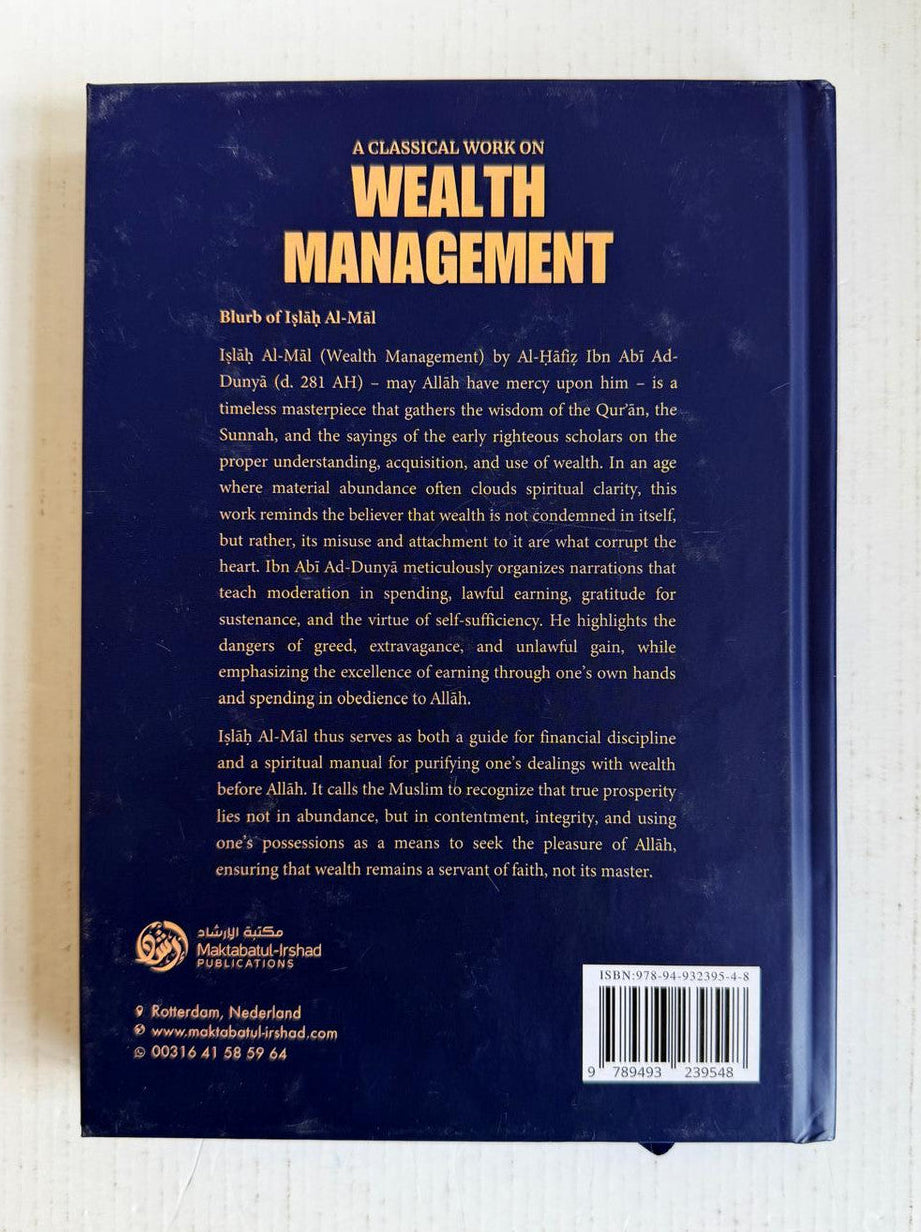
A Classical Work on Wealth Management is a timeless Islamic masterpiece based on Islah al-Mal by Imam Ibn Abi al-Dunya. This beneficial work presents authentic guidance on halal earnings, preserving wealth, avoiding wastefulness, and maintaining financial balance according to Islamic teachings. Drawing from the Qur’an, Sunnah, and sayings of the Salaf, the book explains how Muslims should approach money with responsibility, moderation, gratitude, and generosity. It highlights the importance of ethical business, lawful income, charity, and using wealth as a means to attain the pleasure of Allah rather than worldly attachment. An essential read for students of knowledge, business professionals, and anyone seeking an Islamic perspective on financial management and personal wealth.
From Author:
Compilation of Ahadith on Wealth Management in Islam is a classical Islamic work that gathers authentic narrations dealing with wealth, provision, spending, and responsibility from an Islamic perspective. In this book, Imaam Abi Bakr Abi Ad-Dunya brings together ahadith that guide Muslims on how to earn lawfully, spend wisely, avoid greed, and understand wealth as a trust rather than a goal in itself. The book highlights Islamic principles such as moderation, contentment, charity, and accountability, showing how Islam regulates a believer’s relationship with money in a balanced and ethical way. It also warns against miserliness, extravagance, and attachment to dunya, while encouraging generosity and reliance upon Allaah. This compilation is valuable for anyone seeking a clear understanding of wealth management through the Quran and Sunnah, grounded in the guidance of the early generations. It is especially beneficial for students of knowledge and readers who want to align their financial life with Islamic teachings.
Content:
An Islamic Perspective on Wealth and Livelihood
The book explains that wealth itself is not condemned in Islam; rather, what matters is how wealth is earned, managed, and used. The author highlights the importance of lawful earnings, moderation, gratitude, and financial discipline while warning against greed, extravagance, and attachment to worldly possessions.
The work reminds readers that true success lies not in material abundance alone, but in contentment, sincerity, and using wealth in obedience to Allah.
Topics Covered in the Book
The book contains valuable chapters discussing many aspects of wealth and financial ethics, including:
- Lawful earning and taking wealth rightfully
- The virtues and benefits of wealth
- Wealth management and moderation
- Pursuing professions and craftsmanship
- Honest trade and business dealings
- Real estate and cultivation
- Moderation in food and clothing
- Inheritance and financial responsibility
The author also includes narrations from the Companions and early scholars demonstrating balance, simplicity, and wisdom in financial matters.
Lessons from the Early Scholars
Throughout the book, readers encounter beneficial sayings and examples from great figures of Islamic history, including:
- Umar ibn al-Khattab
- Salman al-Farisi
- Malik ibn Dinar
- Talhah ibn Ubaydillah
These narrations illustrate how the righteous predecessors balanced worldly resources with spirituality, humility, and devotion to Allah.
Wealth as a Means, Not a Goal
One of the central themes of the book is that wealth should remain a servant of faith rather than becoming its master. The author emphasizes:
- Contentment over greed
- Simplicity over extravagance
- Honest work over unlawful gain
- Gratitude for Allah’s provisions
- Using wealth to benefit oneself and others
The famous prophetic statement included in the book beautifully summarizes this principle:
“How excellent is righteous wealth for a righteous person.”
الصفحة: 01
عمل كلاسيكي في
إصلاح المال
للحافظ أبي بكر بن أبي الدنيا (ت 281 هـ)
- رحمه الله -
الصفحة: 02
فهرس المحتويات
جدول الحروف (الترجمة الصوتية)..
الرموز العربية ومعانيها..
المقدمة..
ترجمة المؤلف.
الباب الأول: اكتساب المال من وجهه.
الباب الثاني: فضل المال.
الباب الثالث: إصلاح المال.
الباب الرابع: الرفق في المعيشة وحسن التدبير.
الباب الخامس: احتراف الصنائع واكتسابها.
الباب السادس: أفضل المكاسب.
الباب السابع: المكاسب المذمومة.
الباب الثامن: المساومة في الشراء..
الباب التاسع: العقار.
الباب العاشر: الزراعة.
الباب الحادي عشر: العمل باليد.
الباب الثاني عشر: الاقتصاد في المال.
الباب الثالث عشر: الاقتصاد في الطعام.
الباب الرابع عشر: الاقتصاد في اللباس.
الباب الخامس عشر: المواريث.
الصفحة: 03
إصلاح المال
87- حدثنا ابن الأعرابي، قال: حدثنا حُدَيْن بن عاصم، قال: "لوددت أن لي ذهباً مثل أُحُد أنفقه في سبيل الله".
قيل له: وما تصنع به؟
قال: "لأكثر مَن حولي ممن يخدمني به".
حدثنا يحيى بن عبد الحميد الحماني، قال: حدثنا عبد الله بن المبارك، عن معمر، عن الزهري، عن مالك بن أوس بن الحدثان، عن عمر بن الخطاب - رضي الله عنه -:
«أَدْخَرَ قُوتَ سَنَتِهِ».
- حدثنا علي بن الجعد، قال: حدثنا سفيان، عن ابن أبي عتبة، قال:
اشترى عمر - رضي الله عنه - ثمانية أوسق من طعام. فقيل له في ذلك، فقال: "إذا أصابت النفس قوامها، اطمأنت".
إصلاح المال
90- حدثني عمار بن نصر، قال: حدثنا الفضل بن موسى، عن فرج بن فضالة، عن القاسم، قال:
سُئل سلمان - رضي الله عنه -: ما أفضل المال؟
قال: "الإسلام وخيره".
91- حدثنا الحسن بن الصباح، قال: حدثنا علي بن الحسن بن شقيق، قال: حدثنا ابن المبارك، عن رجل من أهل البصرة، قال:
اشترى مالك بن دينار سويقاً وتَمراً، فكأنه استكثره، فقيل له: يا أبا يحيى، ما هذا؟ قال: هذا للصوم والصلاة.
حدثنا أبو خيثمة، قال: حدثنا سفيان بن عيينة، عن عمرو بن دينار، عن مولى لطلحة بن عبيد الله، قال:
"كان دخل طلحة بن عبيد الله كل يوم ألف (درهم) وافية".
حدثنا إسحاق بن إسماعيل، قال: حدثنا سفيان، عن طلحة بن يحيى، عن عمته سعدة بنت عوف، قالت:
دخل طلحة بن عبيد الله على إحدى نسائه وهو مغموم، فقالت له: ما غَمّك؟ فقال:
رواه البخاري
الصفحة: 04
إصلاح المال
... الله عز وجل قسم لك رزقاً. وإن الله عز وجل يعطي الدنيا مَن أحب ومَن لا يحب، ولا يعطي الدين إلا لمَن أحب. وإن الله عز وجل يعطي الدين، والذي نفسي بيده... لا يسلم عبد حتى يسلم قلبه... ولا يؤمن عبد حق الإيمان حتى يأمن جاره... فما ضرّه؟
... والعدوان. لا يكتسب عبد مالاً حراماً فيتصدق منه فيقبل منه، ولا ينفق منه فيبارك له فيه، ولا يتركه خلف ظهره إلا كان زاداً إلى النار، إن الله عز وجل لا يمحو السيئ بالسيئ، ولكن يمحو السيئ بالحسن، إن الخبيث لا يمحو الخبيث.
إصلاح المال
الباب الثاني: فضل المال
42- حدثنا عبيد الله بن عمر الجشمي، قال: حدثنا وكيع بن الجراح، عن موسى بن علي، عن أبيه، عن عمرو بن العاص - رضي الله عنه - قال: قال رسول الله ﷺ:
«نِعْمَ الْمَالُ الصَّالِحُ لِلْمَرْءِ الصَّالِحِ».
حدثنا إبراهيم بن المنذر الحزامي، قال: حدثنا معن بن عيسى النخعي، عن عبد الله بن سليمان بن أبي سلمة، عن معاذ بن عبد الله، عن عبد الله بن خُبيب، عن عمه، قال: قال رسول الله ﷺ:
رواه البيهقي في شعب الإيمان (4/3) والترغيب والترهيب (2/347): "أحمد... إسناد أبان بن إسحاق عن الصباح... وقد حسناه، والله... قال في مجمع الزوائد (1/53): "رواه أحمد... ورجاله ثقات".
كما قال (10/228): "رواه أحمد، ورجاله ثقات، وإن كان في بعضهم كلام". وضعفه الألباني في ضعيف الترغيب والترهيب (1076). رواه أحمد (4/197)، والبخاري في الأدب المفرد، وابن حبان، والبيهقي في شعب الإيمان (2/91). وحسنه الألباني في صحيح الأدب المفرد.
الصفحة: 05
عمل كلاسيكي في
إصلاح المال
نبذة عن كتاب إصلاح المال
كتاب "إصلاح المال" للحافظ ابن أبي الدنيا (ت 281 هـ) - رحمه الله - هو تحفة خالدة تجمع حكمة القرآن والسنة وأقوال السلف الصالح حول الفهم الصحيح للمال، واكتسابه، وإنفاقه. وفي عصرٍ غالباً ما تحجب فيه الوفرة المادية الصفاء الروحي، يُذكّر هذا العمل المؤمن بأن المال في ذاته ليس مذموماً، بل إن سوء استخدامه والتعلق به هو ما يفسد القلب. دأب ابن أبي الدنيا على ترتيب الآثار التي تعلّم الاقتصاد في النفقة، والكسب الحلال، وشكر النعمة، وفضيلة الكفاف. كما يسلط الضوء على مخاطر الطمع، والإسراف، والكسب الحرام، مع التأكيد على فضل الكسب من عمل اليد والإنفاق في طاعة الله.
وبذلك، يُعد "إصلاح المال" دليلاً للانضباط المالي ومنهجاً روحياً لتزكية تعاملات المرء مع المال أمام الله. إنه يدعو المسلم لإدراك أن الفلاح الحقيقي لا يكمن في الكثرة، بل في القناعة، والنزاهة، وتسخير ما يملكه المرء كوسيلة لابتغاء مرضاة الله، ليبقى المال خادماً للدين لا سيداً له.
الناشر
Maktabatul-Irshad
مؤلف
- الإمام أبو بكر ابن أبي الدنيا
الشحن والتوصيل
نقوم بشحن الطلبات مباشرة من مستودعاتنا في المملكة المتحدة والولايات المتحدة الأمريكية، ونقدم خيارات شحن متعددة لتناسب احتياجاتك. نحن نشحن بفخر إلى جميع أنحاء العالم.
عمليات التسليم في المملكة المتحدة (من مستودع المملكة المتحدة):
يصل الشحن القياسي عادةً في غضون 3-4 أيام عمل. يستغرق التسليم السريع 2-3 أيام عمل. نهدف إلى شحن الطلبات في نفس اليوم أو يوم العمل التالي، مع توفر خيارات التوصيل في اليوم التالي حيثما ينطبق ذلك.
عمليات التسليم في الولايات المتحدة الأمريكية (من مستودع الولايات المتحدة الأمريكية):
تصل الطلبات عادةً في غضون 4-7 أيام عمل.
أوروبا (يتم الشحن من المملكة المتحدة):
يستغرق التسليم القياسي حوالي 6-10 أيام عمل، مع توفر خدمات الشحن السريع في غضون 3-5 أيام عمل.
كندا:
الوقت المقدر للتسليم هو 5-10 أيام عمل.
الشحن في جميع أنحاء العالم:
تصل الطلبات الدولية بشكل عام في غضون 5-20 يوم عمل، اعتمادًا على الوجهة وطريقة الشحن المختارة.
للحصول على جداول زمنية دقيقة للتسليم بناءً على موقعك، يرجى الاتصال بنا عبر البريد الإلكتروني وسيقدم فريقنا معلومات مفصلة ومخصصة لعنوانك.
صفحات العينة - المحتوى
الصفحة: 01
عمل كلاسيكي في
إصلاح المال
للحافظ أبي بكر بن أبي الدنيا (ت 281 هـ)
- رحمه الله -
الصفحة: 02
فهرس المحتويات
جدول الحروف (الترجمة الصوتية)..
الرموز العربية ومعانيها..
المقدمة..
ترجمة المؤلف.
الباب الأول: اكتساب المال من وجهه.
الباب الثاني: فضل المال.
الباب الثالث: إصلاح المال.
الباب الرابع: الرفق في المعيشة وحسن التدبير.
الباب الخامس: احتراف الصنائع واكتسابها.
الباب السادس: أفضل المكاسب.
الباب السابع: المكاسب المذمومة.
الباب الثامن: المساومة في الشراء..
الباب التاسع: العقار.
الباب العاشر: الزراعة.
الباب الحادي عشر: العمل باليد.
الباب الثاني عشر: الاقتصاد في المال.
الباب الثالث عشر: الاقتصاد في الطعام.
الباب الرابع عشر: الاقتصاد في اللباس.
الباب الخامس عشر: المواريث.
الصفحة: 03
إصلاح المال
87- حدثنا ابن الأعرابي، قال: حدثنا حُدَيْن بن عاصم، قال: "لوددت أن لي ذهباً مثل أُحُد أنفقه في سبيل الله".
قيل له: وما تصنع به؟
قال: "لأكثر مَن حولي ممن يخدمني به".
حدثنا يحيى بن عبد الحميد الحماني، قال: حدثنا عبد الله بن المبارك، عن معمر، عن الزهري، عن مالك بن أوس بن الحدثان، عن عمر بن الخطاب - رضي الله عنه -:
«أَدْخَرَ قُوتَ سَنَتِهِ».
- حدثنا علي بن الجعد، قال: حدثنا سفيان، عن ابن أبي عتبة، قال:
اشترى عمر - رضي الله عنه - ثمانية أوسق من طعام. فقيل له في ذلك، فقال: "إذا أصابت النفس قوامها، اطمأنت".
إصلاح المال
90- حدثني عمار بن نصر، قال: حدثنا الفضل بن موسى، عن فرج بن فضالة، عن القاسم، قال:
سُئل سلمان - رضي الله عنه -: ما أفضل المال؟
قال: "الإسلام وخيره".
91- حدثنا الحسن بن الصباح، قال: حدثنا علي بن الحسن بن شقيق، قال: حدثنا ابن المبارك، عن رجل من أهل البصرة، قال:
اشترى مالك بن دينار سويقاً وتَمراً، فكأنه استكثره، فقيل له: يا أبا يحيى، ما هذا؟ قال: هذا للصوم والصلاة.
حدثنا أبو خيثمة، قال: حدثنا سفيان بن عيينة، عن عمرو بن دينار، عن مولى لطلحة بن عبيد الله، قال:
"كان دخل طلحة بن عبيد الله كل يوم ألف (درهم) وافية".
حدثنا إسحاق بن إسماعيل، قال: حدثنا سفيان، عن طلحة بن يحيى، عن عمته سعدة بنت عوف، قالت:
دخل طلحة بن عبيد الله على إحدى نسائه وهو مغموم، فقالت له: ما غَمّك؟ فقال:
رواه البخاري
الصفحة: 04
إصلاح المال
... الله عز وجل قسم لك رزقاً. وإن الله عز وجل يعطي الدنيا مَن أحب ومَن لا يحب، ولا يعطي الدين إلا لمَن أحب. وإن الله عز وجل يعطي الدين، والذي نفسي بيده... لا يسلم عبد حتى يسلم قلبه... ولا يؤمن عبد حق الإيمان حتى يأمن جاره... فما ضرّه؟
... والعدوان. لا يكتسب عبد مالاً حراماً فيتصدق منه فيقبل منه، ولا ينفق منه فيبارك له فيه، ولا يتركه خلف ظهره إلا كان زاداً إلى النار، إن الله عز وجل لا يمحو السيئ بالسيئ، ولكن يمحو السيئ بالحسن، إن الخبيث لا يمحو الخبيث.
إصلاح المال
الباب الثاني: فضل المال
42- حدثنا عبيد الله بن عمر الجشمي، قال: حدثنا وكيع بن الجراح، عن موسى بن علي، عن أبيه، عن عمرو بن العاص - رضي الله عنه - قال: قال رسول الله ﷺ:
«نِعْمَ الْمَالُ الصَّالِحُ لِلْمَرْءِ الصَّالِحِ».
حدثنا إبراهيم بن المنذر الحزامي، قال: حدثنا معن بن عيسى النخعي، عن عبد الله بن سليمان بن أبي سلمة، عن معاذ بن عبد الله، عن عبد الله بن خُبيب، عن عمه، قال: قال رسول الله ﷺ:
رواه البيهقي في شعب الإيمان (4/3) والترغيب والترهيب (2/347): "أحمد... إسناد أبان بن إسحاق عن الصباح... وقد حسناه، والله... قال في مجمع الزوائد (1/53): "رواه أحمد... ورجاله ثقات".
كما قال (10/228): "رواه أحمد، ورجاله ثقات، وإن كان في بعضهم كلام". وضعفه الألباني في ضعيف الترغيب والترهيب (1076). رواه أحمد (4/197)، والبخاري في الأدب المفرد، وابن حبان، والبيهقي في شعب الإيمان (2/91). وحسنه الألباني في صحيح الأدب المفرد.
الصفحة: 05
عمل كلاسيكي في
إصلاح المال
نبذة عن كتاب إصلاح المال
كتاب "إصلاح المال" للحافظ ابن أبي الدنيا (ت 281 هـ) - رحمه الله - هو تحفة خالدة تجمع حكمة القرآن والسنة وأقوال السلف الصالح حول الفهم الصحيح للمال، واكتسابه، وإنفاقه. وفي عصرٍ غالباً ما تحجب فيه الوفرة المادية الصفاء الروحي، يُذكّر هذا العمل المؤمن بأن المال في ذاته ليس مذموماً، بل إن سوء استخدامه والتعلق به هو ما يفسد القلب. دأب ابن أبي الدنيا على ترتيب الآثار التي تعلّم الاقتصاد في النفقة، والكسب الحلال، وشكر النعمة، وفضيلة الكفاف. كما يسلط الضوء على مخاطر الطمع، والإسراف، والكسب الحرام، مع التأكيد على فضل الكسب من عمل اليد والإنفاق في طاعة الله.
وبذلك، يُعد "إصلاح المال" دليلاً للانضباط المالي ومنهجاً روحياً لتزكية تعاملات المرء مع المال أمام الله. إنه يدعو المسلم لإدراك أن الفلاح الحقيقي لا يكمن في الكثرة، بل في القناعة، والنزاهة، وتسخير ما يملكه المرء كوسيلة لابتغاء مرضاة الله، ليبقى المال خادماً للدين لا سيداً له.
من هو الحافظ ابن أبي الدنيا؟
كان الحافظ ابن أبي الدنيا (٨٢٣-٨٩٤م) عالمًا إسلاميًا شهيرًا، وجامعًا للأحاديث، وعالمًا في الأخلاق من بغداد، اشتهر بمؤلفاته في الأخلاق والروحانية والزهد. ألّف العديد من الكتب التي ركّزت على مواضيع كالتواضع والصبر والإخلاص وذكر الموت، بهدف إلهام الإصلاح الأخلاقي والتقوى. من أشهر مؤلفاته كتابا الزهد والموارد، اللذان يجمعان أقوالًا وقصصًا تحثّ على حياة مكرسة للنمو الروحي. ولا تزال كتاباته مصدرًا للتوجيه الروحي والبصيرة الأخلاقية في الأدب الإسلامي.