


كيف نختلف – آداب الاختلاف في الإسلام
كيف نختلف – آداب الاختلاف في الإسلام
Publisher:
Islam Today
Author:
حوار مع سلمان العودة
Language:
العربية
Binding:
غلاف ورقي
Pages: 126
Size: 17×24 سم5.8 × 8.3 بوصة
لم نتمكن من تحميل توفر الاستلام


محتوى قابل للطي
وصف كتاب إسلامي
العربية: كيف نختلف – آداب الاختلاف في الإسلام
"كيف نختلف" هي النسخة العربية من العمل الشهير How to Disagree للدكتور سلمان العودة. يتناول الكتاب واحداً من أهم التحديات الاجتماعية والفكرية التي تواجه المسلمين: كيفية التعامل مع اختلاف الآراء بحكمة واحترام وأدب إسلامي. ومن خلال أمثلة عملية ومناقشات عميقة، يوضح المؤلف أسباب الخلافات، وآداب الحوار، والمبادئ التي تحافظ على الوحدة مع السماح بوجود اختلافات مشروعة في الرأي. ومع التأكيد على الاحترام المتبادل، والإخلاص، والالتزام بالقيم الإسلامية، يشجع الكتاب القراء على تحويل الخلافات إلى فرص للنمو والتفاهم. إنه مورد قيم للطلاب والمعلمين وقادة المجتمع وأي شخص يسعى إلى تحسين التواصل وتعزيز العلاقات داخل المجتمع المسلم.
من المؤلف:
هذا الكتاب هو ترجمة عربية لكتاب كيف نختلف للدكتور سلمان العودة.
يبدو أن الجميع قادر على الحديث عن آداب الاختلاف في الإسلام، لكن قلة منا هم من يستطيعون وضعها موضع التنفيذ. فمن السهل أن نتوقع من الآخرين الالتزام بالسلوك القويم عندما يختلفون معنا، لكننا نفشل في التمسك بنفس هذه المعايير العالية عندما نختلف نحن معهم.
المحتوى:
1. فهم الربا في الإسلام
يشرح المفهوم الإسلامي للربا وتحريمه.
يبحث في التعاليم القرآنية والنبوية المتعلقة بالربا.
يسلط الضوء على التبعات الروحية والأخلاقية والاقتصادية للمعاملات القائمة على الفائدة.
2. تاريخ الصيرفة والتمويل
يتتبع تطور الممارسات المالية من أنظمة التجارة القديمة إلى الصيرفة الحديثة.
يناقش سندات الصرف، وإقراض المال، ودور صاغة الذهب في نشأة البنوك.
يوضح كيف تطورت الآليات المالية التاريخية إلى مؤسسات معاصرة.
3. كيف تعمل البنوك الحديثة
يحلل هيكل الأنظمة المصرفية التقليدية.
يشرح خلق المال من خلال الإقراض وتوسع الديون.
يتحدى الافتراضات الشائعة بأن البنوك مجرد وسطاء ماليين بسطاء.
4. فوائد البنوك والربا
يتحرى ما إذا كانت فوائد البنوك الحديثة تختلف عن الربا المحرم في الإسلام.
يراجع الحجج المستخدمة عادةً للتمييز بين الفائدة المعاصرة والربا الكلاسيكي.
يقيم هذه الادعاءات من خلال المبادئ الشرعية الإسلامية.
5. التضخم والفائدة
يناقش الحجة القائلة بأن الفائدة تعوض المقرضين عن التضخم.
يفحص الآثار الاقتصادية للتضخم على كل من المقرضين والمقترضين.
يقدم نقداً لاستخدام التضخم كمبرر للفائدة.
6. نقد المبررات الشائعة
يتناول الحجج المتعلقة بأسعار الفائدة المنخفضة مقابل المرتفعة.
يفحص القياس بين الفائدة والإيجار.
يناقش التنظيم الحكومي، وسندات الاستثمار، وغيرها من المنتجات المالية المعاصرة.
يقيم هذه المواقف من خلال الاستدلال الفقهي الإسلامي.
7. المبادئ المالية المتوافقة مع الشريعة
يقدم المفاهيم الرئيسية للتمويل الإسلامي.
يؤكد على العدالة، والمخاطر المشتركة، والسلوك الاقتصادي الأخلاقي.
يشجع على بدائل للأنظمة المالية القائمة على الفائدة.
Page:01
Meaning of "Ummah":
The term "Ummah" occurs in the Holy Quran with several meanings, as mentioned by Al-Fairuzabadi in "Basa'ir Dhawi al-Tamyiz fi Lata'if al-Kitab al-Aziz," as well as other exegetes and linguists.
Its most important meanings can be summarized into five:
First: Ummah meaning an Imam or a role model:
As in His saying, the Almighty: ﴿Indeed, Abraham was a leader [ummah] obedient to Allah, inclining toward truth, and was not of the polytheists﴾ [An-Nahl: 120]. The meaning here: a role model in goodness, as reported by the majority of exegetes and the predecessors.
It is also permissible that the meaning is: he was an "Ummah" by himself; because there was no believer on earth other than him. This has been reported from Ibn Abbas (may Allah be pleased with him), Sa'id ibn Jubayr, and others. Farwa ibn Nawfal al-Ashja'i said: Ibn Mas'ud said: "Mu'adh was an Ummah, obedient to Allah."
(1) See: Basa'ir Dhawi al-Tamyiz (2/79-80), Tafsir al-Qurtubi (2/127), Tafsir Ibn Kathir (1/158), Al-Durr al-Manthur (9/130), Fath al-Qadir by Al-Shawkani (1/142), (3/202), (5554), and the following sources.
(2) See: Tafsir al-Tabari (3/621), (14/392), and Tafsir al-Qurtubi (2/127). (3) See: Tafsir al-Tha'labi (6/50), Tafsir Ibn Kathir (4/611), and Al-Durr al-Manthur (9/130).
Page:02
Chapter One: "A Single Ummah"
﴿...upon a way [ummah]...﴾ [Az-Zukhruf: 23], meaning: upon a path and methodology, even if it is deviant and astray, yet they adhered to it; because they found their fathers and ancestors upon it.
Fourth: A group of people or a faction, even if small in number.
As in the saying of Allah, the Almighty: ﴿And when he arrived at the well of Madyan, he found there a crowd [ummah] of people watering [their flocks]﴾ [Al-Qasas: 23]; meaning: a group.
Similarly, His saying: ﴿...every time a nation [ummah] enters, it curses its sister [nation]...﴾ [Al-A'raf: 38]. Generally, "Ummah" refers to a large group, while smaller groups are referred to as a "jama'ah" (group), "ta'ifah" (faction), or "fi'ah" (party), and the like.
Fifth: The people gathered under a single religion.
This has appeared in many verses, including His saying: ﴿Mankind was [of] one religion [ummah]...﴾ [Al-Baqarah: 213].
It has been authentically reported from Ibn Abbas (may Allah be pleased with him) and others that the people were one Ummah upon guidance, and there were ten centuries between Adam (peace be upon him) and his descendants, all of whom were upon faith and monotheism, until the devils came and diverted them from their religion, so Allah sent the prophets as bringers of good tidings and warners.
This requires contemplation; for among the direct children of Adam were those who committed sins.
(1) See: Tafsir al-Qurtubi (2/127), and Tafsir Ibn Kathir (1/158). (2) See: Tafsir al-Tabari (18/206), Tafsir al-Qurtubi (13/268), Tafsir Ibn Kathir (1/158), and Al-Durr al-Manthur.
(3) See: Basa'ir Dhawi al-Tamyiz (2/79), and Al-Kulliyat by Al-Kafawi (1/685-686). (4) See: Musnad al-Bazzar (4815), Tafsir al-Tabari (3/621), (23/303), Tafsir Ibn Abi Hatim (2/376), (8/2696), and Al-Mustadrak (2/442, 546).
Page:03
How do we differ?
salman_alodah
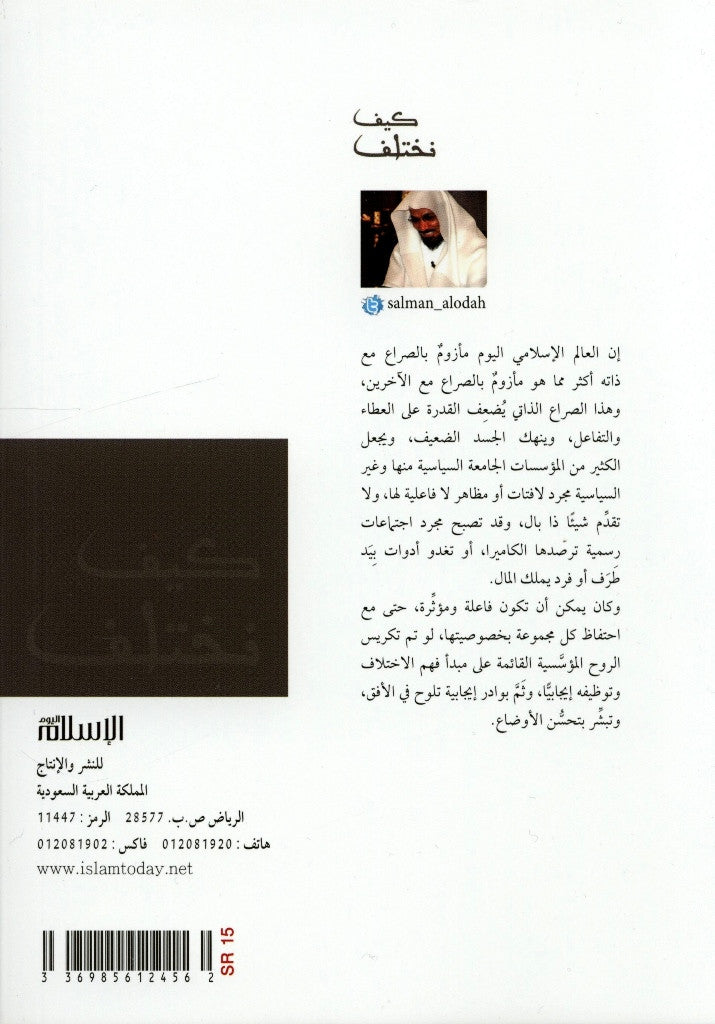
The Islamic world today is in a crisis of conflict with itself more than it is in a conflict with others. This internal conflict weakens the ability to contribute and interact, exhausts the weak body, and renders many unifying institutions—both political and non-political—merely slogans or facades that have no effectiveness and offer nothing significant. They may become mere formal meetings captured by cameras, or they may turn into tools in the hands of a party or an individual who possesses wealth.
They could have been effective and influential, even while each group maintained its specificity, if the institutional spirit based on the principle of understanding difference and employing it positively had been established. There are positive signs appearing on the horizon, promising an improvement in conditions.
Islam for Publishing and Production
Kingdom of Saudi Arabia
الناشر
Islam Today
مؤلف
- حوار مع سلمان العودة
الشحن والتوصيل
نقوم بشحن الطلبات مباشرة من مستودعاتنا في المملكة المتحدة والولايات المتحدة الأمريكية، ونقدم خيارات شحن متعددة لتناسب احتياجاتك. نحن نشحن بفخر إلى جميع أنحاء العالم.
عمليات التسليم في المملكة المتحدة (من مستودع المملكة المتحدة):
يصل الشحن القياسي عادةً في غضون 3-4 أيام عمل. يستغرق التسليم السريع 2-3 أيام عمل. نهدف إلى شحن الطلبات في نفس اليوم أو يوم العمل التالي، مع توفر خيارات التوصيل في اليوم التالي حيثما ينطبق ذلك.
عمليات التسليم في الولايات المتحدة الأمريكية (من مستودع الولايات المتحدة الأمريكية):
تصل الطلبات عادةً في غضون 4-7 أيام عمل.
أوروبا (يتم الشحن من المملكة المتحدة):
يستغرق التسليم القياسي حوالي 6-10 أيام عمل، مع توفر خدمات الشحن السريع في غضون 3-5 أيام عمل.
كندا:
الوقت المقدر للتسليم هو 5-10 أيام عمل.
الشحن في جميع أنحاء العالم:
تصل الطلبات الدولية بشكل عام في غضون 5-20 يوم عمل، اعتمادًا على الوجهة وطريقة الشحن المختارة.
للحصول على جداول زمنية دقيقة للتسليم بناءً على موقعك، يرجى الاتصال بنا عبر البريد الإلكتروني وسيقدم فريقنا معلومات مفصلة ومخصصة لعنوانك.
صفحات العينة - المحتوى
Page:01
Meaning of "Ummah":
The term "Ummah" occurs in the Holy Quran with several meanings, as mentioned by Al-Fairuzabadi in "Basa'ir Dhawi al-Tamyiz fi Lata'if al-Kitab al-Aziz," as well as other exegetes and linguists.
Its most important meanings can be summarized into five:
First: Ummah meaning an Imam or a role model:
As in His saying, the Almighty: ﴿Indeed, Abraham was a leader [ummah] obedient to Allah, inclining toward truth, and was not of the polytheists﴾ [An-Nahl: 120]. The meaning here: a role model in goodness, as reported by the majority of exegetes and the predecessors.
It is also permissible that the meaning is: he was an "Ummah" by himself; because there was no believer on earth other than him. This has been reported from Ibn Abbas (may Allah be pleased with him), Sa'id ibn Jubayr, and others. Farwa ibn Nawfal al-Ashja'i said: Ibn Mas'ud said: "Mu'adh was an Ummah, obedient to Allah."
(1) See: Basa'ir Dhawi al-Tamyiz (2/79-80), Tafsir al-Qurtubi (2/127), Tafsir Ibn Kathir (1/158), Al-Durr al-Manthur (9/130), Fath al-Qadir by Al-Shawkani (1/142), (3/202), (5554), and the following sources.
(2) See: Tafsir al-Tabari (3/621), (14/392), and Tafsir al-Qurtubi (2/127). (3) See: Tafsir al-Tha'labi (6/50), Tafsir Ibn Kathir (4/611), and Al-Durr al-Manthur (9/130).
Page:02
Chapter One: "A Single Ummah"
﴿...upon a way [ummah]...﴾ [Az-Zukhruf: 23], meaning: upon a path and methodology, even if it is deviant and astray, yet they adhered to it; because they found their fathers and ancestors upon it.
Fourth: A group of people or a faction, even if small in number.
As in the saying of Allah, the Almighty: ﴿And when he arrived at the well of Madyan, he found there a crowd [ummah] of people watering [their flocks]﴾ [Al-Qasas: 23]; meaning: a group.
Similarly, His saying: ﴿...every time a nation [ummah] enters, it curses its sister [nation]...﴾ [Al-A'raf: 38]. Generally, "Ummah" refers to a large group, while smaller groups are referred to as a "jama'ah" (group), "ta'ifah" (faction), or "fi'ah" (party), and the like.
Fifth: The people gathered under a single religion.
This has appeared in many verses, including His saying: ﴿Mankind was [of] one religion [ummah]...﴾ [Al-Baqarah: 213].
It has been authentically reported from Ibn Abbas (may Allah be pleased with him) and others that the people were one Ummah upon guidance, and there were ten centuries between Adam (peace be upon him) and his descendants, all of whom were upon faith and monotheism, until the devils came and diverted them from their religion, so Allah sent the prophets as bringers of good tidings and warners.
This requires contemplation; for among the direct children of Adam were those who committed sins.
(1) See: Tafsir al-Qurtubi (2/127), and Tafsir Ibn Kathir (1/158). (2) See: Tafsir al-Tabari (18/206), Tafsir al-Qurtubi (13/268), Tafsir Ibn Kathir (1/158), and Al-Durr al-Manthur.
(3) See: Basa'ir Dhawi al-Tamyiz (2/79), and Al-Kulliyat by Al-Kafawi (1/685-686). (4) See: Musnad al-Bazzar (4815), Tafsir al-Tabari (3/621), (23/303), Tafsir Ibn Abi Hatim (2/376), (8/2696), and Al-Mustadrak (2/442, 546).
Page:03
How do we differ?
salman_alodah
The Islamic world today is in a crisis of conflict with itself more than it is in a conflict with others. This internal conflict weakens the ability to contribute and interact, exhausts the weak body, and renders many unifying institutions—both political and non-political—merely slogans or facades that have no effectiveness and offer nothing significant. They may become mere formal meetings captured by cameras, or they may turn into tools in the hands of a party or an individual who possesses wealth.
They could have been effective and influential, even while each group maintained its specificity, if the institutional spirit based on the principle of understanding difference and employing it positively had been established. There are positive signs appearing on the horizon, promising an improvement in conditions.
Islam for Publishing and Production
Kingdom of Saudi Arabia
من هو HIWAR MAA SALMAN AL AWDA؟
Hiwar Maa Salman Al Awda (A Dialogue with Salman Al-Awda) is a powerful and insightful book that presents a series of conversations, questions, and reflections with Shaykh Salman Al-Awda, a renowned Muslim scholar, reformer, and thinker.