


كنوز من التعاليم المقدسة | شرح المبادئ القانونية الإسلامية والفقه الإسلامي
كنوز من التعاليم المقدسة | شرح المبادئ القانونية الإسلامية والفقه الإسلامي
Publisher:
Kube Publishing
Author:
شارول حسين
Language:
إنجليزي
Binding:
غلاف مقوى
Pages: 168
Size: 13×20 سم
لم نتمكن من تحميل توفر الاستلام


محتوى قابل للطي
وصف كتاب إسلامي
يُعد كتاب "كنز من المبادئ المقدسة | شرح المبادئ القانونية الإسلامية" استكشافًا ثاقبًا لأهم المبادئ القانونية التي توجه الفقه الإسلامي. تعمل هذه المبادئ بمثابة أسس أساسية يستخدمها العلماء لتفسير وتطبيق الشريعة الإسلامية في مختلف الظروف.
يشرح الكتاب كيف توفر المبادئ القانونية الإسلامية إطارًا لفهم الأحكام القانونية المعقدة بطريقة متسقة ومتوازنة. ومن خلال هذه المبادئ، يمكن للعلماء استنتاج أحكام تعكس العدل والإنصاف والحكمة مع الحفاظ على الأمانة لتعاليم القرآن والسنة.
من المؤلف:
Page:01
اعتبارات في إزالة الضرر
الضَّرَرُ لا يُزالُ بالضَّرَرِ
الضرر لا يُستبدل بضرر
إن شرط تطبيق هذه القاعدة هو أن الضرر لا يمكن استبداله بضرر أكبر من الضرر القائم. يبدو أنه من العبث إزالة الضرر إذا كان سيُستبدل بضرر مماثل أو أسوأ. بل إن الهدف في الإسلام هو القضاء على الضرر تماماً، وإذا تعذر ذلك، فبقدر الإمكان. وتتجلى الأهمية القانونية لهذه القاعدة في القانون الشخصي والتجاري أكثر منها في الجانب الروحي. للقاعدة تطبيقات متنوعة في الشريعة، فعلى سبيل المثال، إذا كان هناك منزل مملوك لأكثر من شخص، وأراد أحد الشركاء تقسيم المنزل وفصل نصيبه للحصول على خصوصيته.
Page:02
الأصل براءة الذمة
الأَصْلُ بَرَاءَةُ الذَّمَّةِ
الحالة الأصلية هي الخلو من المسؤولية
تُعد هذه القاعدة واحدة من المبادئ الأساسية في الإجراءات القضائية الإسلامية. وعلى الرغم من أنها قاعدة فرعية من القاعدة الكلية "اليقين لا يزول بالشك"، إلا أن بعض الفقهاء يجادلون بأنها قاعدة مستقلة نظراً لتطبيقاتها واسعة النطاق في العمليات القضائية. هناك كلمتان رئيسيتان في هذه القاعدة: كلمة "براءة" تعني الخلو من الشيء، وكلمة "الذمة" تعني المسؤولية والالتزام. ما تعنيه هذه القاعدة هو أن المسؤولية صفة عارضة وطارئة، والبراءة منها هي الحالة الأصلية للإنسان. ومن ثم، فعندما يولد الشخص، فإنه يكون بريء الذمة ما لم يقدم دليل على عكس ذلك.
Page:03
إذا اجتمع المباشر والمتسبب يُضاف الحكم إلى المباشر
إذا اجْتَمَعَ المُباشِرُ والمُتَسَبْبُ يُضافُ الحُكْمُ إِلَى المُبَاشِرِ
إذا اجتمع الفاعل والمُتسبب، يُنسب الفعل إلى الفاعل
تؤدي هذه القاعدة دوراً كبيراً في الإجراءات الجنائية لتحديد من تقع عليه اللائمة ومن هو المسؤول النهائي. معنى هذه القاعدة هو أنه عندما يجتمع المباشر للفعل والمتسبب فيه، أي الشخص الذي يؤدي بطريقة غير مباشرة إلى تنفيذ الفعل، فإن الحكم يكون على المباشر لأنه السبب الأول والمباشر لتنفيذ ذلك الفعل. وفي مسائل الإجراءات الجنائية، التي تُطبق فيها هذه القاعدة غالباً، من الضروري أن يستند الحكم إلى الأسباب الفعالة والمباشرة لا إلى الأسباب التمهيدية، وذلك لأن الأولى أقوى وأقرب.
Page:04
سلسلة الخزانة في الفكر والحضارة الإسلامية
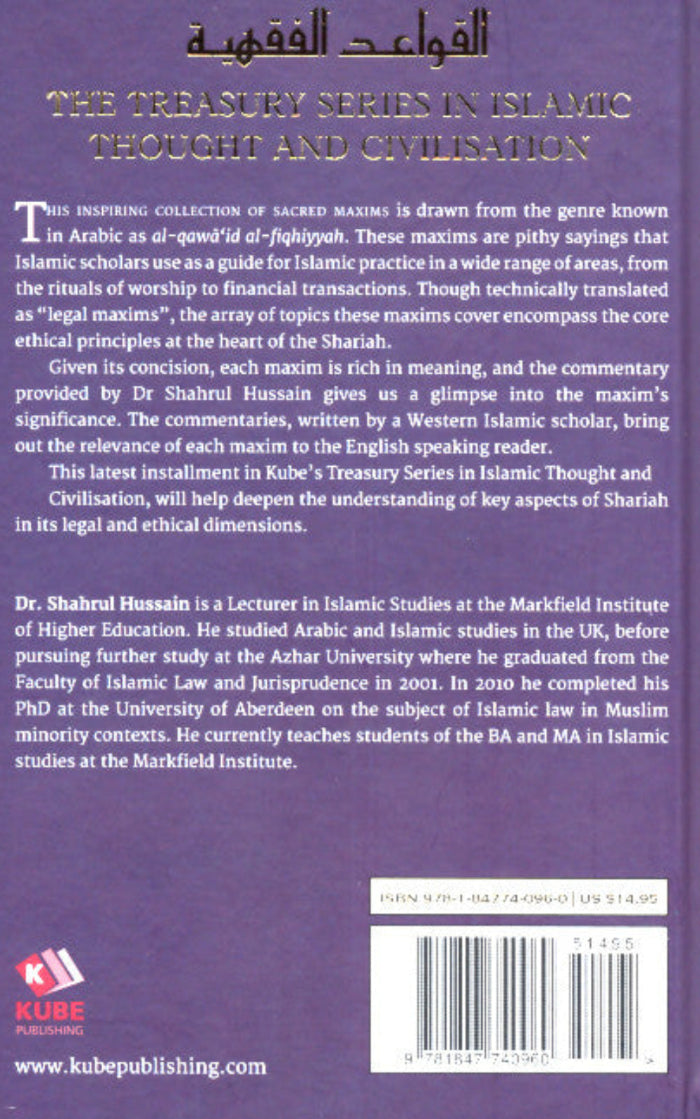
هذه المجموعة المُلهمة من القواعد المقدسة مستمدة من النوع المعروف في اللغة العربية بـ "القواعد الفقهية". هذه القواعد هي أقوال موجزة يستخدمها علماء الإسلام كدليل للممارسة الإسلامية في مجالات واسعة، من طقوس العبادة إلى المعاملات المالية. وعلى الرغم من ترجمتها تقنياً إلى "القواعد القانونية"، فإن مجموعة الموضوعات التي تغطيها هذه القواعد تشمل المبادئ الأخلاقية الأساسية في قلب الشريعة.
نظراً لإيجازها، فإن كل قاعدة غنية بالمعاني، ويوفر التعليق الذي قدمه الدكتور شارول حسين لمحة عن أهمية كل قاعدة. إن التعليقات التي كتبها عالم إسلامي غربي تبرز صلة كل قاعدة بالقارئ الناطق بالإنجليزية.
ستساعد هذه الإضافة الأخيرة في سلسلة "الخزانة" من دار "كيوب" للفكر والحضارة الإسلامية، على تعميق فهم الجوانب الرئيسية للشريعة بأبعادها القانونية والأخلاقية.
الدكتور شارول حسين هو محاضر في الدراسات الإسلامية في معهد ماركفيلد للتعليم العالي. درس اللغة العربية والدراسات الإسلامية في المملكة المتحدة، قبل أن يواصل دراسته في جامعة الأزهر حيث تخرج في كلية الشريعة والقانون عام 2001. وفي عام 2010 أكمل درجة الدكتوراه في جامعة أبردين حول موضوع الشريعة الإسلامية في سياقات الأقليات المسلمة. وهو يدرّس حالياً لطلاب البكالوريوس والماجستير في الدراسات الإسلامية في معهد ماركفيلد.
الناشر
Kube Publishing
مؤلف
- شارول حسين
الشحن والتوصيل
نقوم بشحن الطلبات مباشرة من مستودعاتنا في المملكة المتحدة والولايات المتحدة الأمريكية، ونقدم خيارات شحن متعددة لتناسب احتياجاتك. نحن نشحن بفخر إلى جميع أنحاء العالم.
عمليات التسليم في المملكة المتحدة (من مستودع المملكة المتحدة):
يصل الشحن القياسي عادةً في غضون 3-4 أيام عمل. يستغرق التسليم السريع 2-3 أيام عمل. نهدف إلى شحن الطلبات في نفس اليوم أو يوم العمل التالي، مع توفر خيارات التوصيل في اليوم التالي حيثما ينطبق ذلك.
عمليات التسليم في الولايات المتحدة الأمريكية (من مستودع الولايات المتحدة الأمريكية):
تصل الطلبات عادةً في غضون 4-7 أيام عمل.
أوروبا (يتم الشحن من المملكة المتحدة):
يستغرق التسليم القياسي حوالي 6-10 أيام عمل، مع توفر خدمات الشحن السريع في غضون 3-5 أيام عمل.
كندا:
الوقت المقدر للتسليم هو 5-10 أيام عمل.
الشحن في جميع أنحاء العالم:
تصل الطلبات الدولية بشكل عام في غضون 5-20 يوم عمل، اعتمادًا على الوجهة وطريقة الشحن المختارة.
للحصول على جداول زمنية دقيقة للتسليم بناءً على موقعك، يرجى الاتصال بنا عبر البريد الإلكتروني وسيقدم فريقنا معلومات مفصلة ومخصصة لعنوانك.
صفحات العينة - المحتوى
Page:01
اعتبارات في إزالة الضرر
الضَّرَرُ لا يُزالُ بالضَّرَرِ
الضرر لا يُستبدل بضرر
إن شرط تطبيق هذه القاعدة هو أن الضرر لا يمكن استبداله بضرر أكبر من الضرر القائم. يبدو أنه من العبث إزالة الضرر إذا كان سيُستبدل بضرر مماثل أو أسوأ. بل إن الهدف في الإسلام هو القضاء على الضرر تماماً، وإذا تعذر ذلك، فبقدر الإمكان. وتتجلى الأهمية القانونية لهذه القاعدة في القانون الشخصي والتجاري أكثر منها في الجانب الروحي. للقاعدة تطبيقات متنوعة في الشريعة، فعلى سبيل المثال، إذا كان هناك منزل مملوك لأكثر من شخص، وأراد أحد الشركاء تقسيم المنزل وفصل نصيبه للحصول على خصوصيته.
Page:02
الأصل براءة الذمة
الأَصْلُ بَرَاءَةُ الذَّمَّةِ
الحالة الأصلية هي الخلو من المسؤولية
تُعد هذه القاعدة واحدة من المبادئ الأساسية في الإجراءات القضائية الإسلامية. وعلى الرغم من أنها قاعدة فرعية من القاعدة الكلية "اليقين لا يزول بالشك"، إلا أن بعض الفقهاء يجادلون بأنها قاعدة مستقلة نظراً لتطبيقاتها واسعة النطاق في العمليات القضائية. هناك كلمتان رئيسيتان في هذه القاعدة: كلمة "براءة" تعني الخلو من الشيء، وكلمة "الذمة" تعني المسؤولية والالتزام. ما تعنيه هذه القاعدة هو أن المسؤولية صفة عارضة وطارئة، والبراءة منها هي الحالة الأصلية للإنسان. ومن ثم، فعندما يولد الشخص، فإنه يكون بريء الذمة ما لم يقدم دليل على عكس ذلك.
Page:03
إذا اجتمع المباشر والمتسبب يُضاف الحكم إلى المباشر
إذا اجْتَمَعَ المُباشِرُ والمُتَسَبْبُ يُضافُ الحُكْمُ إِلَى المُبَاشِرِ
إذا اجتمع الفاعل والمُتسبب، يُنسب الفعل إلى الفاعل
تؤدي هذه القاعدة دوراً كبيراً في الإجراءات الجنائية لتحديد من تقع عليه اللائمة ومن هو المسؤول النهائي. معنى هذه القاعدة هو أنه عندما يجتمع المباشر للفعل والمتسبب فيه، أي الشخص الذي يؤدي بطريقة غير مباشرة إلى تنفيذ الفعل، فإن الحكم يكون على المباشر لأنه السبب الأول والمباشر لتنفيذ ذلك الفعل. وفي مسائل الإجراءات الجنائية، التي تُطبق فيها هذه القاعدة غالباً، من الضروري أن يستند الحكم إلى الأسباب الفعالة والمباشرة لا إلى الأسباب التمهيدية، وذلك لأن الأولى أقوى وأقرب.
Page:04
سلسلة الخزانة في الفكر والحضارة الإسلامية
هذه المجموعة المُلهمة من القواعد المقدسة مستمدة من النوع المعروف في اللغة العربية بـ "القواعد الفقهية". هذه القواعد هي أقوال موجزة يستخدمها علماء الإسلام كدليل للممارسة الإسلامية في مجالات واسعة، من طقوس العبادة إلى المعاملات المالية. وعلى الرغم من ترجمتها تقنياً إلى "القواعد القانونية"، فإن مجموعة الموضوعات التي تغطيها هذه القواعد تشمل المبادئ الأخلاقية الأساسية في قلب الشريعة.
نظراً لإيجازها، فإن كل قاعدة غنية بالمعاني، ويوفر التعليق الذي قدمه الدكتور شارول حسين لمحة عن أهمية كل قاعدة. إن التعليقات التي كتبها عالم إسلامي غربي تبرز صلة كل قاعدة بالقارئ الناطق بالإنجليزية.
ستساعد هذه الإضافة الأخيرة في سلسلة "الخزانة" من دار "كيوب" للفكر والحضارة الإسلامية، على تعميق فهم الجوانب الرئيسية للشريعة بأبعادها القانونية والأخلاقية.
الدكتور شارول حسين هو محاضر في الدراسات الإسلامية في معهد ماركفيلد للتعليم العالي. درس اللغة العربية والدراسات الإسلامية في المملكة المتحدة، قبل أن يواصل دراسته في جامعة الأزهر حيث تخرج في كلية الشريعة والقانون عام 2001. وفي عام 2010 أكمل درجة الدكتوراه في جامعة أبردين حول موضوع الشريعة الإسلامية في سياقات الأقليات المسلمة. وهو يدرّس حالياً لطلاب البكالوريوس والماجستير في الدراسات الإسلامية في معهد ماركفيلد.
من هو Shahrul Hussain؟
Shahrul Hussain is a contemporary Islamic author and educator known for presenting Islamic teachings and historical narratives in a clear, engaging, and accessible style. His work focuses on helping readers—especially younger audiences and general readers—understand important events, figures, and values in Islamic history.