


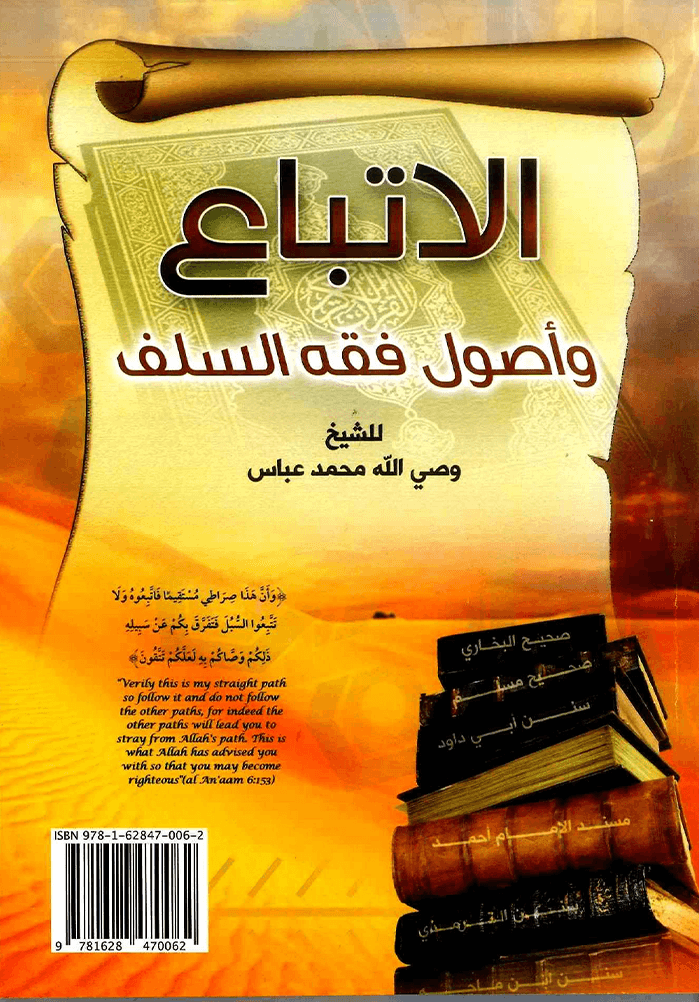
Al-I'Tibaa'A and the Principles of Fiqh of the Salaf by Shaykh Wasiullah Muhammad Abbaas
Al-I'Tibaa'A and the Principles of Fiqh of the Salaf by Shaykh Wasiullah Muhammad Abbaas
Publisher:
Darussalam Publications
Author:
Shaykh Wasiullah Muhammad Abbaas
Language:
English
Binding:
Soft Cover
Pages: 185
Size: 7.1 × 9.8 inches18 × 25 cm
Couldn't load pickup availability


Collapsible content
Description of islamic Book
Al-I'Tibaa'A and the Principles of Fiqh of the Salaf by Shaykh Wasiullah Muhammad Abbaas
Al-I'Tibaa'A and The Principles of Fiqh Of The Righteous Predecessors is a beneficial Islamic work by Shaykh Wasiullah Muhammad Abbas that explains the methodology of the Salaf in understanding and practicing Islamic jurisprudence. This English translation highlights the importance of adhering to the Quran and authentic Sunnah according to the understanding of the righteous predecessors. The book discusses the foundations of correct fiqh, the dangers of blind following, and the necessity of following the straight path established by the early generations of Islam. Written in a clear and accessible style, it serves as an excellent resource for students of knowledge seeking to understand authentic Islamic legal principles and the methodology of Ahlus Sunnah wal Jama‘ah. A valuable addition to Islamic libraries, study circles, and educational institutions.
From Author:
"Verily this is my straight path so follow it and do not follow the other paths, for indeed the other paths will lead you to stray from Allah's path. This is what Allah has advised you with so that you may become righteous" (al-An'aam 6:153) This book is an English translation of the book ‘Al‘I’tibaa’a and the Principles of ‘Fiqh’ of the Righteous Predecessors’ by the great noble scholar, professor sheikh Wasiullah ibn Muhammad Abaas, may Allah preserve him and raise his status in this world and the next. Published for the first time this book will teach every reader about the fiqh of knowledge that our Righteous Predecessors were upon. A must have on every bookshelf!
Content:
Understanding Al-I'tibaa'a
The term Al-I'tibaa'a refers to sincerely following the guidance of Allah and His Messenger ﷺ according to the understanding of the righteous predecessors. The author emphasizes the importance of adhering to authentic Islamic teachings while avoiding innovations and deviations in religion.
The book highlights Qur’anic verses and prophetic guidance that encourage Muslims to remain steadfast upon the straight path.
Exploring the Principles of Fiqh
A major focus of the book is the study of Fiqh (Islamic jurisprudence) and the foundational principles used by the companions and early scholars of Islam. Readers are introduced to:
The obligation of seeking Islamic knowledge
The fundamentals of Islamic jurisprudence
The methodology of the companions in dealing with differences
The principles scholars used in deriving rulings
The responsibilities and etiquette of a Mufti
Seeking and giving religious verdicts correctly
Learning from the Righteous Predecessors
The author explains how the companions of the Prophet ﷺ learned the religion directly from him and preserved its teachings with sincerity and precision. The book also discusses how religious affairs changed after the best generations and stresses the importance of returning to the authentic understanding of Islam.
Page:01
AL'I'TIBAA'A
and The Principles Of Figh of The Righteous Predecessors
By Shaykh Wasiullah Muhammad Abbaas
وَأَنَّ هَذَا صِرَاطِي مُسْتَقِيمًا فَاتَّبِعُوهُ وَلَا تَتَّبِعُوا السُّبُلَ فَتَفَرَّقَ بِكُمْ عَنْ سَبِيلِهِ
ذَلِكُمْ وَصَّاكُمْ بِهِ لَعَلَّكُمْ تَتَّقُونَ
"Verify this is my straight path so follow it and do not follow the other paths, for indeed the other paths will lead you to stray from Allahi's path. This is what Allah has advised you with so that you may become righteous (al An'aam 6:153)
صحيح البخاري صحيح مسل داود مسند
Dar ul Itibaa Publications in
cooperaton with
Dar-Us-Salam
Page:02
Al 'I'tibaa'a
Introduction
All praises are due to Allah, we praise Him we seek His assistance and we seek His forgiveness. re We seek refuge in Allah from the evil of ourselves and from our evil deeds. Whomever Allah guides there is none who can misguide him, and whomever Allah misguides there is none who to can guide him. I testify that there is no deity worthy of worship except Allah alone without any H partners, and I testify that Muhammad is Allah's slave and Messenger. Allah says:
يَتَأَها الَّذِينَ ءَامَنُواْ اتَّقُوا اللَّهَ حَقَّ تُقَاتِهِ، وَلَا تَمُوتُنَّ إِلَّا وَأَنتُم مُّسْلِمُونَ ( )
"O you who believe! Fear Allah as He should be feared, and do not die except in a state of Islam (as Muslims) with complete submission to Allah." (Ali Imran 3:102) Allah says:
يَتَأَيُّهَا النَّاسُ اتَّقُواْ رَبَّكُمُ الَّذِي خَلَقَكُم مِّن نَّفْسٍ وَاحِدَةٍ وَخَلَقَ مِنْهَا زَوْجَهَا وَبَثَّ مِنْهُمَا رِجَالاً كَثِيرًا وَنِسَاءً
وَاتَّقُوا اللَّهَ الَّذِي تَسَاءَلُونَ بِهِ وَالْأَرْحَامَ إِنَّ اللَّهَ كَانَ عَلَيْكُمْ رَقِيبًا (3) )
"O mankind! Be dutiful to your Lord, Who created you from a single person (Adam) and from him (Adam) He created his wife (Eve) and from them both He created many men and women and fear Allah through Whom you demand your mutual rights, and do not cut off the relations of the wombs (kinship). Surely, Allah is Ever an All-Watcher over you. (an Nisaa' 4:1) Allah also says:
يَتَأَيُّهَا الَّذِينَ ءَامَنُوا اتَّقُوا اللَّهَ وَقُولُوا قَوْلاً سَدِيدًا (ج) يُصْلِحْ لَكُمْ أَعْمَلَكُمْ وَيَغْفِرْ لَكُمْ ذُنُوبَكُمْ وَمَن يُطِعِ
اللهَ وَرَسُولَهُ، فَقَدْ فَازَ فَوْزًا عَظِيمًا )
"O you who believe! Keep your duty to Allah and fear Him, and always speak the truth. He will direct you to do righteous good deeds and will forgive you your sins. And whosoever obeys Allah and His Messenger, he has indeed achieved a great achievement (saved from the Hell fire and enter Paradise) (Ahzaab 33:70-71)
As to what proceeds: Verily the best of speech is the Book of Allah and the best of guidance is the guidance of Muhammad. The worst of affairs are the newly-invented affairs in the religion and every newly invented affair in the religion is an innovation and every innovation is misguidance and all misguidance is in the Hellfire. As to what proceeds
Page:03
Translators Note.
About the Author.
Introduction.
Al 'I'tibaa'a
Table of Contents
Chapter One: Definition of al It'ibaa'a.
Part One: Creation of Mankind and the Reason for their Creation.
Part Two: The Sending of the Messengers
Part Three: What is obligatory upon the nations with regards to the Messengers.
Part Four: The time period between the Prophet Muhammad and the Prophet who preceded him
Part Five: The condition of the world when the Prophet Muhammad was sent to mank.in.
Part Six: How The Companions learned and acquired the religion from the Prophet Muhammad
Part Seven: Allah and His Messenger ordered with the imitation and following of the Prophet
Part Eight: Methodology of the Companions when differing, after the time of the Prophet.
Part Nine: The changing of affairs after the best of generations
Chapter Two: Learning the Religion and the 'fiqh' of the Salaf.
Part One: Obligation of learning the religion.
Part Two: 'Figh' in the religion.
Part Three: Subsidiary Divisions of 'fiqh
Part Four: Fundamentals and principles of 'fiqh' of the Companions
Part Five: The Fundamentals which the scholars of 'fiqh' used to base their rulings up
Part Six: Seeking and giving religious verdicts and opinion
Part Seven: That which is obligatory upon the one seeking a religious verdi
Part Eight: Mufti's obligation to give verdicts with the strongest and most preponderant.
Part Nine: The Mufti's knowledge of the different opinions.
Part Ten: The actions of the Mufti regarding the affairs which the religious opinions different.
Part Eleven: The Manners of the Mufti
Closing Statements
Bibliography
Glossary of Terms
Publisher
Darussalam Publications
Author
- Shaykh Wasiullah Muhammad Abbaas
Shipping and Delivery
We dispatch orders directly from our UK and USA warehouses, offering multiple shipping options to suit your needs. We proudly ship worldwide.
UK Deliveries (from UK warehouse):
Standard shipping typically arrives within 3–4 working days. Expedited delivery takes 2–3 working days. We aim to dispatch orders the same day or next working day, with next-day delivery options available where applicable.
USA Deliveries (from USA warehouse):
Orders usually arrive within 4–7 working days.
Europe (shipped from UK):
Standard delivery takes approximately 6–10 working days, with expedited services available in 3–5 working days.
Canada:
Estimated delivery time is 5–10 working days.
Worldwide Shipping:
International orders generally arrive within 5–20 working days, depending on destination and shipping method selected.
For precise delivery timelines based on your location, please contact us by email and our team will provide detailed information tailored to your address.
Sample Pages - Content
Page:01
AL'I'TIBAA'A
and The Principles Of Figh of The Righteous Predecessors
By Shaykh Wasiullah Muhammad Abbaas
وَأَنَّ هَذَا صِرَاطِي مُسْتَقِيمًا فَاتَّبِعُوهُ وَلَا تَتَّبِعُوا السُّبُلَ فَتَفَرَّقَ بِكُمْ عَنْ سَبِيلِهِ
ذَلِكُمْ وَصَّاكُمْ بِهِ لَعَلَّكُمْ تَتَّقُونَ
"Verify this is my straight path so follow it and do not follow the other paths, for indeed the other paths will lead you to stray from Allahi's path. This is what Allah has advised you with so that you may become righteous (al An'aam 6:153)
صحيح البخاري صحيح مسل داود مسند
Dar ul Itibaa Publications in
cooperaton with
Dar-Us-Salam
Page:02
Al 'I'tibaa'a
Introduction
All praises are due to Allah, we praise Him we seek His assistance and we seek His forgiveness. re We seek refuge in Allah from the evil of ourselves and from our evil deeds. Whomever Allah guides there is none who can misguide him, and whomever Allah misguides there is none who to can guide him. I testify that there is no deity worthy of worship except Allah alone without any H partners, and I testify that Muhammad is Allah's slave and Messenger. Allah says:
يَتَأَها الَّذِينَ ءَامَنُواْ اتَّقُوا اللَّهَ حَقَّ تُقَاتِهِ، وَلَا تَمُوتُنَّ إِلَّا وَأَنتُم مُّسْلِمُونَ ( )
"O you who believe! Fear Allah as He should be feared, and do not die except in a state of Islam (as Muslims) with complete submission to Allah." (Ali Imran 3:102) Allah says:
يَتَأَيُّهَا النَّاسُ اتَّقُواْ رَبَّكُمُ الَّذِي خَلَقَكُم مِّن نَّفْسٍ وَاحِدَةٍ وَخَلَقَ مِنْهَا زَوْجَهَا وَبَثَّ مِنْهُمَا رِجَالاً كَثِيرًا وَنِسَاءً
وَاتَّقُوا اللَّهَ الَّذِي تَسَاءَلُونَ بِهِ وَالْأَرْحَامَ إِنَّ اللَّهَ كَانَ عَلَيْكُمْ رَقِيبًا (3) )
"O mankind! Be dutiful to your Lord, Who created you from a single person (Adam) and from him (Adam) He created his wife (Eve) and from them both He created many men and women and fear Allah through Whom you demand your mutual rights, and do not cut off the relations of the wombs (kinship). Surely, Allah is Ever an All-Watcher over you. (an Nisaa' 4:1) Allah also says:
يَتَأَيُّهَا الَّذِينَ ءَامَنُوا اتَّقُوا اللَّهَ وَقُولُوا قَوْلاً سَدِيدًا (ج) يُصْلِحْ لَكُمْ أَعْمَلَكُمْ وَيَغْفِرْ لَكُمْ ذُنُوبَكُمْ وَمَن يُطِعِ
اللهَ وَرَسُولَهُ، فَقَدْ فَازَ فَوْزًا عَظِيمًا )
"O you who believe! Keep your duty to Allah and fear Him, and always speak the truth. He will direct you to do righteous good deeds and will forgive you your sins. And whosoever obeys Allah and His Messenger, he has indeed achieved a great achievement (saved from the Hell fire and enter Paradise) (Ahzaab 33:70-71)
As to what proceeds: Verily the best of speech is the Book of Allah and the best of guidance is the guidance of Muhammad. The worst of affairs are the newly-invented affairs in the religion and every newly invented affair in the religion is an innovation and every innovation is misguidance and all misguidance is in the Hellfire. As to what proceeds
Page:03
Translators Note.
About the Author.
Introduction.
Al 'I'tibaa'a
Table of Contents
Chapter One: Definition of al It'ibaa'a.
Part One: Creation of Mankind and the Reason for their Creation.
Part Two: The Sending of the Messengers
Part Three: What is obligatory upon the nations with regards to the Messengers.
Part Four: The time period between the Prophet Muhammad and the Prophet who preceded him
Part Five: The condition of the world when the Prophet Muhammad was sent to mank.in.
Part Six: How The Companions learned and acquired the religion from the Prophet Muhammad
Part Seven: Allah and His Messenger ordered with the imitation and following of the Prophet
Part Eight: Methodology of the Companions when differing, after the time of the Prophet.
Part Nine: The changing of affairs after the best of generations
Chapter Two: Learning the Religion and the 'fiqh' of the Salaf.
Part One: Obligation of learning the religion.
Part Two: 'Figh' in the religion.
Part Three: Subsidiary Divisions of 'fiqh
Part Four: Fundamentals and principles of 'fiqh' of the Companions
Part Five: The Fundamentals which the scholars of 'fiqh' used to base their rulings up
Part Six: Seeking and giving religious verdicts and opinion
Part Seven: That which is obligatory upon the one seeking a religious verdi
Part Eight: Mufti's obligation to give verdicts with the strongest and most preponderant.
Part Nine: The Mufti's knowledge of the different opinions.
Part Ten: The actions of the Mufti regarding the affairs which the religious opinions different.
Part Eleven: The Manners of the Mufti
Closing Statements
Bibliography
Glossary of Terms
Who is Shaykh Wasiullah Muhammad Abbas?
Shaykh Wasiullah Muhammad Abbas is an Indian Islamic scholar, Hadith expert, and professor at Umm al-Qura University. Born in Uttar Pradesh, India, he pursued advanced Islamic studies at the Islamic University of Madinah and later earned his master’s and PhD degrees in Hadith sciences from Umm al-Qura University. He is widely recognized within Ahl-i-Hadith and Salafi scholarly circles for his teaching of Hadith, Tafsir, and Aqeedah in Makkah, including lessons at Masjid al-Haram. He has authored works on Hadith sciences, Islamic jurisprudence, and following the Qur’an and Sunnah according to the understanding of the Salaf.